Click here to subscribe to our Bowles Law e-letter


Click here to subscribe to our Bowles Law e-letter
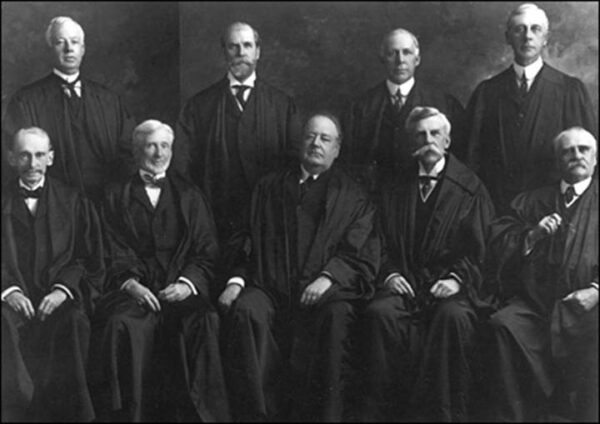
In a rare victory for employers, the U.S. Supreme Court recently ruled that companies may require workers, as a condition of employment, to sign arbitration agreements that waive the right to participate in workplace-related class action...
In a rare victory for employers, the U.S. Supreme Court recently ruled that companies may require workers, as a condition of employment, to sign arbitration agreements that waive the right to participate in workplace-related class action claims. Epic System Corp. v. Lewis.
An arbitration agreement is a contract requiring both sides to resolve their disputes through a private neutral decision-maker rather than a judge or jury. Arbitration has many business-related advantages, including a more efficient, time-saving process that does not involve a potentially more subjective jury process.
A class action is a court case in which a judge allows one or several plaintiffs to sue for a larger group of persons with common claims. For example, a single individual may file and pursue a class action alleging she and all other similarly situated employees were improperly paid for overtime or denied their meal and rest breaks.
A class action “waiver” in an arbitration agreement would preclude the employee from participating in a class action claim, instead limiting that worker to an individualized arbitration proceeding to resolve his or her particular employment complaints.
The National Labor Relations Board (NLRB) has contested the validity of employment-related class action waivers, alleging they unlawfully hinder employees from their rights under the National Labor Relations Act (NLRA) “to engage in ... concerted activities” for their “mutual aid or protection” (i.e., the right to join together to sue their employer). However, other laws, particularly the Federal Arbitration Act (FAA), and related court decisions have upheld the validity of such waivers.
The U.S. Supreme Court has addressed this discrepancy in its Epic decision, narrowly ruling in favor of such class action waiver provisions. The Court concluded that nothing in the NLRA would prohibit such waivers and that courts must enforce them under the FAA.
There are still a number of unanswered questions for California employers, including whether similar “representative claims” under this state’s Private Attorneys General Act (PAGA) remain exempt from such class actions waivers.
Regardless, the enforceability of an employment-related arbitration agreement – particularly in California – requires terms that satisfy a demanding set of very specific fairness standards. Some employers, particularly those with smaller workforces who are not at risk of class action suits, may choose not to require arbitration agreements for their workers out of cost considerations.
Thus, employers must proceed carefully before implementing or modifying arbitration agreements to existing employees. For further assistance, please contact one of our attorneys Tim Bowles, Cindy Bamforth or Helena Kobrin.
Cindy Bamforth
June 6, 2018

The California Supreme Court has issued a landmark decision drastically redefining who can be classified an independent contractor. Dynamex Operations West, Inc. v. Superior Court .
The California Supreme Court has issued a landmark decision drastically redefining who can be classified an independent contractor. Dynamex Operations West, Inc. v. Superior Court. The new criteria potentially expose tens of thousands of businesses who have relied on the old rules to legal actions for unpaid minimum wage and overtime, deprivation of meal and rest breaks, and other alleged violations of this state’s Industrial Wage Orders.
Since 1989, California has relied on a flexible multi-factor standard for distinguishing contractors from employees, most importantly a company’s control over work details. S. G. Borello & Sons, Inc. v. Department of Industrial Relations.
The Dynamex Court pronounced its near-inflexible determination to treat workers engaged in labors central to a company’s products or services as employees, citing the economic incentives and competitive advantages to businesses that misclassify workers as independent contractors.
Thus, to establish a worker is properly classified as an independent contractor, a hiring company must now prove all three prongs of an all-or-nothing “ABC” test:
(A) that the worker is free from the control and direction of the hirer in connection with the performance of the work, both under the contract for the performance of such work and in fact; (B) that the worker performs work that is outside the usual course of the hiring entity’s business; and (C) that the worker is customarily engaged in an independently established trade, occupation, or business of the same nature as the work performed for the hiring entity.
While (A) and (C) factors are familiar, (B) is a new, expansive take on who must be considered employed in a business’s operations. For example, for some decades, general building contractors have hired independent sub-contractors to perform particular portions of a construction job, masonry, plumbing, electrical, etc. The Dynamex decision now casts that traditional relation in doubt. On the other hand, under Dynamex a building owner who directly hires a series of specialty contractors to perform work on his or her property would likely not be the employer of those service providers if he/she can be fairly considered as not in the business of construction.
Needless to say, this new standard is bound to create a period of uncertainty as government, attorneys and courts work to sort out the many questions arising from the decision. Particularly any enterprise that relies heavily on hiring independent contractors to produce any part of its goods and services should urgently address the impact of this decision on its operations.
For further information, please contact Tim Bowles, Cindy Bamforth or Helena Kobrin.
Helena Kobrin
June 1, 2018

California law prohibits discrimination against employees and applicants for their membership in any protected class, including national origin.
California law prohibits discrimination against employees and applicants for their membership in any protected class, including national origin. The California Fair Employment and Housing Council (FEHC), which enacts regulations to protect employees and job candidates from unlawful discrimination, harassment and retaliation, recently issued greater national origin protections.
Effective July 1, 2018, new regulations expand the definitions of “national origin” and “national origin groups.”
The new regulations expand national origin discrimination to include:
The regulations also provide examples of potentially unlawful harassing conduct, including deportation threats, mocking someone’s accent or language, and the use of derogatory comments, slurs or other non-verbal conduct. Prevention of national origin discrimination and harassment claims begins with educating management and workers alike through well-written and updated workplace policy and protocols.
See also:
For more information, please contact Tim Bowles, Cindy Bamforth or Helena Kobrin.
Cindy Bamforth
June 1, 2018

When a worker’s employment ends, the items required in the final paycheck are determined by California’s laws, the employer’s specific policies at the time of termination, and the circumstances of that particular company-employee...
When a worker’s employment ends, the items required in the final paycheck are determined by California’s laws, the employer’s specific policies at the time of termination, and the circumstances of that particular company-employee relationship.
When a business terminates a worker, all wages and all earned but unused paid vacation are due and payable on the last day of work. However, if an employee gives resignation notice less than 72-hours from his departure, the employer has 72 hours from that notice date to provide the final paycheck. If the notice given by either party exceeds 72 hours, all wages must be paid on the last day of work as well as on any paydays that may fall in the interim.
Here are some basics on what employers must include in a final pay check:
Earned Hourly Wages or Salary Must be Included: California requires an employer to fully pay all earned hourly wages, overtime and/or salary compensation through the worker’s final day of labor. A company need only pay the pro-rated portion earned to that final day on a weekly or other pay-period salary for an exempt-from-overtime executive, administrator, etc.
Earned Vacation Pay Must be Included: California does not require an employer to provide paid vacation to any of its workers. However, when a business does offer this benefit, an important rule applies: whenever the employment relationship ends, for any reason whatsoever, and the employee has not used all of the employee’s earned and accrued vacation hours, the employer must pay the employee these hours.
Vacation pay is paid out at the rate the employee was earning at the time of separation from the employer.
Sick Pay is Not Included unless Company Policy States Otherwise: Under California law and the ordinances of those municipalities providing their own paid sick leave standards, unused sick pay does not need to be paid out at the end of a worker’s employment. However, if the business has a paid sick leave policy specifying it will pay out unused sick leave upon termination or at the end of the year, then that employer must also pay any unused sick leave amounts in the final pay.
The situation may not be so clean-cut. Some workplace policies combine paid vacation days, personal days and sick days into a single “paid time off” policy. In this instance, all such days are an accruing benefit and the employer must pay the amount equal to the earned but unused days at termination. It requires full review of an employer’s exact policies to know whether this requirement applies in specific circumstances.
Some Commissions May Be Excluded from Final Pay. Whether an employer must pay all commissions according to these final pay laws depends on that employer’s policies and practices. Considerations include when commissions are deemed to be earned. Some businesses specify a commission earned upon an agreement to purchase. Others set a customer’s payment for the goods or services as the “earning event.” If the event has yet to occur on a commissioned employee’s final day, payment of such commission is owing upon the subsequent occurrence of that event. Best practice is for a company to clearly set out the applicable earning event in its written commission rules.
Consequences in the Event of Underpayment: Whether or not intentional, California imposes a daily “penalty wage” to a maximum 30 days on an employer who miscalculates and thus underpays a departing employee all remaining compensation owing on the latter’s final day of work. This rule does not just cover miscalculation of wages, etc. that might be owing the worker from his or her final pay period. It covers math errors and underpayments committed for any work performed up to three years prior to that final work day. While such mistakes on a single worker are relatively survivable for a company, a legitimate claim brought on behalf of a large class of former employees for an across-the boards error of this kind can be a life-threatening challenge to that business.
See also:
For further information, please contact Tim Bowles, Cindy Bamforth or Helena Kobrin.
Helena Kobrin
May 25, 2018

On Tuesday afternoon a customer walks in your restaurant with his giant Deerhound and starts ordering lunch for both of them.
On Tuesday afternoon a customer walks in your restaurant with his giant Deerhound and starts ordering lunch for both of them. The waitress, surprised and unsure about this arrangement, asks her supervisor if the customer needs to leave because of the “no pets allowed” policy.
May the supervisor promptly show the dog and his owner to the door? Not if the dog is a service animal. Any business establishment open to the public must allow its disabled customers’ service animals to be admitted to the same areas as other customers as provided under federal and California law.
A service animal is defined as any dog (and, under federal law, a miniature horse) that is individually trained to do work or performs tasks for the disabled individual’s benefit, such as protection and rescue work, pulling a wheelchair, or fetching dropped items.
If it’s not already evident why the person needs the service animal, then the public entity may ask these two questions: (1) whether the animal is required because of a disability, and (2) what work or task the animal has been trained to do. The business may not ask about the nature or extent of the disability, for any training documentation, or for a demonstration of the animal’s trained tasks.
However, the service animal must be under the handler’s control at all times (e.g. a harness, leash, voice control and/or signals). If not, and the owner does not take effective action, or the animal is not sufficiently housebroken, then the public entity may remove them.
A business accepting a service animal onto the premises is not responsible for its care or supervision. Additionally, if other individuals are normally charged for the damage they incur, then the business may charge the disabled individual for damage caused by the service animal.
All businesses open to the general public should modify their policies and practices to permit the use of a service animal on their premises, which includes modifying any policy that blanketly prohibits animals from entry.
California businesses failing to comply with these provisions may be found guilty of a misdemeanor, punishable by a fine up to $2500.
For further information, please contact Tim Bowles, Cindy Bamforth or Helena Kobrin.
See also:
Cindy Bamforth
May 24, 2018

Hourly employees must be paid for all “hours worked.” Where an employee is required to travel for work, near or far, the employer must compensate the worker for that time. Exceptions are normal commute time or road trip downtime.
Hourly employees must be paid for all “hours worked.” Where an employee is required to travel for work, near or far, the employer must compensate the worker for that time. Exceptions are normal commute time or road trip downtime. Thus, an hourly worker who watches a movie through a flight for business is still earning pay for his or her hours on the plane except the time spent taking a meal, as traveling employees are still entitled to meal and rest breaks.
Businesses may establish a lower hourly rate of pay for unproductive but compensable travel time. Thus, an employer could pay an hourly employee minimum wage (currently $11.00/hour in California for businesses with 26 or more employees) for the transit time and that worker’s higher, normal rate (say, $20.00/hour) for time spent working at the destination that day. If that worker flew for five hours ($11.00/hour x 5 hours = $55.00) and then attended a conference for another three ($20.00/hr x 3 hours = $60.00), his total pay that day would be $115.00.
Unless there is a clear written agreement setting a special, reduced “travel rate,” the compensation is at the employee’s normal hourly rate, which may be no less than minimum wage. See, California Minimum Wage Rates for 2018 (December, 2017). The state’s daily and weekly overtime laws also apply to work-related travel days. Thus, a worker that spent a ten hour day flying to New York and then preparing for a meeting in the hotel room has earned eight straight time hours and two overtime hours.
California is one of the few states that require overtime premium pay either weekly (“time-and-a-half” after 40 in a week) or daily (“time-and-a-half” after eight hours in a day, “double time” after 12 daily hours). See, The Basics of Overtime (May, 2018).
Things get more complex when a California employee works either daily or weekly overtime while earning separate hourly rates during a pay period. Employers must calculate those 1.5x and 2x premium rates based upon the “regular rate of pay.” To calculate the “regular [hourly] rate” to be used for paying overtime, the employer must add up all non-overtime compensation for a week and divide it by the total number of hours worked.
Thus, if the above worker flying to New York also returned to California that same week, working a total of 50 hours, with ten of those hours at the $11.00/hour travel rate ($11.00/hr x 10 hrs. = $110.00) and the other 40 hours at the $20.00 rate ($20.00/hour x 40 hrs. = $800), his total earned compensation would of course be $910.00 for those 50 hours. The regular rate would be $18.20/hr ($910.00 ÷ 50 hrs = $18.20), making the 1.5x premium rate for each of the ten overtime hours $27.30.
If the worker had any very long work days that week exceeding 12 hours, the employee would earn 1.5x the regular rate for the each of the 9th – 12th hours worked in that day and then 2x the regular rate for each daily hour worked over 12. So, if the employee worked five days of 8, 10, 12, 14, and 8 hours respectively, the additional pay for overtime on both a daily or weekly calculation would be for 10 hours at an additional .5 premium rate per hour (or 10 x $13.65 overtime premium) and 2 hours at an additional 2x premium rate per hour (i.e., 2x $27.30 overtime premium). The employer would therefore pay $910 + $136.50 + $54.60 for that week.
For further information, please contact Tim Bowles, Cindy Bamforth or Helena Kobrin.
Helena Kobrin
May 18, 2018

Upon arriving to work on Monday morning your customer service manager asks if she can bring her monkey to the office. Must management grant her request? It depends.
Upon arriving to work on Monday morning your customer service manager asks if she can bring her monkey to the office.
Must management grant her request? It depends. If she needs the monkey to reasonably accommodate her disability, then the employer will most likely have to grant her wish. Only where accommodation choices would legitimately impose undue hardship is the company justified in denying the request.
Under federal law an assistive animal is any dog or miniature horse trained to perform tasks to benefit a disabled individual.
California more broadly defines an assistive animal as any animal “that is necessary as a reasonable accommodation for a person with a disability.”
In addition to trained dogs, California recognizes all trained or untrained support animals that provide “emotional, cognitive, or other similar support to a person with a disability.”
Thus, even an untrained monkey could qualify if it provides emotional support to an applicant or employee with a physical or mental disability.
As part of the interactive process, the employer may ask the customer service manager to provide a letter from the employee’s health care provider confirming that she has a disability and explaining why the assistive animal is required in the workplace (e.g., why the animal is required to enable the employee to perform her essential job functions). The employer may require annual recertification of the continued need for the assistive animal.
Employers may also set minimum standards for assistive animals, such as requiring them to be free from offensive odors, be fully housebroken, and not a danger to anyone’s health or safety. In California, only within the first two weeks of allowing the assistive animal in the workplace may the employer challenge whether the animal meets such standards.
California employers should:
Please note different rules apply for businesses open to the public concerning customers’ service animals. We will provide more specific information about these requirements in a future article.
For further information, please contact Tim Bowles, Cindy Bamforth or Helena Kobrin.
See also:
Cindy Bamforth
May 15, 2018

No California employer is obligated to provide paid vacation time to its workers. However, such benefit is a common practice, promoting morale and productivity.
No California employer is obligated to provide paid vacation time to its workers. However, such benefit is a common practice, promoting morale and productivity. Once a company grants paid vacation (for example, one week annually), it is considered an accruing benefit, i.e., an employee earns it gradually throughout the working year. See, Vacation Pay in California (March 2011) and Requiring Use of Paid Vacation for Unpaid Leaves (August, 2012).
As vacation benefit “accrues” throughout an annual cycle, a worker who ends employment in the middle of that year will have earned his or her proportionate share of the full annual benefit. On the other hand, under a policy of one week paid vacation each calendar year for full-time workers, an employee who doesn’t take any time off for, say, ten years is going to have ten weeks of pay coming to him or her upon departure. An employer who neglects to pay the accrued amount on the employee’s departure will be subject to a penalty of as much as one month’s wages.
To prevent large vacation pay accruals, an employer’s written paid vacation policy can put a cap on how much vacation a worker can accrue (for example, 18 months of benefits). Such a policy will put vacation accrual on hold after the specified amount of accrual time and direct the worker to utilize at least some paid vacation, after which the benefit can begin accruing again up to the specified limit.
Additionally, business does not necessarily go on vacation during the prime months for taking time off. In order to ensure continued production and service to their publics, employers have the right to manage their workers’ vacation timing, including approval of scheduling and the number of vacation days a given worker may take at any particular time.
Manager thought and care are required. For example, an employer may not deny vacation time to a worker simply because that person recently returned from a medical disability leave. Such grounds – unrelated to business production demands — could constitute unlawful retaliation. In the event management must deny a proposed vacation period or suggest alternative dates, written confirmation of the actual work-related reasons is a very good idea.
Companies should specify the scheduling ground rules in any policy providing such benefits, including a requirement of written requests well in advance of planned vacations and a clear statement that it is ultimately management’s prerogative when and how the company will schedule vacation time.
For further information, please contact Tim Bowles, Cindy Bamforth or Helena Kobrin.
Helena Kobrin
May 10, 2018

The California Fair Employment and Housing Act (FEHA) requires employers with five or more on payroll to engage in an “ interactive process ” with a worker requesting accommodation of a disability.
The California Fair Employment and Housing Act (FEHA) requires employers with five or more on payroll to engage in an “interactive process” with a worker requesting accommodation of a disability. The employer must have timely, good faith and ongoing discussions to explore if and how to reasonably accommodate the physically or mentally disabled worker’s ability to perform the essential functions of his or her job. Failure to do so can be a costly error.
On April 24, 2018, the California Department of Fair Employment and Housing (DFEH) announced that it settled a reasonable accommodation case with the Compton Unified School District (Compton Unified) for more than $200,000.
Complainant worked as an elementary school teacher for 16 years. She had allegedly asked for accommodation because she could not physically reach above shoulder level. After a brief meeting, Compton Unified concluded “that writing on the board is an essential function of teaching second grade and that the complainant could not be accommodated.” She had to remain on leave until she was eventually terminated.
In response, the teacher filed a DFEH complaint alleging that Compton Unified refused to provide reasonable accommodation for her disability.
DFEH Director Kevin Kish stated in the press release: “When employees have disability-related restrictions, the law requires an interactive process, and that process is more than a short meeting without discussion of possible accommodations.”
Employers should always proceed with caution when responding to an employee’s request for disability accommodation. This includes properly engaging in an ongoing, thorough, fair and well-documented interactive process that identifies various potential accommodations and determines the strengths and weaknesses of each one.
The employer is only justified in refusing to reasonably accommodate the disabled employee where accommodation choices would legitimately impose undue hardship. The undue hardship standard is difficult to satisfy and the employer should consult with competent and experienced legal counsel before making that determination.
For further information, please contact Tim Bowles, Cindy Bamforth or Helena Kobrin.
See also:
Cindy Bamforth
May 9, 2018