Click here to subscribe to our Bowles Law e-letter


Click here to subscribe to our Bowles Law e-letter
Cautionary Tale Episode 112
1,730,598 Reasons to calculate overtime correctly
DOL Hits Contractor
For Paying Incorrect Overtime Rates
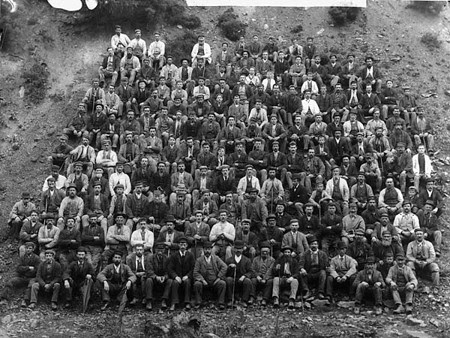
The U.S. Department of Labor’s Wage and Hour Division recovered $1,730,598 in back wages for 1,666 workers after finding that The State Group Industrial (USA) Ltd. Inc., a Tennessee-based multi-trade contractor, miscalculated overtime by excluding incentive bonuses from the employees’ regular rates of pay.
Under federal law, overtime generally must be paid at 1.5 times the employee’s “regular rate,” not merely 1.5 times the base hourly rate. The regular rate generally includes all compensation for the workweek, subject to statutory exclusions. The calculation is:
Total includable compensation for the workweek (excluding overtime and statutory exclusions) ÷ Total hours worked that week = Regular Rate
DOL Fact Sheet 56A explains what to include or exclude from the federal regular rate. Discretionary bonuses may be excluded, but State Group failed to include non-discretionary incentive bonuses in its regular rate calculation.
Wage and Hour Division Administrator Andrew Rogers stated:
"The State Group violated federal law when it excluded bonuses from its overtime calculations, averaging more than $1,000 in back wages owed to each employee. Our investigators remain committed to obtaining appropriate remedies for workers who are not paid as the law requires and driving long term compliance to prevent violations in the future."
California law also requires overtime based on the employee’s regular rate of pay. Under Labor Code section 510, overtime is generally due at 1.5 times the regular rate, with double time required in specific circumstances. See Calculating Overtime with Employee Bonuses in California.
Flat-sum bonuses -- guaranteed dollar amounts for specific actions like weekend work -- have special overtime rules. Under federal law, divide the flat sum bonus by total hours worked that week to calculate overtime. In California, divide the flat sum bonus by the non-overtime hours actually worked (capped at 8/day or 40/week), not total hours worked. This can produce a higher overtime rate. California employers are required to pay whichever is the higher amount.
Take-Aways:
Employers must calculate and pay overtime based on the correct regular rate. Using the base hourly rate alone can create substantial liability.
For further information, please contact Tim Bowles, Cindy Bamforth or Helena Kobrin.
See also:
Helena Kobrin
July 17, 2026
If you are an employer facing possible litigation, or have an employee issue on which you need immediate guidance, call us to set up a consultation, or submit your message.
NOTE: Use of this website does not make one a client of the Law Offices of Timothy Bowles (“Firm” or “Bowles Law”). Establishing an attorney-client relationship and the confidentiality that comes with it depends on the Firm’s prior confirmation that no factor, including any conflict of interest (for example, our representation of another party adverse to you), exists to prevent that establishment. If you have confidential information that you would like to provide a Bowles Law attorney, please communicate directly to one of our attorneys, in person, by telephone, email, fax or other written means. Do not use this website to offer or communicate confidential information about any legal matter.