Click here to subscribe to our Bowles Law e-letter


Click here to subscribe to our Bowles Law e-letter
Religious Ruling Favors Employees
Supreme Court Requires Accommodation Unless Substantial Cost Burden
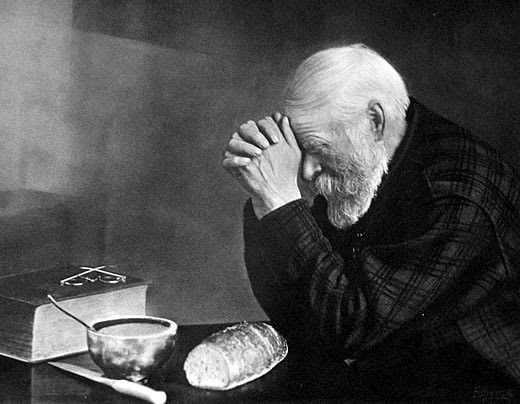
Civil rights laws protect employees from discrimination based on various classifications, including religion. Employers must provide religious accommodations unless doing so would create an “undue hardship.” Such accommodation could include such things as time off for religious observance, not working on the particular sabbath, or exceptions to dress requirements.
Since a 1977 Supreme Court opinion, federal courts have interpreted company undue hardship as only more than a “de minimis” effect -- “very small or trifling” – on its cost of operations, enabling employers to deny religious needs of employees for ultimately inconsequential financial impact.
The U.S. Supreme Court has now set a much higher bar to justify denial of accommodation requests. In Groff v. DeJoy, the employer had denied a postal worker’s religiously based requests not to work Sundays. Disapproving the “de minimis” standard, the Court found undue hardship requires showing a religious accommodation would be a substantial burden “in the overall context of an employer’s business,” meaning “the burden of granting an accommodation would result in substantial increased costs in relation to the conduct of its particular business.”
An employer thus must consider factors such as the “nature, size, and operating cost” of its business in making religious accommodation decisions. The test requires a practical, common-sense review of the facts. The effect of an accommodation on other workers is relevant only if it has actual ramifications for the employer’s business. The Court reiterated that “employee animosity to a particular religion, to religion in general, or to the very notion of accommodating religious practice” cannot create “undue” hardship. Other possible options must also be considered before an accommodation can be considered “undue.”
Take-Aways:
An employer must take religious accommodation requests seriously and analyze the facts to determine if – in the context of its business – there would be substantial increased costs. If not, then the accommodation must be granted. What is substantial for a two-employee retail store will be drastically less than the same analysis for Target or Walmart.
For further information, please contact Tim Bowles, Cindy Bamforth or Helena Kobrin.
See also:
Helena Kobrin
September 1, 2023
If you are an employer facing possible litigation, or have an employee issue on which you need immediate guidance, call us to set up a consultation, or submit your message.
NOTE: Use of this website does not make one a client of the Law Offices of Timothy Bowles (“Firm” or “Bowles Law”). Establishing an attorney-client relationship and the confidentiality that comes with it depends on the Firm’s prior confirmation that no factor, including any conflict of interest (for example, our representation of another party adverse to you), exists to prevent that establishment. If you have confidential information that you would like to provide a Bowles Law attorney, please communicate directly to one of our attorneys, in person, by telephone, email, fax or other written means. Do not use this website to offer or communicate confidential information about any legal matter.