Click here to subscribe to our Bowles Law e-letter


Click here to subscribe to our Bowles Law e-letter
How do you choose a trademark (for products) or service mark (for services)? Choosing an enforceable mark or one that can be registered with the government is not as simple as just picking a word, icon or phrase that you like. Careful research and planning are required to confirm your chosen mark does not conflict, i.e., is not likely to cause confusion in the public’s eye, with an existing mark. If you skip this step out of supposed cost or time considerations and rely purely on chance that no-
How do you choose a trademark (for products) or service mark (for services)? Choosing an enforceable mark or one that can be registered with the government is not as simple as just picking a word, icon or phrase that you like. Careful research and planning are required to confirm your chosen mark does not conflict, i.e., is not likely to cause confusion in the public’s eye, with an existing mark. If you skip this step out of supposed cost or time considerations and rely purely on chance that no-one else already has rights that would trump your own, you may be in for a very expensive mistake.
Witness the nearly 30 years of legal actions (1978 – 2007) between Apple Records (aka the Beatles’ label) and Apple Computer, in part over the supposed confusion between the music company’s whole green Granny Smith apple logo and the computer company’s iTunes cartoon apple with a bite taken. Apple Records prevailed in some of the cases and there were some settlements. Apple Computer then prevailed in the last court battle over whether its establishment of iTunes violated the earlier settlement, citing another case decision to argue that “even a moron in a hurry could not be mistaken about” the distinction between the two marks. The parties then settled, with Beatles music available on iTunes. Of course, if you don’t have the kind of money these two entities could devote to the fight, you should avoid such disputes in the first place.
Some of the steps involved in picking a good trademark are:
1. Find out if anyone else is using the mark you want to use or something similar. The research can and should be done on various levels, for example, search of the USPTO (United States Patent and Trademark Office) website; with state trademark registrars; online search for others using the mark; other searches of business forums and publications.
2. Determine if any such similar or identical marks are being used to identify products or services that are the same or related to what you are looking to identify with your potential mark.
3. In the event of such conflicts, continue the selection and research process until you have a potential mark that you believe will not be too close to someone else’s and the goods or service it is used to identify.
Some potential conflicts are obvious. An individual seeking to use “Nike,” “Nikey,” or even “NighKeigh” to identify a shoe company is clearly a bad idea. In addition to marks that are identical or similar in appearance or spelling, sounding the same can be enough to rule it out.
Another less-evident factor can cause problems. Some people do not register their established marks with the U.S. or other national government or with any state. Thus, even a fairly thorough search will not find them. Yet, even without government registration, a use in commerce (between states or with a foreign country) or even on a local level, may give its owner the right to block you from using the same or a similar mark for the same or similar products or services. Thus well-planned research beyond the standard government data bases should be part of the due diligence.
Maximizing your protections should include hiring a trademark specialist attorney who can get a search done for you. While you can of course order a search yourself, you would not then receive the attorney’s analysis on potentials for conflict and invitations for trouble. “Penny wise and pound/dollar foolish” comes to mind. Skipping the relatively small investment of a close search may buy a new business the much greater expense of dealing with a “cease and desist” letter from a rival. Such a letter typically presents an assortment of bad alternatives: (a) stop using the mark to avoid a losing legal battle and incur the expense of having to switch to a new, non-conflicting mark; (b) fight the challenger in court, with virtually guaranteed high legal fees and similarly guaranteed uncertainty of outcome; or (c) ignore the letter and hope they will go away.
Prevention of infringement claims is thus key. Clearing and properly protecting a mark are part of a business’s start-up costs or launch of a new product or service. Include those costs in your budget and you will save in the long run. Contact attorney Helena Kobrin if you need help selecting a legally protectable trademark.
Helena Kobrin
October 24, 2014
Trademark can be confused with copyright. As we have explained in recent blogs , a copyright protects works that one creates.
Trademark can be confused with copyright. As we have explained in recent blogs, a copyright protects works that one creates. A trademark is a word, group of words, symbol or logo a person or company uses to distinguish their products from those of others. A word, symbol, etc. used to distinguish someone’s services from others is a service mark.
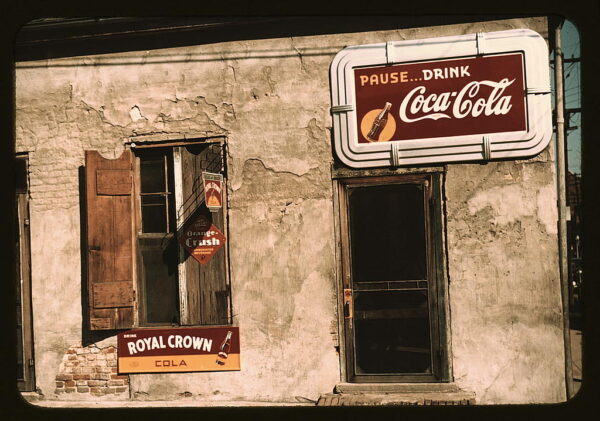
Trademarks and service marks are also commonly referred to as “brands.” “Coca-Cola” thus stands to distinguish one company’s cola beverage from those produced by others, including of course “Pepsi-Cola.” Cola connoisseur and average citizen alike can rightfully expect Coke’s and Pepsi’s distinctive trademarks to guide him or her to the preferred beverage. One associates a particular taste with one company and another taste with its competitor because both enterprises have spent millions over the years protecting respective brands to identify their respective products exclusively. The right to control such a brand gives its owner the power to bar anyone else from using that trademark to identify its own rival product.
Trademarks, along with other intellectual property, can be the most valuable assets your business will own. We will address in coming weeks the extent of trademark rights, how one acquires a trademark, how one protects it, and related issues. Contact Helena Kobrin of our office on such matters.
Trademark can be confused with copyright. As we have explained in recent blogs, acopyrightprotects works that one creates. Atrademarkis a word, group of words, symbol or logo a person or company uses to distinguish their products from those of others. A word, symbol, etc. used to distinguish someone’s services from others is aservice mark.
Trademark can be confused with copyright. As we have explained in recent blogs, a copyright protects works that one creates. A trademark is a word, group of words, symbol or logo a person or company uses to distinguish their products from those of others. A word, symbol, etc. used to distinguish someone’s services from others is a service mark.
Trademarks and service marks are also commonly referred to as “brands.” “Coca-Cola” thus stands to distinguish one company’s cola beverage from those produced by others, including of course “Pepsi-Cola.” Cola connoisseur and average citizen alike can rightfully expect Coke’s and Pepsi’s distinctive trademarks to guide him or her to the preferred beverage. One associates a particular taste with one company and another taste with its competitor because both enterprises have spent millions over the years protecting respective brands to identify their respective products exclusively. The right to control such a brand gives its owner the power to bar anyone else from using that trademark to identify its own rival product.
Trademarks, along with other intellectual property, can be the most valuable assets your business will own. We will address in coming weeks the extent of trademark rights, how one acquires a trademark, how one protects it, and related issues. Contact Helena Kobrin of our office on such matters.
Helena Kobrin
October 16, 2014

“Fair Use” is the most prevalent defense against copyright infringement and possibly the most misunderstood. It is a subject all in itself.
“Fair Use” is the most prevalent defense against copyright infringement and possibly the most misunderstood. It is a subject all in itself.
Simply stated, if a use is “fair use,” it allows you to use someone else’s creation in a particular way without liability for copyright infringement. However, there is no shortage of misconceptions on when fair use applies. Even a long-time copyright lawyer will not always be able to make a definite determination.
The Copyright Act (section 107 of title 17 United States Code) states that: “the fair use of a copyrighted work . . . for purposes such as criticism, comment, news reporting, teaching (including multiple copies for classroom use), scholarship, or research, is not an infringement of copyright.” It prescribes four principal elements that courts analyze in determining whether a fair use defense is valid or not:
“(1) the purpose and character of the use, including whether such use is of a commercial nature or is for nonprofit educational purposes;
(2) the nature of the copyrighted work [including such issues as whether it is published or unpublished and whether it is creative or factual];
(3) the amount and substantiality of the portion used in relation to the copyrighted work as a whole; and
(4) the effect of the use upon the potential market for or value of the copyrighted work.”
While these criteria may sound pretty straightforward, application is far from simple except in a truly obvious case. Courts have engaged in much discussion of what these factors mean and how they are to be interpreted. For example, the distinction between commercial and non-profit use is not clear-cut. Commercial use is not always “unfair” and non-profit use not always “fair.” The federal Ninth Circuit Court of Appeals once decided that an educational (classroom) use by one teacher of multiple pages from a cake decorating booklet created by another teacher for her classroom was not fair use. See Marcus v. Rowley, 695 F.2d 1171 (9th Cir. 1983). The Fifth Circuit Court of Appeals found that copying of articles from scientific journals for scholarly use by Texaco’s scientists also was not fair use, in American Geophysical Union V. Texaco Inc., 60 F.3d 913 (2nd Cir. 1994). In contrast, when 2 Live Crew took Roy Orbison’s famous song, “Pretty Woman,” changing the words and recording it as rap music – an undisputed commercial use – it was fair use as a parody. See Campbell v. Acuff-Rose Music (92-1292), 510 U.S. 569 (1994).
Unfortunately, some people decide they are engaged in fair use when they do not really know what it is. For example, one composer mistakenly thought it was fair use if you did not use more than four measures of music by someone else. This is why, in most instances, creative people are best off when they stick with what they know best – creation – and leave it to the legal experts to determine if they are on safe ground when they want to make use of someone else’s creation in their own. A copyright attorney can advise whether: (a) you are taking a large or small risk that you will receive a cease and desist letter from the copyright holder; (b) a fair use defense will or will not be viable; (c) you should forget the idea altogether; or (d) you should apply to the content owner for a license. On the other hand, if you think someone has infringed your copyright by using a portion in his or her own material, a copyright lawyer can tell you if you have a case or need to step back and take a deep breath.
For assistance with fair use analysis or other issues of copyright law, contact our Of Counsel attorney, Helena Kobrin.

The ability of employers to follow the law – and of judges to enforce it – depends on clearly defined standards of responsibility and conduct.
The ability of employers to follow the law – and of judges to enforce it – depends on clearly defined standards of responsibility and conduct. Vaguely or otherwise poorly stated rules can lead to inconsistent outcomes in very similar factual situations. This danger of arbitrary, unpredictable consequences is perhaps no better illustrated than in the recent struggles of three appeals judges to define the terms of the federal Americans with Disabilities Act (ADA) in Weaving v. City of Hillsboro (9th Circuit, D.C. No. 3:10-cv-01432-HZ, August 15, 2014).
The ADA forbids workplace discrimination against a “qualified individual on the basis of disability.” “Qualified individual” means a person who, with or without reasonable accommodation, can perform the essential functions of the employment position that such individual holds or desires. Under the ADA, a “disability” is “a physical or mental impairment that substantially limits one or more major life activities,” with “a record of such an impairment,” or who is “regarded as having such an impairment.” The ADA provides examples of such major life activities, including “caring for oneself, performing manual tasks, seeing, hearing, eating, sleeping, walking, standing, lifting, bending, speaking, breathing, learning, reading, concentrating, thinking, communicating and working.”
The challenge in the Weaving case appeal was whether the ADA’s protections should extend to an individual terminated over recurring interpersonal problems with co-workers that he and testifying mental health practitioners attributed to so-called attention deficit hyperactivity disorder (ADHD). Two of the three appeals judges concluded that Officer Weaving’s sometimes gruff, offensive manner – even if the supposed result of a purported ADHD condition – did not deserve ADA protection because his behavior evidenced only an inability “to get along with others,” not a major life activity. The third judge disagreed, contending that Weaving’s periodically boorish behavior amounted to a substantial impairment of the ADA-protected major life activity of “interacting with others.”
While employers might take heart in the immediate result of the Weaving case, that (to use the court’s term) “jerks” do not deserve ADA protection, the decision really should give neither workers nor managers comfort since it leaves the dividing line about as clear as mud between: a) disruptive conduct from which an employer can protect its workforce by suspension or termination of the perpetrator; and b) perhaps offensive but protected behavior stemming from a disability that a business must seek to reasonably accommodate.
The City of Hillsboro, Oregon terminated Matthew Weaving from its police force in late 2009, in part based on the report of his superior that Weaving had created a hostile work environment for his junior officers and peers for actions described as “tyrannical, unapproachable, non-communicative, belittling, demeaning, threatening, intimidating, arrogant, and vindictive.” Weaving at page 10.
Officer Weaving then sued the City for ADA discrimination, alleging that he deserved protection because his diagnosed ADHD condition substantially limited his major life activity of “interacting with others.” The City appealed after a jury awarded Officer Weaving well over $600,000 in damages and over $139,000 in attorney fees. Weaving at page 11.
Weaving contended his situation was similar to the systems analyst who was able to maintain an ADA case in McAlindin v. County of San Diego (9th Cir., 1999) 192 F.3d 1226. There, Mr. McAlindin was able to convince two out of three appeals judges that his claimed panic attacks, “fear reaction,” and “communicative paralysis” created a substantial limitation on his major life activity of interacting with others. 192 F.3d at 1235-1236. Weaving also argued he was entitled to ADA protection just as an equipment operator had been in Head v. Glacier Northwest (9th Cir., 2005) 413 F.3d 1053. There, Mr. Head convinced the appeals court that the ADA could protect him from discrimination since his avoidance of crowds and large family gatherings, and his shutting himself away in his house for weeks – all purportedly the result of a diagnosed “bipolar” mental disorder – constituted a substantial limitation on his major life activity of interacting with others. 413 F.3d at 1060-1061.
Yet, two of the three of the judges in Officer Weaving’s appeal found his situation more akin to another “bipolar”-afflicted employee, this time an electric-guitar assembler in Jacques v. DiMarzio, Inc. (2nd Cir. 2004) 386 F.3d 192. According to the lower court’s record, Ms. Jacques was a “problem employee,” prone to confrontations with co-workers, intolerance of ethnic minorities in the production department, and emotional problems dealing with supervisory staff. Ms. Jacques’s supervisors had found her the “most confrontational person we ever employed,” with supervisors and coworkers regarding her as “intimidating and mercurial” and feeling obliged to treat her with “kid gloves.” 386 F.3d at 197-198.
Taking the cue from the Jacques case, the majority in Weaving found the officer was not eligible for ADA protection for being a cantankerous person with mere trouble getting along with coworkers. In contrast to the plaintiffs in the McAlindin and Head cases, Officer Weaving did not shut himself away, unable at times to interact with others at all. While able to engage in normal social interactions, “his interpersonal problems existed almost exclusively in his interactions with his peers and subordinates.” Weaving at page 17. “One who is able to communicate with others, though his communications may at times be offensive, ‘inappropriate, ineffective, or unsuccessful,’ is not substantially limited in his ability to interact with others within the meaning of the ADA. To hold otherwise would be to expose to potential ADA liability employers who take adverse employment actions against ill-tempered employees who create a hostile workplace environment for their colleagues.” Weaving at page 18.
Circuit Judge Callahan, the third judge in Weaving, disagreed sharply with the other two. Citing the report of the treating psychologist, she emphasized that Officer Weaving was apparently unable to “self-regulate” certain symptoms of his supposed ADHD condition, including impulsiveness, “not seeming to listen when spoken to, … interrupting others, … difficulty waiting his turn, blurting out comments without having emotional intelligence, [and lack of] awareness of the effect that that communication would have on his other workers at the police department.” Weaving at page 23. Judge Callahan thus contended that Officer Weaving “was well beyond being merely cantankerous or troublesome. To the contrary, he had problems in his interactions with just about everyone throughout his career in law enforcement.” Judge Callahan thus reasoned that Weaving was substantially limited in his ability to interact with others and was not just a cranky, defiant bully undeserving of ADA protection. Weaving at page 32.
The Weaving decision demonstrates the highly subjective element that can drive the discussion on what is and what is not a protectable mental disability under the ADA. In the face of disruptive conduct as displayed by Officer Weaving, management must base any disciplinary decisions on the observable and documented negative effects that such angry, demeaning and bullying behavior has on the morale and productivity of the workers on the receiving end of such conduct. Job descriptions that establish the abilities to engage in effective, constructive communication and to work in efficient coordination with supervisors, coworkers and juniors will also promote the proper objective expectations for a worker at every company position.
For further information and assistance on workplace disability issues, contact any of our office’s attorneys, Tim Bowles, Cindy Bamforth or Helena Kobrin.

As reported in “Will California Employers Have to Cough Up Paid Sick Leave?”, the proposed Healthy Workplaces, Healthy Families Act of 2014 (Assembly Bill [AB] 1522) was the California Legislature’s third – and now successful – attempt to provide such benefits. Governor Brown signed that measure into law on September 10, making California and Connecticut the only two states to require businesses to provide paid sick leave.
As reported in “Will California Employers Have to Cough Up Paid Sick Leave?”, the proposed Healthy Workplaces, Healthy Families Act of 2014 (Assembly Bill [AB] 1522) was the California Legislature’s third – and now successful – attempt to provide such benefits. Governor Brown signed that measure into law on September 10, making California and Connecticut the only two states to require businesses to provide paid sick leave.
Starting in July 2015, all California employers, regardless of size (and except for those with collective bargaining agreements and other very limited exemptions), will generally need to provide paid sick leave to any temporary, part-time and full-time employee who has worked in California for 30 days, at an accrual rate of at least one paid hour for every 30 hours worked. An employee would be entitled to use accrued sick days beginning on the 90th day of employment.
Accrued paid sick days shall carry over to the following year of employment. However, an employer may limit an employee’s use of paid sick days to 24 hours (or three days) in each year of employment.
Employees will be allowed to use paid sick time for their own or a family member’s preventative care (dental cleaning, physical etc.), as well as for treatment and care of an existing health condition. “Family member” includes children (of any age), parents, spouse, registered domestic partner, grandparent, grandchild and sibling. Employers shall not require employees to search for or find a replacement worker to cover the shifts during which the employee uses paid sick leave.
Employers must also modify their record-keeping, itemized wage statements, employee notices, and posters to satisfy the new law. After the California Labor Commissioner’s office publishes its upcoming frequently-answered questions on the new law, we will issue an updated blog with more information.
For assistance creating complete and comprehensive workplace policies, contact one of our attorneys Tim Bowles, Cindy Bamforth or Helena Kobrin.
September 25, 2014
As reported in “Will California Employers Have to Cough Up Paid Sick Leave?”, the proposed Healthy Workplaces, Healthy Families Act of 2014 (Assembly Bill [AB] 1522) was the California Legislature’s third – and now successful – attempt to provide such benefits. Governor Brown signed that measure into law on September 10, making California and Connecticut the only two states to require businesses to provide paid sick leave.
As reported in “Will California Employers Have to Cough Up Paid Sick Leave?”, the proposed Healthy Workplaces, Healthy Families Act of 2014 (Assembly Bill [AB] 1522) was the California Legislature’s third – and now successful – attempt to provide such benefits. Governor Brown signed that measure into law on September 10, making California and Connecticut the only two states to require businesses to provide paid sick leave.
Starting in July 2015, all California employers, regardless of size (and except for those with collective bargaining agreements and other very limited exemptions), will generally need to provide paid sick leave to any temporary, part-time and full-time employee who has worked in California for 30 days, at an accrual rate of at least one paid hour for every 30 hours worked. An employee would be entitled to use accrued sick days beginning on the 90th day of employment.
Accrued paid sick days shall carry over to the following year of employment. However, an employer may limit an employee’s use of paid sick days to 24 hours (or three days) in each year of employment.
Employees will be allowed to use paid sick time for their own or a family member’s preventative care (dental cleaning, physical etc.), as well as for treatment and care of an existing health condition. “Family member” includes children (of any age), parents, spouse, registered domestic partner, grandparent, grandchild and sibling. Employers shall not require employees to search for or find a replacement worker to cover the shifts during which the employee uses paid sick leave.
Employers must also modify their record-keeping, itemized wage statements, employee notices, and posters to satisfy the new law. After the California Labor Commissioner’s office publishes its upcoming frequently-answered questions on the new law, we will issue an updated blog with more information.
For assistance creating complete and comprehensive workplace policies, contact one of our attorneys Tim Bowles, Cindy Bamforth or Helena Kobrin.
September 25, 2014

As in any other sort of civil lawsuit, the alleged wrongdoer can prevail in a copyright infringement claim by asserting a valid defense. Common defenses include: Lack of Copyright Notice : Under U.S.
As in any other sort of civil lawsuit, the alleged wrongdoer can prevail in a copyright infringement claim by asserting a valid defense. Common defenses include:
Under U.S. law before March 1, 1989, copyright owners were required to put a copyright notice on their works.The challenged party could assert failure to do so to nullify the ownership requirement of an infringement claim, as the work so published would have gone into the public domain.While the U.S.’s adoption of the Berne Convention Implementation Act on that date removed this strict requirement, it still applies to older copyrights, and prudent copyright owners still put copyright notices on their published works.
Copyright only applies to original works of authorship. If you depict something in a mundane way without any creativity, you may not have sufficient originality to claim copyright in what you have produced. For example, seeing a red car parked outside and then writing “There is a red car in front of the house” uses virtually no creativity or originality. Nor would simply taking a snapshot of the car without staging the lighting and other aspects of the photo.
A graphic design that lacks originality cannot be copyrighted such as "©". A prominent example was Best Western’s failed application to copyright its logo. (The hotel chain was able to register its “Best Western” design as a trademark however.)
The Supreme Court has held that mundane information, such as the names, addresses, phone numbers in telephone directories cannot be copyrighted. However, the selection and arrangement of such information may be sufficiently original to deserve copyright protection. While the threshold for originality is low, the more originality and creativity involved in the work, the more likely copyright protection will apply.
3. Nothing was Copied:
A news photographer and a fan who simultaneously take virtually identical shots at a concert would probably not have copyright claims against each other. Thus, if the professional sought to sue to protect his photograph, the fan could likely defend himself against that claim because he did not copy from the photographer’s photo.
This defense acknowledges the copyright owner has the right to protect his or her original work but asserts that the use was “fair,” for example a minimal quotation of the work in the context of a scholarly discussion.Fair use is a major topic in itself deserving of a separate and upcoming blog in this series.
If you have copyright issues on which you need assistance, please contact attorney Helena Kobrin.

Given the widespread popularity of electronic cigarettes, more cities and states are passing legislation to address their use in the workplace. Electronic cigarettes , or e-cigarettes, are battery-powered and tobacco free.
Given the widespread popularity of electronic cigarettes, more cities and states are passing legislation to address their use in the workplace. Electronic cigarettes, or e-cigarettes, are battery-powered and tobacco free. They vaporize a liquid nicotine solution that users inhale and then puff out (i.e., “vaping”). The exhaled water vapor appears similar to traditional tobacco smoke but without the odor.
Three states, New Jersey, North Dakota, and Utah, have enacted bans against e-cigarettes in the workplace. Multiple cities have followed suit, including Seattle, Boston, New York City and Chicago. Surprisingly, California, usually in the forefront of such legislation, has yet to expand its workplace smoking bans to encompass e-cigarettes. Absent a state-wide ban, some California counties and cities have prohibited e-cigarettes on their own, including Marin County, Santa Clara County, and the City of Los Angeles.
Employers with multi-city or multi-state operations should consider instituting a uniform ban on e-cigarettes to ensure compliance as such prohibitions continue to spread. Even in jurisdictions with no restrictions on workplace vaping, employers may wish to ban the practice outright for several reasons, such as to prevent co-worker and customer complaints and to avoid triggering indoor smoke detectors. Some employees have reportedly misused e-cigarettes or “vape pens” to smoke marijuana in their workplaces. That practice may be difficult to detect because the vapor does not have a discernible odor.
Where lawful, some employers view vaping as a means to increase productivity and decrease absenteeism since such users need not leave the building for multiple cigarette breaks beyond the minimum required rest periods. If an employer permits vaping, however, it should explicitly ban marijuana or other drug use in vape pens and reserve the right to inspect such devices for such illicit substances.
For assistance creating complete and comprehensive workplace policies, contact one of our attorneys Tim Bowles, Cindy Bamforth or Helena Kobrin.
