Click here to subscribe to our Bowles Law e-letter


Click here to subscribe to our Bowles Law e-letter
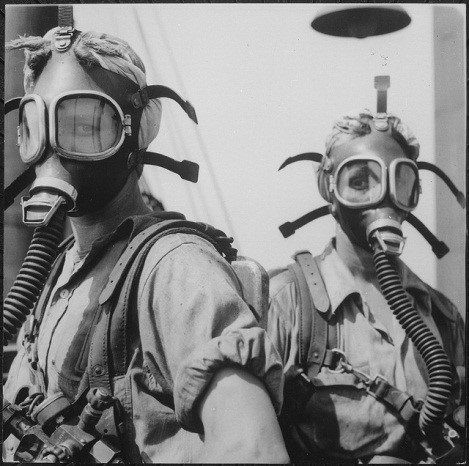
A minimal underpayment of wages to a single worker can morph into a claim potentially worth millions if magnified across a “class” of many workers subject to the same alleged employment practices.
A minimal underpayment of wages to a single worker can morph into a claim potentially worth millions if magnified across a “class” of many workers subject to the same alleged employment practices. Targeting larger employers, such “class action” suits have become big business in the courts across the United States, including California.
The success or failure of such a massive claim against United States Steel Corporation fell on the Supreme Court’s chosen definition of the term “changing clothes.” Sandifer, et al. v. United States Steel Corp. 200 United States Reports (U.S.) 310, 134 Supreme Court Reporter (S.Ct.) 870, decided January 27, 2014.
The issue was whether the safety gear employer U.S. Steel required workers to wear in its plants – including flame retardant jacket, protective pants, gloves and hard hat -- was actually “clothing” or not. Since their union had made an agreement with the company that time workers spent “changing clothes” at the beginning and end of the day would not be compensated, the employees who brought the suit claimed such protective gear was not “clothing” because these items were largely donned over garments worn for decency. Utilizing Webster’s New International Dictionary of the English Language (2nd edition, 1950) (Webster’s Second), the Court broadly defined “clothing” and related terms in favor of employer U.S. Steel, defeating the lawsuit.
U.S. Employment Law History: The case’s outcome required an examination of the history of employment law – and the tensions between organized labor and management -- in the United States. Toward the end of the Great Depression, Congress created the Fair Labor Standards Act (1938) (FLSA), governing minimum wages for the majority of employees nationwide. The Supreme Court has traditionally interpreted the reach of the FLSA broadly, for example finding that compensable work time includes “all time spent during which an employee is necessarily required to be on the employer’s premises, on duty or at a prescribed workplace” and that such time includes “preliminary activities after arriving … such as putting on aprons and overalls [and] removing shirts.”
Businesses pushed back in the later 1940s. Organized labor had used the Court’s expansive application of the FLSA to bring “portal” lawsuits for industry to compensate employees for time putting on and taking off work-related gear (“portals” being the entrances to mines). Yet, industry convinced Congress and President Truman that such broad application violated “long-established customs, practices, and contracts between employers and employees.” The Portal-to-Portal Act of 1947 thus excluded from mandatorily compensable time “activities which are preliminary to or postliminary to [a worker’s] principal activity or activities …”
The struggle continued. The Labor Department promptly claimed the Portal-to-Portal Act would not apply to (and thus companies would have to pay wages for) time “changing clothes” and “washing up and showering” if those activities were so directly related to the specific work of an employee that they were an “integral part of that employee’s principal activity.” In response, Congress amended the FLSA in 1949 to permit industry and labor to exclude “changing clothes” or “washing” from compensable work time through the terms or customs and practices encompassed by written collective bargaining agreements. 29 United States Code [U.S.C.] section 203(o).
When several workers brought this suit on behalf of some 800 current and former employees, U.S. Steel and the steelworkers union had maintained an agreement excluding “changing clothes” from compensable work time for some 50 years, since 1947.
Definition of “Clothes”: The employees in this case sought to define “clothes” as excluding items designed and used to protect against workplace hazards, citing a Webster’s definition that limited clothes to items worn for “decency or comfort.” Observing there is no meaningful distinction between items worn for protection or those worn for comfort, the Court in any event choose to apply another, broader definition of “clothes” from the same dictionary, items intended to cover some part of the human body or just plain “wearing apparel.”
Definition of “Changing”: Again, the employees attempted to use a Webster’s definition that suited their purposes, arguing that “changing clothes” only means substituting one article for another. They thus asserted that since protective gear went over a worker’s street clothes, a person wasn’t really changing into them. The Court again disagreed, using another Webster’s definition for “changing” that embraces two concepts, substituting and altering. Thus, to the Court, donning or doffing protective gear is within the definition of “changing clothes” as the items cover the body and, when worn, alter the person’s overall dress.
Outcome, the Art of a Supreme Court Decision: Wading into the 12 specific items of protective gear involved in this case, the Court found nine of them were “designed and used to cover the body and are commonly regarded as articles of dress” (including the jacket, pants, hood and hardhat). However, the Court found that three of them – safety glasses, earplugs and a respirator -- were not clothing, i.e., “articles of dress.”
This of course created the potential that courts would now have to determine how many minutes were spent putting or taking off the nine items (non-compensable) and how many were spent putting on or removing the other three (compensable). To avoid the need for such judicial micromanagement, the Court artfully punted, ruling that if the changing time involving all 12 items is mostly spent with the nine articles of clothing, then the entire period should be regarded as changing clothes.
While this decision concerned a single workplace practice and whether it was covered in a specific union contract, it does illustrate the great stakes that are involved when a company allegedly makes “little” errors that affect a large number of employees. Such situations can grow into class action claims on a scale that could place a business out of business. Thus, careful and continuing management attention to the details of employer timekeeping, rest and meal break periods, wage calculations and a host of other workplace procedures is essential.
Please contact attorneys Tim Bowles, Cindy Bamforth or Helena Kobrin for assistance on such critical matters.
A minimal underpayment of wages to a single worker can morph into a claim potentially worth millions if magnified across a “class” of many workers subject to the same alleged employment practices. Targeting larger employers, such “class action” suits have become big business in the courts across the United States, including California.
A minimal underpayment of wages to a single worker can morph into a claim potentially worth millions if magnified across a “class” of many workers subject to the same alleged employment practices. Targeting larger employers, such “class action” suits have become big business in the courts across the United States, including California.
The success or failure of such a massive claim against United States Steel Corporation fell on the Supreme Court’s chosen definition of the term “changing clothes.” Sandifer, et al. v. United States Steel Corp. 200 United States Reports (U.S.) 310, 134 Supreme Court Reporter (S.Ct.) 870, decided January 27, 2014.
The issue was whether the safety gear employer U.S. Steel required workers to wear in its plants – including flame retardant jacket, protective pants, gloves and hard hat — was actually “clothing” or not. Since their union had made an agreement with the company that time workers spent “changing clothes” at the beginning and end of the day would not be compensated, the employees who brought the suit claimed such protective gear was not “clothing” because these items were largely donned over garments worn for decency. Utilizing Webster’s New International Dictionary of the English Language (2nd edition, 1950) (Webster’s Second), the Court broadly defined “clothing” and related terms in favor of employer U.S. Steel, defeating the lawsuit.
U.S. Employment Law History: The case’s outcome required an examination of the history of employment law – and the tensions between organized labor and management — in the United States. Toward the end of the Great Depression, Congress created the Fair Labor Standards Act (1938) (FLSA), governing minimum wages for the majority of employees nationwide. The Supreme Court has traditionally interpreted the reach of the FLSA broadly, for example finding that compensable work time includes “all time spent during which an employee is necessarily required to be on the employer’s premises, on duty or at a prescribed workplace” and that such time includes “preliminary activities after arriving … such as putting on aprons and overalls [and] removing shirts.”
Businesses pushed back in the later 1940s. Organized labor had used the Court’s expansive application of the FLSA to bring “portal” lawsuits for industry to compensate employees for time putting on and taking off work-related gear (“portals” being the entrances to mines). Yet, industry convinced Congress and President Truman that such broad application violated “long-established customs, practices, and contracts between employers and employees.” The Portal-to-Portal Act of 1947 thus excluded from mandatorily compensable time “activities which are preliminary to or postliminary to [a worker’s] principal activity or activities …”
The struggle continued. The Labor Department promptly claimed the Portal-to-Portal Act would not apply to (and thus companies would have to pay wages for) time “changing clothes” and “washing up and showering” if those activities were so directly related to the specific work of an employee that they were an “integral part of that employee’s principal activity.” In response, Congress amended the FLSA in 1949 to permit industry and labor to exclude “changing clothes” or “washing” from compensable work time through the terms or customs and practices encompassed by written collective bargaining agreements. 29 United States Code [U.S.C.] section 203(o).
When several workers brought this suit on behalf of some 800 current and former employees, U.S. Steel and the steelworkers union had maintained an agreement excluding “changing clothes” from compensable work time for some 50 years, since 1947.
Definition of “Clothes”: The employees in this case sought to define “clothes” as excluding items designed and used to protect against workplace hazards, citing a Webster’s definition that limited clothes to items worn for “decency or comfort.” Observing there is no meaningful distinction between items worn for protection or those worn for comfort, the Court in any event choose to apply another, broader definition of “clothes” from the same dictionary, items intended to cover some part of the human body or just plain “wearing apparel.”
Definition of “Changing”: Again, the employees attempted to use a Webster’s definition that suited their purposes, arguing that “changing clothes” only means substituting one article for another. They thus asserted that since protective gear went over a worker’s street clothes, a person wasn’t really changing into them. The Court again disagreed, using another Webster’s definition for “changing” that embraces two concepts, substituting and altering. Thus, to the Court, donning or doffing protective gear is within the definition of “changing clothes” as the items cover the body and, when worn, alter the person’s overall dress.
Outcome, the Art of a Supreme Court Decision: Wading into the 12 specific items of protective gear involved in this case, the Court found nine of them were “designed and used to cover the body and are commonly regarded as articles of dress” (including the jacket, pants, hood and hardhat). However, the Court found that three of them – safety glasses, earplugs and a respirator — were not clothing, i.e., “articles of dress.”
This of course created the potential that courts would now have to determine how many minutes were spent putting or taking off the nine items (non-compensable) and how many were spent putting on or removing the other three (compensable). To avoid the need for such judicial micromanagement, the Court artfully punted, ruling that if the changing time involving all 12 items is mostly spent with the nine articles of clothing, then the entire period should be regarded as changing clothes.
While this decision concerned a single workplace practice and whether it was covered in a specific union contract, it does illustrate the great stakes that are involved when a company allegedly makes “little” errors that affect a large number of employees. Such situations can grow into class action claims on a scale that could place a business out of business. Thus, careful and continuing management attention to the details of employer timekeeping, rest and meal break periods, wage calculations and a host of other workplace procedures is essential.
Please contact attorneys Tim Bowles, Cindy Bamforth or Helena Kobrin for assistance on such critical matters.
May 9, 2014

There are economic risks for an employer who misclassifies a worker who should be employed as an independent contractor.
There are economic risks for an employer who misclassifies a worker who should be employed as an independent contractor. A wide range of California and federal agencies have the power to impose back taxes, interest and penalties upon companies who unsuccessfully attempt the tactic.
California placed greater deterrents on the practice in 2012. Labor Code sections 226.8 and 2753 permit certain officials or a court to impose civil penalties between $5,000 and $25,000 for each instance of willful misclassification against both employers and any individual adviser (other than a lawyer) who “knowingly advises an employer to treat an individual as an independent contractor to avoid employee status”.
The agency or court directing such payment must also direct the business or person to post a notice on its website for one year, specifying that the company has violated the law, has had to change its business practices in order to cease doing so, and that employees who believe they were also misclassified may contact the Labor and Workforce Development Agency. See also,
“Personal Liability and Mandatory On-Line Flogging for Misclassifying Employees as Independent Contractors.”
Boiled down, employers can impose their oversight and control over an employee’s daily production while independent contractors are, well, independent, free to provide services to the hiring party by any means the contractor chooses. However, there are never any absolutes. Determination of “employed” or “contracted” status is an exercise in comparing and balancing many factors, sometimes conflicting, on the degree and manner of control. Two recent California appeals court decisions illustrate how this is always a case-by-case proposition.
In Bain v. Tax Reducers, Inc. (2013) 219 Cal.App.4th 110, the California Court of Appeal found that an accountant working for a tax preparation and bookkeeping firm was an employee and not an independent contractor as the company had classed him. The court noted the firm required the accountant to:
The court also pointed out that:
By contrast, in Beaumont-Jacques v. Farmers Group, Inc. (2013) 217 Cal.App.4th 1138, another California Court of Appeal panel found that a district manager for a group of related insurance companies was an independent contractor. The manager hired agents, who had to be approved by the company, and she trained and motivated the agents to sell the company’s products. Most importantly, the court found that even though she had to follow the company’s “‘normal business practice’ and ‘goals and objectives,’” the company did not control “to any meaningful degree the means by which [she] performed and accomplished her duties as a district manager.”
The court also observed that the manager:
The court found her properly classified as an independent contractor even though she was required to and did prepare reports and attend meetings of district managers.
As a relatively few pennies of prevention is clearly more sensible than the many thousands that it may cost to resolve a classification gone wrong, businesses should confirm any contractor relationship is soundly defined and justified as independent in practice. For assistance, please contact attorneys Tim Bowles, Cindy Bamforth or Helena Kobrin.
See also, “Independent Contractors and Employees Avoiding Misclassification of Hired Workers in California.”
United Parcel Service, Inc. (UPS) essentially “won” an age discrimination case when a California jury awarded an ex-employee only $27,280 in damages.
United Parcel Service, Inc. (UPS) essentially “won” an age discrimination case when a California jury awarded an ex-employee only $27,280 in damages. That relative victory was short-lived, erased by the trial judge awarding the worker $700,000 for her attorney fees. The appeals court recently upheld this decision. Muniz v. United Parcel Service, Inc. (9th Cir. 2013) 738 F.3d 214
Kim Muniz sued employer UPS alleging, in part, that supervisor Ron Meyer demoted her based on gender and age discrimination and retaliation in violation of California’s Fair Employment and Housing Act (FEHA), California Government Code 12900 and following sections. UPS argued it had promoted Muniz beyond her level of competence and Meyer was simply the first to recognize Muniz’s failings.
The jury found Muniz’s gender wrongfully motivated UPS to demote her and was a substantial factor in causing her harm. However, while Muniz requested damages totaling over $700,000, the jury only awarded her $27,280 -- $9,990 for lost earnings, $7,300 for past medical expenses and $9,990 for past non-economic losses.
Both sides claimed victory and sought payment from the other for attorney fees under FEHA, Government Code section 12965(b). The court found Muniz the prevailing party, at which point she requested $2,000,000 in attorneys’ fees (some 73 times the damages award). The district court judge then awarded her some $700,000, or 26 times the jury’s damage award.
UPS appealed the $700,000 assessment, claiming Muniz didn’t deserve that much after her very limited success at trial. However, the appeals court was unsympathetic, ruling that “a trial court does not under California law abuse its discretion simply by awarding fees in an amount higher, even very much higher, than the damage awarded, where successful litigation causes conduct which the FEHA was enacted to deter [to be] exposed and corrected.’”
This case underscores that employers must consider the possibility of attorney fee awards to prevailing employees in FEHA discrimination cases even if the worker’s claims appear to be relatively weak. Of course, to reduce the potential for employee claims as much as possible, employers should take effective measures to prevent unlawful workplace conduct. Employers should also always promptly and thoroughly investigate all complaints of discrimination, harassment or retaliation and take effective remedial action as necessary. Company managers must always act as part of the solution to any such claim and, whether out of neglect or other ill-advised reaction, never place themselves in a position where they can be perceived as part of the problem.
For more information or assistance, please contact the Law Offices of Timothy Bowles, 626-583-6600 or visit our .

Effective April 18, 2014, the Equal Employment Opportunity Commission (EEOC) doubled the penalty for an employer’s failure to post that agency’s “ Equal Employment Opportunity is the Law ” notice, from $110 to $210 per violation.
Effective April 18, 2014, the Equal Employment Opportunity Commission (EEOC) doubled the penalty for an employer’s failure to post that agency’s “Equal Employment Opportunity is the Law” notice, from $110 to $210 per violation. See, 29 Code of Federal Regulations (CFR) section 1601.30(b).
The required notice includes the basics for:
Covered employers include all private companies employing at least 15 individuals and all federal contractors and subcontractors. The notice must be posted prominently for viewing by employees and job applicants, e.g., personnel office, lunchroom or company bulletin board.
For more information concerning required workplace notices, contact one of our attorneys, Timothy Bowles, Cindy Bamforth or Helena Kobrin.

Effective April 18, 2014, theEqual Employment Opportunity Commission(EEOC) doubled the penalty for an employer’s failure to post that agency’s “Equal Employment Opportunity is the Law” notice, from $110 to $210 per violation.See,29 Code of Federal Regulations (CFR) section 1601.30(b).
Effective April 18, 2014, the Equal Employment Opportunity Commission (EEOC) doubled the penalty for an employer’s failure to post that agency’s “Equal Employment Opportunity is the Law” notice, from $110 to $210 per violation.See, 29 Code of Federal Regulations (CFR) section 1601.30(b).
The required notice includes the basics for:
The 1964 Civil Rights Act (Title VII) (prohibits employment discrimination based on a protected class including race, color, religion, sex [including pregnancy] and national origin);
The Americans with Disabilities Act (ADA) (prohibits workplace disability discrimination); and
The Genetic Information Non-Discrimination Act (GINA) (prohibits workplace discrimination based on genetic information).
Covered employers include all private companies employing at least 15 individuals and all federal contractors and subcontractors. The notice must be posted prominently for viewing by employees and job applicants, e.g., personnel office, lunchroom or company bulletin board.
For more information concerning required workplace notices, contact one of our attorneys, Timothy Bowles, Cindy Bamforth or Helena Kobrin.
Despite staffing cuts, hiring freezes and sequestration woes, the U.S. Equal Employment Opportunity Commission (EEOC) recovered a record $372.1 million for its private sector workplace discrimination charges -- $6.7 million more than it...
Despite staffing cuts, hiring freezes and sequestration woes, the U.S. Equal Employment Opportunity Commission (EEOC) recovered a record $372.1 million for its private sector workplace discrimination charges -- $6.7 million more than it recovered the year prior.
The EEOC enforces federal anti-discrimination in employment laws. According to the EEOC’s Fiscal Year 2013 Performance and Accountability Report (PAR), the EEOC received a 93,727 private sector discrimination charges. Although some 6,000 less than the prior three years, it still ranks among the agency’s top five.
The EEOC has continued to focus on systemic enforcement, targeting unlawful patterns, practices or policies which broadly impact an industry, profession, company or geographic area. Systemic practices include discriminatory barriers in recruitment and hiring; discriminatory restricted access to management training programs and to high level jobs; exclusion of qualified women from traditionally male dominated fields of work; unlawful pre-employment inquiries aimed at detecting disabilities; and age discrimination by reductions in a workforce.
The EEOC reports 300 systemic investigations in fiscal 2013 resulting in 63 settlements or conciliation agreements totaling some $40 million. Agency lawsuits filed for systemic enforcement represented over 20 percent of all active suits in that 2013, the largest proportion since tracking started in 2006. The EEOC also obtained more than $160.9 million in monetary benefits for complaining employees through mediation resolutions, the second highest level in the agency’s history.
If you as employer don’t wish to contribute to any further groundbreaking statistics, we can help. For more information concerning California or federal employment laws, contact one of our attorneys Tim Bowles, Cindy Bamforth or Helena Kobrin.
27 Feb, 2014
A recent California Court of Appeal case – Sanchez v. Swissport, Inc. (February 21, 2014), 213 California Appellate Reporter, fourth series (Cal.App.4 th ) 1331 – confirms that employers must comply with both the Pregnancy Disability Leave...
A recent California Court of Appeal case – Sanchez v. Swissport, Inc. (February 21, 2014), 213 California Appellate Reporter, fourth series (Cal.App.4th) 1331 – confirms that employers must comply with both the Pregnancy Disability Leave Law (PDLL) law and the wider protections for women disabled due to pregnancy under in the Fair Employment and Housing Act (FEHA).
The PDLL requires any employer with four or more persons on payroll to provide a worker up to four months of unpaid leave for her pregnancy, delivery and newborn care. Pregnant employees have those rights even if they must go out on such leave within days of taking on new employment. These protections extend to full time and part-time workers alike.
The FEHA also requires any employer with four or more employees to provide disabled individuals equal employment opportunity if such persons are able to perform the essential functions of the job position in question with reasonable accommodation as necessary. However, an employer is not required to accommodate such a worker if such action would create undue hardship on that company’s operations. For example, a business may decline to hire a blind person for a truck driving position (since accommodation would be too burdensome on the company) but likely may not decline to hire a qualified computer programmer because he or she cannot walk (since accommodation for sitting at a terminal is probably a simple, inexpensive matter).
In the above case, Ana Sanchez alleged Swissport employed her for some two years (mid-2007 to mid-2009). In early 2009, she requested and received a temporary leave for medically required time away on her high-risk pregnancy. While she then had to be away from the job until that October to give birth and attend to newborn care – obviously more than four months later -- Ms. Sanchez alleged that “very soon after she was scheduled to give birth, she would have returned to work, with the need for only minimal accommodations, if any, in order to perform the essential function[s] of her job.” 213 Cal.App.4th at 1334-1335.
Ms. Sanchez claimed that Swissport nevertheless terminated her in July on the company’s contention it had no further obligation to accommodate her once she had been absent for the four months under the PDLL. Ms. Sanchez also asserted that prior to her termination, Swissport never contacted her “to engage her in a timely, good faith interactive process in order to identify available accommodations, such as the extended leave of absence she had requested, so that she could remain employed.” Finally, she alleged that “the reasonable accommodations necessitated by her pregnancy and pregnancy-related disabilities would not have created an undue hardship upon [Swissport], nor would said accommodations have adversely impacted, in any way, the operation of [its] business.” 213 Cal.App.4th at 1335.
Swissport convinced the trial judge to dismiss the case, on its claim that its obligations to accommodate Ms. Sanchez’s pregnancy ended after it provided the four month leave. The California Court of Appeal disagreed and allowed Ms. Sanchez to continue her suit. An employer’s compliance with PDLL does not fulfill its obligations to comply with the wider disability protections under the FEHA. “We conclude that … the plain language of the PDLL … makes clear that its remedies augment, rather than supplant, those set forth elsewhere in the FEHA. By its terms, the PDLL provides that its remedies are ‘in addition to’ those governing pregnancy, childbirth, and pregnancy-related medical conditions set forth in the FEHA.” 213 Cal.App.4th at 1338.
This decision underscores the importance of employer’s open and constructive communication with any worker seeking time away from the job due to pregnancy, child birth or newborn care. It is a business’s obligation to ensure it seeks to understand and reasonably accommodate such conditions short of undue hardship to its operations. This is particularly critical in instances where an employee is requesting such accommodations after she has expended her maximum four month time away under the PDLL.
Please contact attorneys Tim Bowles, Cindy Bamforth, or Helena Kobrin for assistance in this highly sensitive area of employee relations.
A recent California Court of Appeal case –Sanchez v. Swissport, Inc. (February 21, 2014), 213 California Appellate Reporter, fourth series (Cal.App.4th) 1331– confirms that employers must comply with both thePregnancy Disability Leave Law(PDLL) law and the wider protections for women disabled due to pregnancy under in theFair Employment and Housing Act(FEHA).
A recent California Court of Appeal case – Sanchez v. Swissport, Inc. (February 21, 2014), 213 California Appellate Reporter, fourth series (Cal.App.4th) 1331 – confirms that employers must comply with both the Pregnancy Disability Leave Law (PDLL) law and the wider protections for women disabled due to pregnancy under in the Fair Employment and Housing Act (FEHA).
The PDLL requires any employer with four or more persons on payroll to provide a worker up to four months of unpaid leave for her pregnancy, delivery and newborn care. Pregnant employees have those rights even if they must go out on such leave within days of taking on new employment. These protections extend to full time and part-time workers alike.
The FEHA also requires any employer with four or more employees to provide disabled individuals equal employment opportunity if such persons are able to perform the essential functions of the job position in question with reasonable accommodation as necessary. However, an employer is not required to accommodate such a worker if such action would create undue hardship on that company’s operations. For example, a business may decline to hire a blind person for a truck driving position (since accommodation would be too burdensome on the company) but likely may not decline to hire a qualified computer programmer because he or she cannot walk (since accommodation for sitting at a terminal is probably a simple, inexpensive matter).
In the above case, Ana Sanchez alleged Swissport employed her for some two years (mid-2007 to mid-2009). In early 2009, she requested and received a temporary leave for medically required time away on her high-risk pregnancy. While she then had to be away from the job until that October to give birth and attend to newborn care – obviously more than four months later — Ms. Sanchez alleged that “very soon after she was scheduled to give birth, she would have returned to work, with the need for only minimal accommodations, if any, in order to perform the essential function[s] of her job.” 213 Cal.App.4th at 1334-1335.
Ms. Sanchez claimed that Swissport nevertheless terminated her in July on the company’s contention it had no further obligation to accommodate her once she had been absent for the four months under the PDLL. Ms. Sanchez also asserted that prior to her termination, Swissport never contacted her “to engage her in a timely, good faith interactive process in order to identify available accommodations, such as the extended leave of absence she had requested, so that she could remain employed.” Finally, she alleged that “the reasonable accommodations necessitated by her pregnancy and pregnancy-related disabilities would not have created an undue hardship upon [Swissport], nor would said accommodations have adversely impacted, in any way, the operation of [its] business.” 213 Cal.App.4th at 1335.
Swissport convinced the trial judge to dismiss the case, on its claim that its obligations to accommodate Ms. Sanchez’s pregnancy ended after it provided the four month leave. The California Court of Appeal disagreed and allowed Ms. Sanchez to continue her suit. An employer’s compliance with PDLL does not fulfill its obligations to comply with the wider disability protections under the FEHA. “We conclude that … the plain language of the PDLL … makes clear that its remedies augment, rather than supplant, those set forth elsewhere in the FEHA. By its terms, the PDLL provides that its remedies are ‘in addition to’ those governing pregnancy, childbirth, and pregnancy-related medical conditions set forth in the FEHA.” 213 Cal.App.4th at 1338.
This decision underscores the importance of employer’s open and constructive communication with any worker seeking time away from the job due to pregnancy, child birth or newborn care. It is a business’s obligation to ensure it seeks to understand and reasonably accommodate such conditions short of undue hardship to its operations. This is particularly critical in instances where an employee is requesting such accommodations after she has expended her maximum four month time away under the PDLL.
Please contact attorneys Tim Bowles, Cindy Bamforth, or Helena Kobrin for assistance in this highly sensitive area of employee relations.