Click here to subscribe to our Bowles Law e-letter


Click here to subscribe to our Bowles Law e-letter
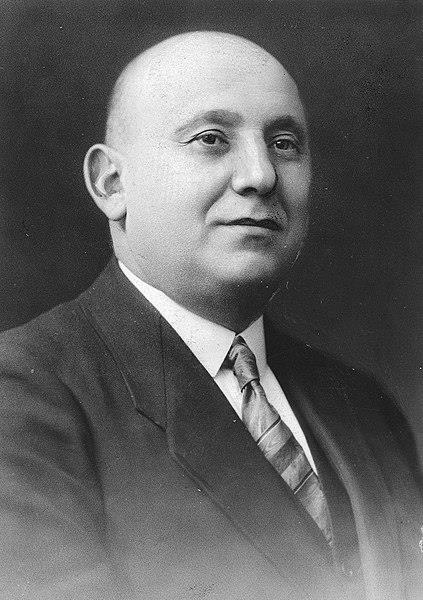
Bald men – at least in the United Kingdom – can seek recourse against unwelcome workplace jokes or taunts about their follicly-challenged appearance.
Bald men – at least in the United Kingdom – can seek recourse against unwelcome workplace jokes or taunts about their follicly-challenged appearance.
The claimant asserted that his supervisor at The British Bung Company, a wooden cask closures manufacturer, called him a “bald c*nt.” Although he claimed no issue with the expletive, the worker did not appreciate the comment on his appearance.
Linking baldness to gender (male), the court held the remark crossed the line, creating an intimidating, hostile, degrading, humiliating, or offensive environment.
Writing for the three-judge panel, Judge Brain likened such unwanted remarks on male appearance to comments on the size of a woman’s breasts. “There is a connection between the word “bald” on the one hand and the protected characteristic of sex on the other… [A]s all three members of the Tribunal will vouchsafe, baldness is much more prevalent in men than women. We find it to be inherently related to sex. (In contrast, we accept that baldness affects [predominantly] adult males of all ages so is inherently not a characteristic of age).”
Under California and federal law, sexual harassment is a form of unlawful workplace discrimination, singling out individuals due to gender. Unwelcome and inappropriate conduct is illegal whether aimed at men, women, or individuals of the opposite or same sex. The harassment does not require proof of sexual desire.
Take-Aways:
For further information, please contact Tim Bowles, Cindy Bamforth or Helena Kobrin.
See also:
Cindy Bamforth
May 26, 2022

To promote business image, California employers may dictate reasonable workplace dress and grooming standards . Yet, managers cannot be dictators if certain protected worker preferences are in play.
To promote business image, California employers may dictate reasonable workplace dress and grooming standards. Yet, managers cannot be dictators if certain protected worker preferences are in play.
Policy may require employees to dress in a neat and well-presented manner and to report to work well-groomed and clean. Employers can require uniforms and direct their good maintenance and cleaning. They may also prohibit or limit use of perfumes or other scented body lotions for those working in physical proximity with others. Policy may bar displayed tattoos and body piercings.
Yet, written standards must also recognize and management must seek to reasonably accommodate certain individual conditions or choices protected by law, including:
Take-Aways:
Company policy can and should direct dress and grooming standards supporting that business’s commercial values while recognizing the prerogative of workers to seek and maintain protected exceptions. Managers must have sufficient training and skill to address, document and resolve requests for reasonable accommodation.
See also:
hairstyle discrimination banned - new California law takes effect January 1, 2020(July 11, 2019)
dress for success – how to address the employee dress Code(April 29, 2018)
new transgender rights in the workplace (expanded California regulations effective July 1, 2017) (July 21, 2017)
Tim Bowles
May 20, 2022

The California Labor Commissioner has again looked under the hood of the car wash industry, citing Torrance Car Wash more than $800,000 for wage theft violations affecting 35 workers, including minimum wage, overtime and meal and rest...
The California Labor Commissioner has again looked under the hood of the car wash industry, citing Torrance Car Wash more than $800,000 for wage theft violations affecting 35 workers, including minimum wage, overtime and meal and rest breaks.
Investigators found the employer failed to pay workers for all hours worked, required on-time workers to wait before punching in, and did not provide required meal and rest breaks.
In an April 27, 2022 release, the Commissioner stated: “The business owners violated labor laws to avoid paying workers the wages they were owed and refused to cooperate with our investigation by withholding documents during our inspection. My office had to get additional warrants to conduct our inspection of the business.”
The Commissioner’s office was prompted to investigate after receiving a referral from the CLEAN Car Wash Campaign, a pro-union coalition that supports car wash workers.
Take-Aways:
Citations of this magnitude can destroy a business. Employers must ensure continuing compliance with California’s wage laws.
For further information, please contact Tim Bowles, Cindy Bamforth or Helena Kobrin.
See also:
Cindy Bamforth
May 18, 2022

Those who dread that mass of co-workers annually aiming a horrible rendition of “happy birthday” in his or her direction can now take heart. They are not alone.
Those who dread that mass of co-workers annually aiming a horrible rendition of “happy birthday” in his or her direction can now take heart. They are not alone. A Kentucky jury has awarded a man $450,000 for his employer’s alleged failure to prevent a panic attack triggered by an at-work celebration of his birthday.
In Berling v. Gravity Diagnostics, Kenton County Circuit Court No. 19-CI-01631, plaintiff claimed an anxiety disorder protected against disability discrimination by Kentucky law. A lab technician for employer Gravity Diagnostics, he alleged that a few days in advance of his birthday he told the office manager of his condition and asked the company to excuse him from its practice of throwing parties for its employees.
Mr. Berling asserted that on August 7, 2019 the company nevertheless permitted a lunch room birthday celebration for him, triggering an attack and forcing him to abruptly leave the office and spend the meal time in his car. He further alleged that:
Similar to federal and California standards, Gravity Diagnostics was obligated to consider and provide reasonable accommodations to disabled workers and to refrain from retaliating against those asserting such rights. After a two-day trial, the jury found:
The California Fair Employment and Housing Act (FEHA) requires employers of five or more employees to provide reasonable accommodation for individuals with a physical or mental disability to apply for jobs and to perform the essential functions of their jobs unless it would cause an undue hardship.
Employers must initiate an “interactive process” when an applicant or employee requests reasonable accommodation for a claimed disability. The employer must also offer to initiate an interactive process when management becomes aware of the possible need for an accommodation. This awareness might come through a third party, by observation, or because the employee has exhausted leave benefits but still needs reasonable accommodation.
Take-Aways:
The interactive process to determine whether reasonable accommodation is feasible should be well documented, demonstrating an individualized assessment of both the job and the specific physical or mental limitations of the individual. As the Berling case demonstrates, consultation with experienced legal counsel is a good idea here.
For further information, please contact Tim Bowles, Cindy Bamforth or Helena Kobrin.
See also:
Tim Bowles
May 14, 2022

Pending Assembly Bill (AB) 2182 would add “family responsibilities”— “the obligations of an employee or applicant to provide care for a minor child or care recipient” – to the ever-growing list of classes protected from discrimination by...
Pending Assembly Bill (AB) 2182 would add “family responsibilities”— “the obligations of an employee or applicant to provide care for a minor child or care recipient” – to the ever-growing list of classes protected from discrimination by employers with five or more employees under the Fair Employment and Housing Act.
Under proposed new Government Code 12940.5, unless there is an undue hardship, employers would have to make accommodations for employees to provide such care, including:
Employers that would like to provide feedback on this bill can contact their Assembly members.
Take-Aways:
Employers of five or more should watch this blog or signup for our E-letter for information on this potential law and will need to accommodate employees with family responsibilities should it pass.
For further information, please contact Tim Bowles, Cindy Bamforth or Helena Kobrin.
See also:
Helena Kobrin
May 11, 2022

California employers are still not out of the heavily-regulated pandemic woods. On April 21, 2022, the Occupational Safety and Health Standards Board approved the third amendment to Cal/OSHA’s COVID-19 Prevention Emergency Temporary...
California employers are still not out of the heavily-regulated pandemic woods. On April 21, 2022, the Occupational Safety and Health Standards Board approved the third amendment to Cal/OSHA’s COVID-19 Prevention Emergency Temporary Standards (ETS).
Effective May 6, 2022 through December 31, 2022, the revised ETS applies to most California workers not covered by the Aerosol Transmissible Diseases standard.
Important revisions to the current ETS include:
Important ETS provisions that remain unchanged include requirements to:
Cal/OSHA will soon publish updated FAQs and will presumably issue an updated model COVID-19 Prevention Program in English and Spanish.
For further information, please contact Tim Bowles, Cindy Bamforth or Helena Kobrin.
See also:
Cindy Bamforth
May 6, 2022

The California Labor Commissioner has cited Foster Farms and its staffing agencies $3,783,800 for failing to notify nearly 3,500 temp workers of COVID-19 supplemental paid sick leave benefits (SPSL).
The California Labor Commissioner has cited Foster Farms and its staffing agencies $3,783,800 for failing to notify nearly 3,500 temp workers of COVID-19 supplemental paid sick leave benefits (SPSL).
Employers of more than 25 must provide written notice to all full-time employees, such as the Labor Commissioner’s model notice in English and Spanish, of their rights to receive pandemic-related SPSL. See, Find Out What’s New in 2022 Paid COVID Sick-Leave Expanded: California’s New Variant: Up to 80 Hours Paid Time Away (February 25, 2022).
In an April 26, 2022 release, the Labor Commissioner stated: “Employers who contract with staffing agencies have a joint responsibility to protect the health of their workers. Employers are obligated to ensure that employees are made aware of sick leave benefits intended to protect workers, their families and the public from the spread of COVID-19.”
For further information, please contact Tim Bowles, Cindy Bamforth or Helena Kobrin.
See also:
Helena Kobrin
May 5, 2022

California Assembly Bill (AB) 2932 seeks to redefine the “workweek” from 40 hours to 32 hours for employers with more than 500 on payroll.
California Assembly Bill (AB) 2932 seeks to redefine the “workweek” from 40 hours to 32 hours for employers with more than 500 on payroll.
Under existing California law, employers must pay whichever total overtime hours are greater over the seven-day workweek — weekly (over 40) or cumulative daily (over eight/day).
The proposed new law would require affected employers to pay overtime after 32 work hours/week and prohibits regular pay rate reduction in response.
If enacted, California would be the first state in the U.S. to adopt a less-than-40-hour workweek, joining countries such as Australia (38), Belgium (38) and France (35).
In opposition, the California Chamber of Commerce stated: “California is one of the only states with the eight hours per day requirement. The remaining states all comply with the federal Fair Labor Standards Act (FLSA), which only requires overtime after 40 hours in a week. Now, California is proposing to be the only state to differ from the FLSA in two ways: both the daily eight-hour requirement and lowering the 40-hour weekly overtime threshold to 32 hours. That is a minimum 10% increase in wages per employee per week.”
Take-Aways:
We’ll continue to monitor this bill. California employers of all sizes must continue to properly track and pay daily and weekly overtime. Those concerned over the prospective change should let their legislators know.
For further information, please contact Tim Bowles, Cindy Bamforth or Helena Kobrin.
See also:
Cindy Bamforth
April 28, 2022

AB 2188 , pending in the California Assembly, seeks to prohibit employers, other than those in building and construction trades, from discriminating against workers for: off-the-job cannabis use; and non-psychoactive cannabis metabolites...
AB 2188, pending in the California Assembly, seeks to prohibit employers, other than those in building and construction trades, from discriminating against workers for:
The proposed law does not protect employees stoned on-the-job, thus largely preserving an employer’s right to maintain a drug-free workplace, including by testing required under federal law (e.g., in the transportation industry). However, a long-list of business groups, including the California Chamber of Commerce, oppose the measure for limiting available screening tools and effectively barring pre-employment screening.
While the Labor and Employment Committee cut the bill back substantially earlier this month, it continues its way through the legislature.
Take-Aways:
Stay tuned. For now, using traditional drug testing methods at legally-permitted times, employers can continue to decline employment to marijuana-using applicants and to exclude drug-impaired workers from the workplace. Constituents may of course make their AB 2188 concerns known to their legislators.
For further information, please contact Tim Bowles, Cindy Bamforth or Helena Kobrin.
See also:
Helena Kobrin
April 22, 2022