Click here to subscribe to our Bowles Law e-letter


Click here to subscribe to our Bowles Law e-letter

Now with over 40 million residents and some 950,000 employers , California leads the nation in the size and diversity of its workforce.
Now with over 40 million residents and some 950,000 employers, California leads the nation in the size and diversity of its workforce. Every employee in the state holds protections against discrimination, harassment and retaliation, primarily through the Fair Employment and Housing Act (FEHA).
Such workplace rights were long in coming and hard fought. At statehood (1850), California was rife with racial inequities. The new state legislature stripped the native populations of land claims, prohibited African Americans from homesteading public land and barred Chinese children from public school.
Over the next 100 years, California’s minority population continued to boom despite repeated discriminatory backlash from the white holders of power.
From 1900 to 1930, roughly 10% of Mexico’s population migrated to California and other southwestern states. During World War II, 500,000 African Americans migrated to California to work in the state’s booming wartime economy. Through the war, Mexican and African American laborers replaced white workers who had gone off to fight. When the war ended, however, many of these laborers were dismissed. Those able to find employment were relegated to menial, low-paying positions. Job discrimination against minorities remained widespread.
In response, state lawmakers introduced the Fair Employment Practices Act (1946), proposing a ban on employment discrimination based on race, religion, color or national origin. However, it took 13 years, to 1959, to enact it. That same year, California’s Unruh Civil Rights Act also became law, entitling “all persons to full and equal accommodations, advantages, facilities, privileges or services in all business establishments, including both private and public entities.”
Regardless, local governments retained the power to restrict minorities from living in California communities. The state legislature responded with the Rumford Fair Housing Act (1963). The California Real Estate Association countered with Proposition 14 to nullify the Rumford Act and restore landlord power to deny housing to anyone. Although approved by 65% of the voters, the California Supreme Court ruled Prop 14 unconstitutional, restoring the Rumford Act.
In 1980, the Fair Employment Practices Act and Rumford Housing Act were combined and renamed the Fair Employment and Housing Act, banning employment and housing discrimination in California. The FEHA also established an enforcement agency, the Department of Fair Employment and Housing (DFEH), with the power to investigate, mediate and prosecute unlawful discrimination, harassment and retaliation complaints. The DFEH is now the largest civil rights agency in the country.
The DFEH also serves as an information and resource center for employers and employees alike. For instance, the agency has developed a library of required notices and circulars on many of FEHA’s critical aspects, for example:
The FEHA and its federal counterparts, including the Civil Rights Act of 1964 and the Americans with Disabilities Act (1990), stem from the premise that persons should be judged for their competence on the job and not by factors of race, religion and the many other characteristics deemed arbitrary and irrelevant to workplace qualification.
See also,
For more information on such matters, please contact Tim Bowles, Cindy Bamforth or Helena Kobrin.
Tim Bowles
March 26, 2021

On March 11, 2021, President Biden signed the American Rescue Plan Act of 2021 (ARPA), extending payroll tax credits provided under the federal Families First Coronavirus Response Act ( FFCRA ) into Fall, 2021.
On March 11, 2021, President Biden signed the American Rescue Plan Act of 2021 (ARPA), extending payroll tax credits provided under the federal Families First Coronavirus Response Act (FFCRA) into Fall, 2021.
The FFCRA, which expired December 31, 2020, required two types of COVID-related paid leave:
(1) up to 80 hours of emergency paid sick leave on any one of six criteria (subject to a quarantine or isolation order; advised by a health care provider to self-quarantine; experiencing symptoms, etc.) (Emergency PSL); and
(2) up to 10 weeks more of partially paid emergency family and medical leave to care for a child whose school or place of care is closed due to COVID-19 related reasons (E-FMLA Leave).
See, Federal Coronavirus Workplace Relief - New Paid Sick Leave, Family Leave and Tax Credits Effective April 2, 2020 (March 23, 2020)
To promote an employer’s continuing voluntary provision of such paid leave benefits, the ARPA permits participating businesses to take tax credits on expanded sets of criteria for these two types of COVID-related covered leaves between April 1, 2021 and September 30, 2021.
Employers who choose to provide such optional benefits must comply with all applicable ARPA rules to qualify for the tax credits, including:
Thus, participating employers should update their policies and forms and consult with legal and tax advisors for assistance complying with these provisions of the ARPA.
See also:
For more information, please contact Tim Bowles, Cindy Bamforth or Helena Kobrin.
Cindy Bamforth
March 25, 2021

With only limited exceptions, Cal/OSHA ’s mandatory COVID-19 Emergency Temporary Standards (ETS) (effective November, 2020) apply to all California employers.
With only limited exceptions, Cal/OSHA’s mandatory COVID-19 Emergency Temporary Standards (ETS) (effective November, 2020) apply to all California employers. See, What’s New in 2021: Infection Prevention Direction CAL/OSHA COVID-19 Emergency Temporary Standards (February 5, 2021)
Exclusion Pay: The ETS require covered employers to provide employee pay and to maintain seniority and all other rights and benefits during absences due to:
The ETS and their frequently-asked questions advise:
See also:
For more information, please contact Tim Bowles, Cindy Bamforth or Helena Kobrin.
Cindy Bamforth
March 18, 2021
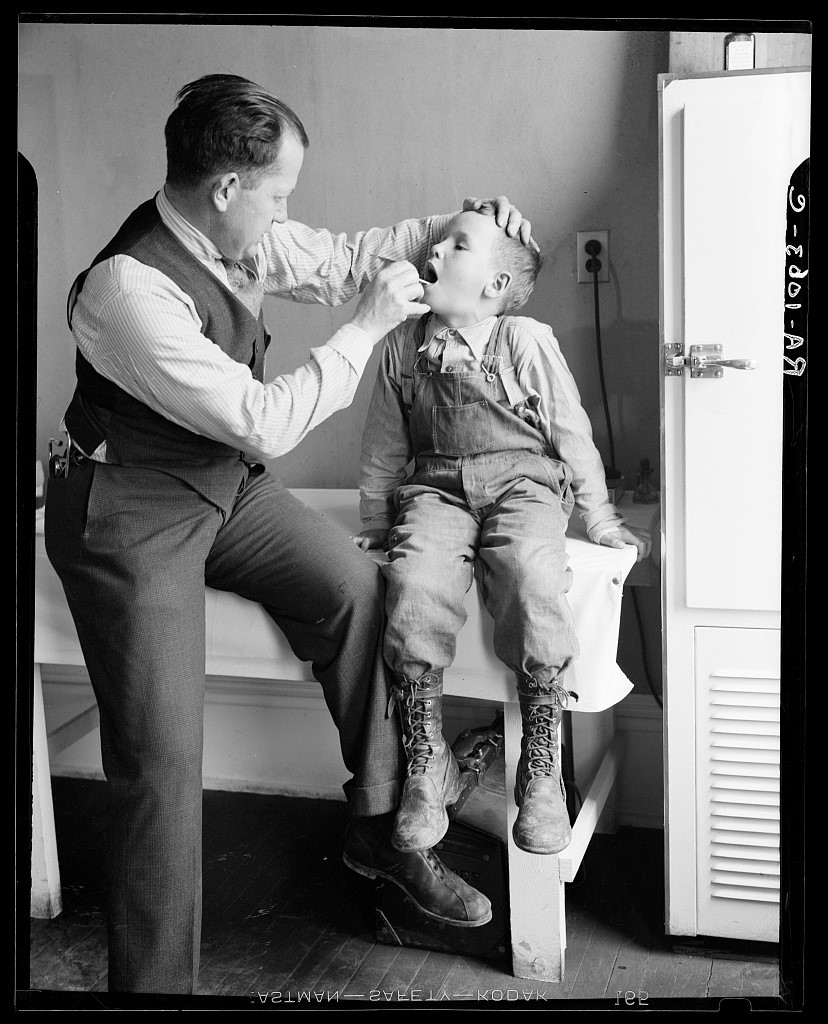
Under California Labor Code § 515.6 , licensed physicians and surgeons are exempt from overtime compensation so long as they are paid minimum hourly compensation.
Under California Labor Code § 515.6, licensed physicians and surgeons are exempt from overtime compensation so long as they are paid minimum hourly compensation. Effective January 1, 2021, the Department of Industrial Relations increased that rate from $84.79 to $86.49.
Employers must accurately track an eligible person’s hours worked and pay at least that minimum/hour to avoid paying California’s overtime premium rates for more than eight hours of work in a day or 40 in a week. Other pay systems, including lump sum weekly or monthly salaries, do not satisfy this exemption.
Eligibility requires a doctor to be “primarily engaged” (more than 50% of the time) in duties requiring medical licensure. California Business & Professions Code § 2052 defines those duties as “practicing any system or mode of treating the sick or afflicted in this state” or diagnosing, treating, operating for, or prescribing for physical or mental conditions, ailments, blemishes, deformities, diseases, disfigurements, disorders, or injury.
Employers relying on this exemption should have implemented this rate change by the January 1 deadline. Any who have not done so should correct what they have been paying doctors back to that date.
A licensed medical doctor may also qualify for the administrative, executive, or professional overtime exemptions. Each category possesses its own distinct criteria, including specific duties requirements and payment by salary equivalent to at least two-times California’s minimum wage for a 40-hour week.
For more information, please contact Tim Bowles, Cindy Bamforth or Helena Kobrin.
Helena Kobrin
March 12, 2021

Closely paralleling national standards , California employers must balance COVID-19 health and safety guidelines with the required Fair Employment and Housing Act ( FEHA ) protections for those who seek accommodation for a physical or...
Closely paralleling national standards, California employers must balance COVID-19 health and safety guidelines with the required Fair Employment and Housing Act (FEHA) protections for those who seek accommodation for a physical or mental disability or religious conviction and practice.
To further help achieve this balance, the Department of Fair Employment and Housing (DFEH) has again updated its “DFEH Information on COVID-19” circular (March 4, 2021), offering new policy and protocols for vaccination-related health condition inquiries.
Employers May Require Worker COVID-19 Vaccinations Subject to Anti-Discrimination and Anti-Harassment Protections: While the DFEH is careful not to provide guidance “on whether or to what extent an employer should mandate vaccination within its workforce,” the agency cautions that management must respect disability- and religion-based objections if inoculation is to be required.
Thus, if an employer mandates workforce-wide vaccination and an employee objects on the basis of disability or a sincerely held religious belief or practice, management must engage that worker in a good faith interactive process to find a reasonable accommodation short of an undue hardship to the company’s operations.
The DFEH observes that reasonable accommodation is a fact-specific determination. Possible alternatives include whether the employee is able to work from home or whether reasonable worksite procedures and safeguards are feasible to enable work on site without endangering that employee or others. For a workplace where other prevention safeguards are already in place – social distancing, masks, etc. – such accommodation should generally not be difficult to achieve.
Employers, in Theory, Need Not Accommodate an Objection to Vaccine Safety: The DFEH advises that if an employee objects to receiving a vaccination because he or she does not trust the safety of the vaccine, FEHA does not legally require the employer to reasonably accommodate that person. However, the agency’s guidelines do not address the prospect that an employer who disciplines or terminates such an objecting worker might face a retaliation claim if that worker frames his or her complaint as his/her own valid health and safety concern.
The take-away is that employers should field any objection to vaccination with patience and respect and likely work with experienced legal counsel to resolve all good faith worker concerns.
An Employer Should Plan Its COVID Vaccination Screening Questions: The agency acknowledges that employers may generally ask workers to answer COVID-related questions, including screening arriving workers for symptoms.
Thus the DFEH advises that an employer administering an in-house vaccination program may ask employees pre-vaccination screening questions that could elicit disability information so long as the inquiry is “job-related and consistent with business necessity.” (The guidelines remind employers to maintain any vaccination records as confidential medical information.)
Yet, as the DFEH offers no examples of a proper “job-related” question in this context, management should deliberately plan just how pre-vaccination screeners will proceed, including posing all questions as job- and business-related and transitioning to the required interactive process if a worker raises a disability or religious concern.
Take-Aways:
employers should consult with experienced legal counsel before implementing procedures in this sensitive area.
See also:
For more information, including the adoption of workplace vaccination policy and protocols, contact Tim Bowles, Cindy Bamforth or Helena Kobrin.
Tim Bowles
March 11, 2021

The California Labor & Workforce Development Agency ( LWDA ) has launched a new website consolidating COVID resources previously only available through separate state and local online websites including: new laws; online prevention...
The California Labor & Workforce Development Agency (LWDA) has launched a new website consolidating COVID resources previously only available through separate state and local online websites including:
The site also includes an employer portal, a one-stop hub for California employers. After the employer anonymously answers questions on its location, industry business and current COVID-19 related practices, the portal generates a tailored “road map” containing a list of relevant links to current state and local COVID industry guidance to operate safely and lawfully.
Labor Secretary Julie A. Su commented, “We recognize that in a public health crisis, guidelines and best practices are evolving. That’s why we created a central navigation hub where employers can find the latest information.”
LWDA will update the portal on an ongoing basis. To encourage its use, the agency notes the site “is for educational purposes and will not be used for state enforcement activities.”
See also,
For more information, please contact Tim Bowles, Cindy Bamforth or Helena Kobrin.
Cindy Bamforth
March 5, 2021

Likely to be quickly signed by Governor Newsom, Senate Bill (SB) 95 significantly expands California employer obligations to provide COVID-related paid sick leave in addition to established sick leave benefits, retroactive to January 1,...
Likely to be quickly signed by Governor Newsom, Senate Bill (SB) 95 significantly expands California employer obligations to provide COVID-related paid sick leave in addition to established sick leave benefits, retroactive to January 1, 2021.
While we will report on the bill’s specifics once it is officially part of the Labor Code, its passage underscores the vital importance of updated, compliant workplace policies.
Accordingly, we will be promptly offering revised model forms to track with this significant development.
Current for 2021, our model forms will now include:
Our comprehensive model employee handbook will now include:
See also,
CONTACT US TO ORDER NOW
To order or for more information, contact Office Manager Aimee Rosales at 626.583.6600 or email her at officemgr@tbowleslaw.com.
March 5, 2021
Cal/OSHA continues to “encourage” business compliance with its pandemic regulations by targeting, fining and announcing violators on broad scale.
Cal/OSHA continues to “encourage” business compliance with its pandemic regulations by targeting, fining and announcing violators on broad scale. Starting with several supermarkets and a frozen food plant we earlier reported, Cal/OSHA has now issued COVID-19 fines to businesses and facilities that include:
The fines range from the trivial (e.g., $475.00) to, so far, San Quentin State Prison’s top assessment at $396,070.
Violation examples include failures to follow the rules on:
Employers can consult Cal/OSHA’s multi-lingual guidances by industry, webinars, training and other educational materials, and FAQs for the required protective and compliance measures. By the appropriate websites, they should also confirm what COVID-19 situations trigger the duty to record and report to OSHA and/or to their local public health authorities.
Retaliation (e.g., termination, discipline) against employees who raise COVID protection issues is of course also unlawful. Thus, the Labor Commissioner cited a McDonald’s franchise, its owners and HR manager for $125,913 in fines for firing four employees who had gone out on strike and complained to the authorities over COVID-19 workplace safety issues.
See also:
Take-Aways:
Employers should adopt and apply a full set of Cal/OSHA-compliant COVID protocols until the state withdraws them. We continue to advise and equip businesses with updated templates to this end. For further information, please contact Tim Bowles, Cindy Bamforth or Helena Kobrin.
Helena Kobrin
March 4, 2021

The California Department of Fair Employment and Housing ( DFEH ) has published an important toolkit for employer compliance with the 2021 expanded California Family Rights Act ( CFRA ) and the Pregnancy Disability Leave law ( PDL ).
The California Department of Fair Employment and Housing (DFEH) has published an important toolkit for employer compliance with the 2021 expanded California Family Rights Act (CFRA) and the Pregnancy Disability Leave law (PDL). See, California’s Expanded Family and Medical Leave Significantly Impacts Small Business. (November 12, 2020)
Under the expanded CFRA, all employers with five or more on payroll must provide eligible workers with up to 12 weeks of unpaid job-protected family and medical leave each year to care for their own or a family member’s serious health condition or to bond with a new child.
California’s PDL also requires employers with five or more on payroll to provide up to four months of unpaid disability leave per pregnancy.
The toolkit contains two health care provider certification forms, two quick reference guides and three fact sheets. An interactive app for new parents and pregnant employees will be soon available as well.
The toolkit also includes revised required posters in six languages. See, Family and Medical Leave and PDL.
Covered employers should promptly familiarize themselves with and train their supervisors on these 2021 documents, post/distribute the required posters, and update their employee handbooks, leave packets and absence request forms.
See also,
For more information, please contact Tim Bowles, Cindy Bamforth or Helena Kobrin.
Cindy Bamforth
February 25, 2021