Click here to subscribe to our Bowles Law e-letter


Click here to subscribe to our Bowles Law e-letter

The saga continues. After a month or more of eased restrictions, California’s “Statewide Public Health Officer Order” (July 13, 2020) required all counties to close indoor operations for • dine-in restaurants, • wineries and tasting rooms,...
The saga continues.
After a month or more of eased restrictions, California’s “Statewide Public Health Officer Order” (July 13, 2020) required all counties to close indoor operations for:
With exception for any outdoor dining services, bars, brewpubs, breweries, and pubs were also to close all operations.
The new order also specified that counties remaining on the California County Monitoring List for three consecutive days are required to shut down:
We count 20 counties which have rescinded their local orders to follow statewide guidances:
Other counties and many cities continue with “safer at home” or “shelter in place” ordinances similar to or stricter than Sacramento’s statewide directives. To our knowledge, as of August 7, 2020:
Thanks again to our legal assistant Daniska Coronado for these continuing updates. Please use the above links and other online resources for further developments. Requirements of varying strictness continue to change frequently, municipality-by-municipality.
See also:
For more information, contact Tim Bowles, Cindy Bamforth or Helena Kobrin.
Tim Bowles
Daniska Coronado
August 7, 2020

California employers must follow COVID-19 health and safety guidances including those from the federal Centers for Disease Control (CDC) , the California Department of Public Health , and the California Division of Occupational Safety and...
California employers must follow COVID-19 health and safety guidances including those from the federal Centers for Disease Control (CDC), the California Department of Public Health, and the California Division of Occupational Safety and Health (Cal/OSHA).
Employers with five or more on payroll must also avoid violating workplace discrimination protections, including this state’s Fair Employment and Housing Act (FEHA). For instance, management cannot send workers home during a pandemic based on their Asian heritage or any other actual or perceived national origin.
To further help achieve this balance, the Department of Fair Employment and Housing (DFEH) has updated its “DFEH Employment Information on COVID-19” FAQs (July 24, 2020), suggesting among other things policy and protocols for health condition inquiries and reasonable accommodation for FEHA-protected “disability” conditions.
However, the agency’s suggestions do not altogether resolve conflicts between pandemic health directives designed to thwart infection’s spread and the privacy rights of individual workers.
Guidelines include for instance:
Employers may ask employees if they are experiencing COVID-19 symptoms as long as management keeps the information confidential;
In keeping with privacy law, management also “should not identify” by name any employee in quarantine, who has tested positive for COVID-19, or has come into close contact with someone who has the virus.
However, employers also need to follow “local, state, and federal public health recommendations.”
This leaves management with the legitimate question of how they can protect co-workers from infection if a stricken employee should not be identified by name while local health directives may require such disclosure;
Employers may require employees to wear personal protective equipment during the pandemic. Where an employee with a disability needs a related reasonable accommodation, for example to use non-latex gloves, the employer should provide these absent undue hardships;
Employers must also strive to reasonably accommodate an employee who cannot come to work because of an underlying disability increasing his/her risk for severe COVID-19 related illness;
The guidance points out that because age is not a disability, management is not required to reasonably accommodate employees based on their age alone. However, employers also must not discriminate against older employees. “For example, an employer may not return only employees under age 65, even if the employer is doing so to protect its older employees from COVID-19 risks.”
Thus employers should consult with experienced legal counsel before implementing policies and procedures on how to keep workplaces safe and healthy while also protecting their workers’ civil rights.
See also:
For more information about this guidance or other employment issues related to COVID-19, contact Tim Bowles, Cindy Bamforth or Helena Kobrin.
Cindy Bamforth
August 5, 2020
After four months of various degrees of “stay home,” “safer at home,” and “shelter in place,” California offers its Covid-19 Employer Playbook for a Safe Reporting (July 24, 2020), an attempted comprehensive “guidance” for limiting...
After four months of various degrees of “stay home,” “safer at home,” and “shelter in place,” California offers its Covid-19 Employer Playbook for a Safe Reporting (July 24, 2020), an attempted comprehensive “guidance” for limiting workplace infection as the pandemic wears on.
“Guidance” suggests recommendations, not the direct force of law. However, the piece cross-references and supplies links to many COVID-inspired mandatory statewide and municipal health and safety standards. Management should thus read and apply the Playbook conscientiously.
Such close study will confirm the need for experienced legal counsel to assist an employer with the critical balancing between individual employee privacy rights and employer responsibility to protect the wider workforce and public from infection in these remarkable times.
Citing the state’s Industry-Specific Guidance and Checklists – covering particular pandemic considerations for 29 business sectors (now updated through July 30, 2020) -- the Playbook specifies the six needed actions for all employers. All facilities must:
“1. Perform a detailed risk assessment and create a work site-specific COVID-19 prevention plan
“2. Train workers on how to limit the spread of COVID-19. This includes how to screen themselves for symptoms and when to stay home
“3. Set up individual control measures and screenings
“4. Put disinfectant protocols in place
“5. Establish physical distancing guidelines
“6. Establish universal face covering requirements (with allowed exceptions) in accordance with CDPH [Cal. Dept. of Public Health] guidelines …”
Anticipating trouble, Playbook Appendix A offers employer approaches to enforcing workplace mask requirements including:
Offering nothing to clarify the ill-defined boundary between the privacy rights of a COVID-19 symptomatic employee and the need to prevent a company-wide outbreak, the Playbook instead simultaneously advises management:
Also touching the limits of employee privacy against public health interests, the volume cites required compliance with Cal/OSHA’s (Cal. Occupational Health and Safety Administration) Recording and Reporting Requirements for COVID-19 Cases.
On the appropriate Cal/OSHA form, employers must keep a record of any “work-related COVID-19 fatality or illness,” including any employee displaying pandemic-related symptoms who has spent “days away from work.” Thus, a positive COVID-19 test is not a prerequisite for logging an employee absent for “days” (how many is undefined) with a fever. Cal/OSHA recommends “erring on the side of recordability.”
Cal/OSHA also requires employers to report “serious illness, serious injury or death of an employee that occurred at work or in connection with work within eight hours of when [management] knew or should have known of the illness.” The agency states that “serious illness includes, among other things, any illness occurring in a place of employment or in connection with any employment that requires inpatient hospitalization for other than medical observation or diagnostic testing.”
The question thus arises: how does an employer determine whether an unfortunate worker requiring COVID-19 hospitalization contracted the illness at work or in any other manner connected with that employment. Best practice, again, would be to “err” on the side of reporting.
While the Playbook undertakes to cover the waterfront of COVID-19 related workplace issues, it also underscores an employer’s need to issue thorough pandemic-related policies and protocols and to address any employee infection promptly and with care and proper documentation. The help of skilled legal counsel is thus a good idea here.
See also:
For more information, contact Tim Bowles, Cindy Bamforth or Helena Kobrin.
Tim Bowles
July 31, 2020
The California Labor Commissioner has filed her “AB 5” first lawsuit -- against Mobile Wash, Inc. of Bellflower, CA -- for misclassifying more than 100 mobile car washers as independent contractors under the state’s “ABC” test.
The California Labor Commissioner has filed her “AB 5” first lawsuit -- against Mobile Wash, Inc. of Bellflower, CA -- for misclassifying more than 100 mobile car washers as independent contractors under the state’s “ABC” test. See, The Mystery of it All – Employed or Independent? California Offers AB5 Answers (February 7, 2020)
The June, 2020 complaint alleges that Mobile Wash should classify its workers as employees and thus among other things pay minimum wage for travel time, reimburse their expenses, and cease to extract a transaction fee for tips made by credit card.
If successful, the suit would likely be catastrophic for this gig-based business, with Mobile Wash liable for minimum wage back pay, doubled “liquidated damages,” overtime for six-day, 10-hour day workweeks, rest period premiums, sick leave violation penalties, business expenses, and underpaid tips back to April 2017.
Commissioner Lilia García-Brower stated: “Willful misclassification of workers harms not only workers but law-abiding employers and the public. Under the ABC test, these workers are clearly employees and were entitled to basic labor protections. My office is committed to combatting this unlawful practice as a business model.”
Underscoring that determination, the suit also names president and CEO as a defendant under Labor Code 558.1 for allegedly causing Mobile Wash to violate the minimum wage and other requirements of the Labor Code.
Commissioner Garcia-Brower credits the Community Labor Environmental Action Network (CLEAN), a non-profit advocacy group, for bringing Mobile Wash’s alleged practices to the state’s attention.
With AB 5’s tight restrictions as well as its multiple exceptions, it is more important than ever to obtain expert advice from a management-side employment attorney before deciding to engage workers – or to continue to engage them -- as independent contractors.
See also:
For further information, please contact Tim Bowles, Cindy Bamforth or Helena Kobrin.
Helena Kobrin
July 30, 2020
The U.S. Equal Employment Opportunity Commission’s ( EEOC ) June 17 update of COVID-related guidelines (June 17 Update) offers first-time protocols for the management of aged 65-plus workers in pandemic times under the Age Discrimination...
The U.S. Equal Employment Opportunity Commission’s (EEOC) June 17 update of COVID-related guidelines (June 17 Update) offers first-time protocols for the management of aged 65-plus workers in pandemic times under the Age Discrimination in Employment Act (ADEA).
COVID-19’s unprecedented circumstances have led the EEOC to loosen many of its established restrictions against employer intrusions into worker illness symptoms and medical care otherwise dictated by Americans with Disabilities Act (ADA) and other anti-discrimination laws. See, Infection Protection, What Employers Can Ask in a Pandemic (March 25, 2020).
On the other hand, the agency has issued unequivocal reminders that pandemic conditions are not license for unlawful national origin or race discrimination or harassment, e.g., unequal or hostile treatment of Asian workers on the pretext that COVID-19 is a “Chinese” disease or the like.
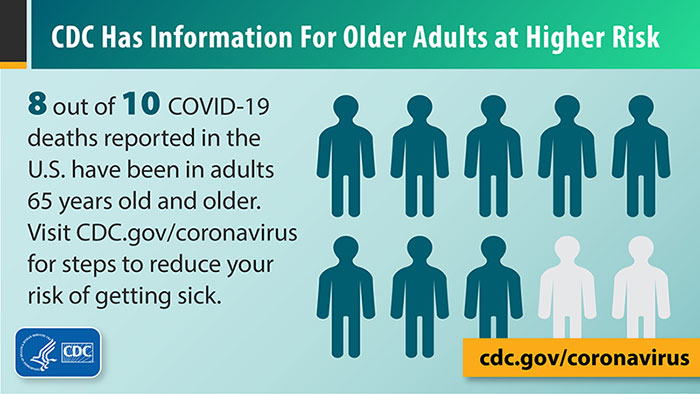
Taking the CDC’s cue that 8 out of 10 COVID-19-related deaths reported in the United States have been among adults aged 65 years and older, the EEOC’s June 17 Update reminds employers they may not exclude “older adults” from the workplace just because they are reported to be more vulnerable to the pandemic’s ill effects.
“The ADEA would prohibit a covered employer [15 or more on payroll] from involuntarily excluding an individual from the workplace based on his or her being 65 or older, even if the employer acted for benevolent reasons such as protecting the employee due to higher risk of severe illness from COVID-19.”
As the ADEA only protects those aged 40-plus against discrimination relative to people younger than 40, the June 17 Update advises that ADEA does not prohibit employers from providing 65-plus employees “flexibility” to work relative to other older workers protected by the ADEA “even if it results in [those] workers ages 40-64 being treated less favorably based on age in comparison.”
The June 17 Update recognizes that no individual is entitled to reasonable accommodation due to his/her age but continues: “Workers age 65 or older also may have medical conditions that bring them under the protection of the ADA as individuals with disabilities. As such, they may request reasonable accommodation for their disability as opposed to their age.” Emphasis supplied.
Thus best management practices should include careful attention to older worker requests to remain on or return to the job and to documenting proper deliberation and decision.
See also:
For more information, contact Tim Bowles, Cindy Bamforth or Helena Kobrin.
Tim Bowles
July 24, 2020
The federal Families First Coronavirus Response Act (FFCRA) requires most businesses with fewer than 500 employees to provide emergency paid sick leave benefits for workers affected by COVID-19.
The federal Families First Coronavirus Response Act (FFCRA) requires most businesses with fewer than 500 employees to provide emergency paid sick leave benefits for workers affected by COVID-19. For example, covered employers must provide 80 hours of paid sick leave for full-time employees and two weeks of average hours worked for part-time employees who cannot work or telework for any one of six COVID-19 related reasons. See, Federal Coronavirus Workplace Relief (March 23, 2020).
With the pandemic persisting in California, local governments continue to issue emergency ordinances for workers to supplement FFCRA benefits. Since our initial posting -- Paid Sick Leave Going Viral (May 29, 2020) -- we count two more California cities and one county joining the list.
To our knowledge, and as of July 22, 2020:
*
*Ordinances for the cities of Emeryville, Los Angeles and San Diego require employers to allow covered employees to use any accrued sick leave benefits for COVID-19 related reasons.
California has issued a statewide April 16, 2020 Supplemental Paid Sick Leave Order (and mandatory poster) for food sector employers with 500 or more employees.
Please check the above links and other online resources for any updates.
See also:
For more information about these laws or other employment issues related to COVID-19, contact Tim Bowles, Cindy Bamforth or Helena Kobrin.
Cindy Bamforth
July 23, 2020
To a degree, the First Amendment shields religious institutions from government involvement in employment disputes. The U.S.
To a degree, the First Amendment shields religious institutions from government involvement in employment disputes. The U.S. Supreme has recently broadened that protection to potentially place hundreds of thousands of parochial school teachers and other church-affiliated workers outside the reach of workplace discrimination laws. Our Lady of Guadalupe School v. Morrissey-Berru (July 8, 2020)
Two elementary teachers employed at Southern California Catholic schools claimed discriminatory termination, for age and disability respectively. While denying those allegations, the schools claimed they were in any event beyond the reach of the federal Age Discrimination in Employment Act (ADEA) and the Americans with Disabilities Act (ADA) because each teacher fell within the “ministerial exception” to these laws.
Seven justices of the Court agreed with the schools. Although neither employee held the title of minister or any equivalent church leadership designation, the majority found them unprotected by discrimination laws as each functioned as “teacher of religion” by the inclusion of some degree of Catholic indoctrination and practice in their otherwise secular curricula. The justices concluded that they must respect the schools’ self-declared exemption from the ADEA and ADA because the First Amendment protects the right of religious institutions “to decide for themselves, free from state interference, matters of church government as well as those of faith and doctrine.”
Justice Sotomayor’s dissent pointed up the decision’s potentially staggering applications. Previously, the ministerial exemption applied only to individuals demonstrably in leadership positions of respective denominations. Justice Sotomayor observed that so long as the religious employer determines that a worker’s “duties” are “vital” to “carrying out the mission of the church,” that employer now appears able “to make employment decisions because of a person’s skin color, age, disability, sex, or any other protected trait for reasons having nothing to do with religion.”
Pulling no punches, the justice remarked that “sources tally over a hundred thousand secular teachers whose rights are at risk … [to say] nothing of the rights of countless coaches, camp counselors, nurses, social-service workers, in-house lawyers, media-relations personnel, and many others who work for religious institutions. All these employees could be subject to discrimination for reasons completely irrelevant to their employers’ religious tenets.”
Whether this Our Lady decision leads to such a broad loss of discrimination protections for workers in the faith sector remains to be seen. All justices acknowledge future cases must of necessity proceed on a case-by-case basis. However, the ruling does provide church institutions a roadmap on how best, in good faith, to position particular employee job duties to the exclusion of those protections.
See also:
For more information, please contact Tim Bowles, Cindy Bamforth or Helena Kobrin.
Tim Bowles
July 16, 2020
On June 28, 2020, Governor Newsom directed bars to close in five counties on the state's watch list: Fresno, Kern, Kings, Los Angeles, and Tulare.
On June 28, 2020, Governor Newsom directed bars to close in five counties on the state's watch list: Fresno, Kern, Kings, Los Angeles, and Tulare. These join two other counties – Imperial and San Joaquin – with bars already subject to such mandatory closings. The state has recommended bar closings in eight other counties.
We count 19 counties which have rescinded their local orders to follow Sacramento’s statewide guidances:
As of July 10, California counties and cities with stay at home orders in place include:
Thanks again to our legal assistant Daniska Coronado for these continuing updates. Please use the above links and other online resources for further developments. Requirements of varying strictness continue to change frequently, municipality-by-municipality.
See also:
For more information about coronavirus employment issues, contact Tim Bowles, Cindy Bamforth or Helena Kobrin.
Tim Bowles
Daniska Coronado
July 11, 2020
The Families First Coronavirus Response Act ( FFCRA ) provides emergency paid sick leave and additional paid family leave for a worker who must care for his/her child due to COVID-19-related school or other “place of care” closures.
The Families First Coronavirus Response Act (FFCRA) provides emergency paid sick leave and additional paid family leave for a worker who must care for his/her child due to COVID-19-related school or other “place of care” closures. Would a summer camp closure qualify? Perhaps.
The U.S. Department of Labor (DOL)’s FAQs guidance provides that a closed summer camp or program may be considered a place of care for an employee’s child if the child was enrolled before the summer program announced its closure:
Question 93: “I took paid sick leave and am now taking expanded family and medical leave to care for my children whose school is closed for a COVID-19 related reason. After completing distance learning, the children’s school closed for summer vacation. May I take paid sick leave or expanded family and medical leave to care for my children because their school is closed for summer vacation?
“Answer: No. Paid sick leave and emergency family and medical leave are not available for this qualifying reason if the school or child care provider is closed for summer vacation, or any other reason that is not related to COVID-19. However, the employee may be able to take leave if his or her child’s care provider during the summer—a camp or other programs in which the employee’s child is enrolled—is closed or unavailable for a COVID-19 related reason.”
However, with the pandemic’s continuing uncertainties, many summer camps and programs announced closure this year prior to a family’s opportunity to enroll. In a further June 26 guidance, the DOL has confirmed that a parent’s mere interest in a camp or program is generally insufficient to qualify for such paid leaves. However, formal enrollment before a closure announcement is not strictly required. While there is no one-size-fits-all guide for eligibility, the guidance states that qualification will turn on whether the child would have attended the summer camp/program had it not closed due to COVID-19. Indicators of that intent may include:
Covered employers should proceed with caution before denying an employee’s request to use FFCRA leave due to the closure of a child’s summer program, consulting with experienced employment counsel as needed.
See also:
For more information, please contact Tim Bowles, Cindy Bamforth or Helena Kobrin.
Cindy Bamforth
July 9, 2020