Click here to subscribe to our Bowles Law e-letter


Click here to subscribe to our Bowles Law e-letter

While each state has the power to set wage and other workplace standards for labor performed within its borders, that authority can blur when truckers and passenger carrier personnel divide their work time between the states.
While each state has the power to set wage and other workplace standards for labor performed within its borders, that authority can blur when truckers and passenger carrier personnel divide their work time between the states. On several suits by pilots and flight attendants, the California Supreme Court has ruled certain interstate transportation workers are entitled to state’s protections on paychecks and paydays even for labor outside the state: Ward v. United Airlines and Oman v. Delta Airlines (June 29, 2020).
The employees, all of whom only worked part time inside the state, sought class action recovery of up to $4,000/employee for airline failure to issue California-compliant paystubs (Labor Code 226) on their wages. They argued in part that if they live and pay taxes in California, United and Delta should comply with section 226 no matter where labors were performed. Contending a state’s laws should not reach beyond its geographic boundaries, United and Delta countered they should not be responsible for such compliance when most work was performed outside California.
Observing that California’s current paycheck protection law was introduced in 1943 “at the behest of railroad employees,” many of whom worked interstate, the court found 226 paystub requirements apply when this state “is the [one] that has the most significant relationship to the work,” specifically:
Thus for interstate haulers and carriers, the answer to the question of whether this paystub law applies to its employees is that “it depends.”
The ruling means, for example, that an Arizona hauler must comply with California’s detailed paycheck requirements (as well as the state’s accompanying twice/month minimum paydays law) for a Phoenix-based driver who spends more than half of his or her road time in California in any given pay period. No compliance is required for pay periods in which that driver spends only half or less of his/her road time in California.
The decision also requires an air carrier to comply with these paystub rules for a flight attendant based for example out of LAX but who only works a few hours in-state over any pay period. However, that carrier would not have to comply with the California rules for a New York-based flight attendant who spends comparable time flying in and out of Los Angeles.
The court was careful to explain that the application of other California labor laws to interstate workers must be analyzed on the particular language and meaning of those specific sections. Thus, as it was not critical to the case, the Oman decision found that the geographic reach of this state’s minimum wage laws to hours worked by such multi-state personnel would have to wait for a future case.
See also:
For more information, please contact Tim Bowles, Cindy Bamforth or Helena Kobrin.
Tim Bowles
July 2, 2020
With temperatures rising to summer levels in parts of the state, employer obligations to protect outdoor workers from heat-related illnesses, beginning at 80 degrees Fahrenheit, come into force.
With temperatures rising to summer levels in parts of the state, employer obligations to protect outdoor workers from heat-related illnesses, beginning at 80 degrees Fahrenheit, come into force. Areas not yet reaching that threshold should prepare for the heat to come.
Particularly with continuing state and local COVID-19 workplace face mask requirements, employers must be particularly vigilant to protect their employees from heat illness.
Principal Deputy Assistant Secretary Loren Sweatt for the U.S. Department of Labor’s Occupational Safety and Health Administration (OSHA) recently blogged tips to prevent heat illness, including:
We note that employers should be cognizant that workers who have been out for months and left at a time when temperatures were much cooler will need to reacclimatize and reacquaint themselves with the risks and protections associated with work in hot climates.
Ms. Sweatt’s suggested measures are similar to California’s Occupational Safety & Health Standards Board (OSHSB) regulations which include special measures for high-heat (over 95 degrees) such as observing employees for signs of heat illness and ensuring 10-minute cool-down breaks every two hours.
California’s Division on Occupational Safety and Health (Cal/OSHA) provides additional tools and information, including heat illness triggers, handlings, and creating a required written prevention plan.
A heat illness plan should be part of an employer’s required Illness and Injury Prevention Plan (IIPP), made available at the applicable worksite(s). A business must convey/translate its plan into the language understood by the majority of the company’s workers.
An IIPP for outdoor workers should also address Valley Fever, caused by a fungus in the top two to twelve inches of soil in parts of the state, especially Fresno, Kern, Kings, Madera, Merced, San Luis Obispo, and Tulare counties. Outdoor workers are susceptible to Valley Fever when triggers such as high wind, digging, and plowing release the fungi into the air. Several Cal/OSHA regulations address Valley Fever safety practices.
See also:
For further information, please contact Tim Bowles, Cindy Bamforth or Helena Kobrin.
Helena Kobrin
July 1, 2020
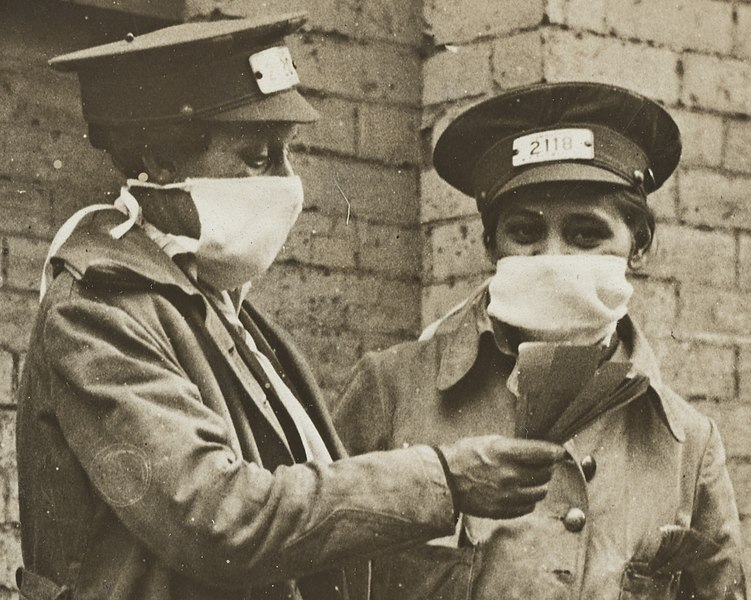
The California Department of Public Health issued a detailed, updated June 18 Guidance requiring cloth face coverings to limit the spread of COVID-19.
The California Department of Public Health issued a detailed, updated June 18 Guidance requiring cloth face coverings to limit the spread of COVID-19. The guidance’s mandatory provisions include:
Face covering in high-risk situations:
Exemptions: Persons:
The guidance observes that a cloth face covering’s primary role is to reduce the release of infectious particles when someone speaks, coughs or sneezes, “including someone who has COVID-19 but feels well.” The guidance also reminds the public that face coverings are not a substitute for physical distancing, washing hands and staying home when ill.
California employers are responsible for ensuring compliance in their places of work.
See also:
For more information, please contact Tim Bowles, Cindy Bamforth or Helena Kobrin.
Tim Bowles
June 26, 2020
The Coronavirus Aid, Relief, and Economic Security ( CARES Act ) protects small business from COVID-19’s economic impact.
The Coronavirus Aid, Relief, and Economic Security (CARES Act) protects small business from COVID-19’s economic impact. Section 1102 of the Act created the Paycheck Protection Program (PPP) to help employers keep their workers on payroll. Qualifying PPP loans may be forgiven up to the full principal amount. See also, COVID-19 Safety Nets (April 14, 2020)
On June 5, 2020, President Trump signed the Paycheck Protection Program Flexibility Act of 2020 (Flexibility Act) providing these modified PPP provisions:
On June 17, 2020, the Small Business Administration (SBA) issued a revised user-friendly PPP loan forgiveness application implementing the Flexibility Act modifications, as well as a simplified form for borrowers that: (i) are self-employed and have no employees; or (ii) did not reduce the compensation of their employees by more than 25 percent and did not reduce the number or hours of their employees; or (iii) experienced reductions in business activity as a result of COVID-19 health directives and did not reduce employee compensation by more than 25 percent.
Employers should use the loan money for the reasons indicated in the CARES Act, clearly document the use
of all PPP funds, fill out all forms truthfully and accurately, and consult with a CPA or other tax advisor as needed.
Additional Resources:
For more information, please contact Tim Bowles, Cindy Bamforth or Helena Kobrin.
Cindy Bamforth
June 25, 2020
California minimum wage s are currently $13.00 per hour for employers with 26 or more employees and $12.00 for employers with 25 employees or less.
California minimum wages are currently $13.00 per hour for employers with 26 or more employees and $12.00 for employers with 25 employees or less. On January 1 of each coming year, these will continue to increase one dollar/hour until reaching $15 per hour for the larger employers (26-plus) in 2022 and for the smaller employers a year later. See California’s Gradual Increases in Minimum Wage, to Reach $15.00 Per Hour by January 1, 2022 (April, 2016).
The statewide minimum wage is not the end of the inquiry. A number of municipalities have higher minimum wage rates and particular definitions of what “employers” or “employees” they impact.
Effective July 1, 2020, 12 cities and two counties will increase their minimum wage rates while Santa Rosa initiates a higher standard. Many of these will continue to rise in coming years. See the UC Berkeley Center for Labor Research and Education listing for regular updates.
Operations spanning more than one of these jurisdictions face the potential complication of which ordinance or ordinances to apply. While the solution is likely unique to each employer, a possible best practice is to set wages at the highest rate among the choices.
Some cities have enacted separate minimum wage laws for hotel workers. Each rate is increasing on July 1: Long Beach ($15.47); Santa Monica ($17.13) and City of Los Angeles ($17.13).
A covered employer must also conspicuously post an updated wage notice/bulletin for each applicable jurisdiction. Click the above city/county link(s) to download the most current notice.
See also:
Helena Kobrin
June 18, 2020
California law prohibits discrimination against applicants and employees for their membership in any protected class, including religious creed, disability and age (40+).
California law prohibits discrimination against applicants and employees for their membership in any protected class, including religious creed, disability and age (40+). The California Fair Employment and Housing Council (FEHC) has issued new regulations effective July 1, 2020, to better protect such individuals.
Advertisements. The new regulations prohibit practices that adversely impact applicants or employees age 40 or older, unless the practice is job-related and consistent with business necessity and no alternative practice could accomplish that business purpose with a lesser discriminatory impact.
With limited exceptions, employers are thus prohibited from using recruiting and advertising language that could reasonably be construed to deter or limit employment of anyone age 40 or older. Examples include: “digital native,” “young,” “college student,” “recent college graduate,” “boy,” or “girl” or any other terms implying a preference for younger employees.
Pre-employment inquiries. Inquiries regarding an applicant’s available work schedule “shall not be used to ascertain the applicant’s religious creed, disability, or medical condition” and must “clearly communicate that an employee need not disclose any scheduling restrictions based on legal protected grounds.”
Online application technology must not eliminate applicants based on their schedule unless “job-related and consistent with business necessity.” Online applications must “includes a mechanism for the applicant to request an accommodation.”
Best Practices:
California employers should promptly update their websites, marketing materials, job applications, advertisements, and hiring forms and policies to meet the new requirements.
For example, when inquiring about work schedules, job advertisements, candidate application forms (online or physical copies), and job interviews must now include language such as: “Other than time off for reasons related to your religion, a disability, or a medical condition, are there any days or times when you are unavailable to work?”
Full compliance with these revised regulations should help prevent or promptly correct discriminatory practices.
See also:
For more information please contact Tim Bowles, Cindy Bamforth or Helena Kobrin.
Cindy Bamforth
June 12, 2020
While we are not yet out of the woods, state and local government continue to ease restrictions upon life as we at least used to know it.
While we are not yet out of the woods, state and local government continue to ease restrictions upon life as we at least used to know it.
As pandemic pressure has eased and public demands have increased, at least 35 counties have announced their ability to accelerate their transition through “Stage 2” of California’s “Pandemic Roadmap”: the reopening of lower-risk workplaces and other spaces.
We also count 17 counties which have rescinded their local orders in order to follow just the statewide guidances:
To our knowledge, and as of June 5, counties with stay at home orders in place include:
Thanks again to Daniska Coronado for this continuing compilation.
See also:
For more information about these laws or other employment issues related to coronavirus, contact Tim Bowles, Cindy Bamforth or Helena Kobrin.
Tim Bowles
Daniska Coronado
June 5, 2020
Setting aside the vital importance of people’s spiritual ties in times of need, California (echo’ing the feds) had regarded churches “non-essential” from the March 19 start of its safer-at-home orders.
Setting aside the vital importance of people’s spiritual ties in times of need, California (echo’ing the feds) had regarded churches “non-essential” from the March 19 start of its safer-at-home orders. As pandemic pressure has eased and public demands have increased, the state has now acknowledged the religion’s role in pandemic recovery: COVID-19 “Industry” Guidance for Places of Worship and Providers of Religious Worship and Cultural Ceremonies (May 25, 2020) (Guidance).
The County and City of Los Angeles swiftly followed suit, adopting an amended Appendix F Protocol for Places of Worship to their public health orders (Orders). As the city put it: houses of worship “provide services that are recognized to be critical to the health and well-being of [Los Angeles].”
The Guidance and both Orders require religious groups to limit capacity to the lower of 25 percent of maximum allowed occupancy or 100 people.
The Guidance includes 13 pages of standards from social distancing, wearing masks, cleaning, and excluding persons who are ill to church-specific protocols such as not passing collection plates but allowing digital offerings or other safe drop boxes, shortening services, and avoiding singing and group recitation, which can cause droplets to spread.
Appendix F contains similar requirements and suggestions in checklist form for houses of worship.
The California Department of Public Health is to revisit the Guidance by June 15 for its public health impact and for phased restoration to full activity.
Permitting religious providers to re-open, albeit on a limited basis thus far, will help seekers receive spiritual guidance in the pandemic’s wholesale uprooting of people’s lives.
See also:
For more information about these laws or other employment issues related to coronavirus, contact Tim Bowles, Cindy Bamforth or Helena Kobrin.
Helena Kobrin
June 4, 2020
In response to COVID-19, a growing number of California cities and counties have issued expanded paid sick leave laws primarily targeting employers exempt from the federal Families First Coronavirus Response Act (FFCRA).
In response to COVID-19, a growing number of California cities and counties have issued expanded paid sick leave laws primarily targeting employers exempt from the federal Families First Coronavirus Response Act (FFCRA).
To our knowledge, and as of May 29, 2020:
California also issued a statewide April 1, 2020 Supplemental Paid Sick Leave Order (and mandatory poster) for food sector employers with 500 or more employees.
While this is a start for employers and employees affected by these new standards, steady change has been a constant in response to changing pandemic conditions. Please check the above links and other online resources for any updates.
See also:
For more information about these laws or other employment issues related to COVID-19, contact Tim Bowles, Cindy Bamforth or Helena Kobrin.
Cindy Bamforth
May 29, 2020