Click here to subscribe to our Bowles Law e-letter


Click here to subscribe to our Bowles Law e-letter

It seemed like a good idea at the time: the rapid growth of Uber-style “gig economy” business models ostensibly offering a win-win of worker freedom and consumer convenience.
It seemed like a good idea at the time: the rapid growth of Uber-style “gig economy” business models ostensibly offering a win-win of worker freedom and consumer convenience. Yet, California government came to another conception of such arrangements: presumed exploitation. Hence enter AB 5 and its hardball “ABC” test for independent contractor classification, effective January 1, 2020. See, The Mystery of It All; Employed or Independent? (February 7, 2020).
In an opening attack, Uber and Postmates unsuccessfully sought to bar enforcement of the new law on the grounds it unconstitutionally singled them out. See, Roadkill; Federal Court Denies Uber Request to Stop AB5 (February 21, 2020).
On May 5, the state took the offensive in turn. The California attorney general and the city attorneys of San Francisco, Los Angeles, and San Diego have sued Uber and Lyft for:
The complaint contends rideshare drivers fail to meet any of part of the ABC independent contractor test:
The complaint argues Uber and Lyft maintain control overtheir drivers in a multitude of ways including dictating what passengers they can drive, what cars they can use, setting rates, determining pay, invoicing, handling driver and passenger issues, controlling routes, logging drivers off their app for the company’s own reasons, and many more.
Using the companies’ public filings, the complaint states the companies are transportation companies selling on-demand rides to their customers and providing the drivers to supply those rides. Thus, the companies are not “mere technology companies” as they argue, but are “deeply enmeshed in the provision of transportation services.”
The complaint claims that Uber and Lyft drivers do not have their own transportation businesses, their driving requires no special skills or training, they do not have investments in their driving beyond a vehicle and a smartphone, and more. It also argues that the limited choices drivers have, such as when to drive, do not meet the normal decision-making level of business owners.
The process shall continue. Uber and Lyft will defend vigorously (first court appearance not until October 7) while exploring all other options, including greater driver independence in their business models as well as a possible ballot initiative to repeal or revise AB 5.
The initiative process – requiring the proponent to gather signatures from a minimum 5% of the number of people who voted in the most recent election for governor within 180 days – will no doubt be challenging in our pandemic times.
Whatever the outcome of this battle of titans, the state is turning resources back to perhaps the hottest workplace issue in play before the pandemic hit. California business still engaged in decisions over worker classification are best advised to finish that work.
See also:
For assistance in correct classification decisions, contact Tim Bowles, Cindy Bamforth or Helena Kobrin.
Helena Kobrin
May 22, 2020

As much of the U.S. begins to dig out after months of pandemic-inspired “hibernation,” many of us resume reach to the wider world.
As much of the U.S. begins to dig out after months of pandemic-inspired “hibernation,” many of us resume reach to the wider world. My attention returns to Liberia and Sierra Leone and our firm’s support of Applied Scholastics International (APS) and its African Literacy Campaign (ALC). See, My True Pay (January 16, 2020).
We launched ALC’s 2020 phase in February only to collide with the “stay in place” directives of nearly every national and state government in the northern hemisphere, including all West African countries. Liberia and Sierra Leone have been particularly sensitive to COVID-19’s potential consequences from the havoc Ebola created in that region in 2014-2015.
While Ebola reportedly took the lives of some 4,800 Liberians (out of 11,300 deaths in the region), the current pandemic’s public health impact has been relatively light. With a population of some 5,000,000, Liberia reportedly counts 269 documented COVID-19 cases, with 242 recovered and 27 deceased. See, Johns Hopkins Coronavirus Resource Center, nation-by-nation map.
The Liberian government’s lock down applied since April 10 to flatten the pandemic’s curve so significantly has been well-beyond anything Americans have experienced, including a national militarily enforced curfew, 3 p.m. – 6 a.m., daily. For example, armed soldiers have deployed to shut down open markets, the country’s lifeblood.
As here, all Liberian schools have been shut for many weeks. (Ebola shut the schools there for well over a year in 2014-2015.)
If halting COVID-19’s progress wasn’t enough, the region’s seasonal rains blew off a large portion of ALC partner Global Cares Mission Academy’s roof in mid-April. (Half of Global Cares 300 students are orphans.)
Ironically, we launched the ALC in June, 2014, the week Ebola came to Monrovia. Then, as now, the campaign stands as a significant player in recovery from the impact of these bone-deep disruptions. Accordingly, we have devoted 2020 ALC donations to:
With our donors’ continuing help, Applied Scholastics and the ALC are in Liberia and West Africa to stay; now helping to protect student, family and faculty health; hopefully soon to assist in the meaningful and swift recovery of education region-wide.
All support is welcome through our GoFundMe site: https://www.gofundme.com/f/african-literacy-campaign-2020.
Thank you. So much more to come!
Tim Bowles
May 28, 2020
Applied Scholastics Relief
Educate West Point
Monrovia, Liberia
May 20, 2020
California employers must carry workers’ compensation insurance for on-the-job injuries and job-related illnesses.
California employers must carry workers’ compensation insurance for on-the-job injuries and job-related illnesses.
California governor Newsom’s May 6, 2020 Executive Order N-62-20 (the order) directs that workers contracting COVID-19-related illness between March 19 and July 5, 2020 are presumed entitled to full work comp coverage, including medical care, temporary disability, permanent disability, supplemental job displacement, vocational rehabilitation, and death benefits.
The presumption applies if the employee worked at a jobsite outside her or his home at the employer’s direction between March 19, 2020 and July 5, 2020 and then tested positive for or was diagnosed with COVID-19 within 14 days.
Employers may dispute the presumption within 30 days of the date the claim is filed with “other evidence” to prove the illness did not occur due to work duties.
The order also confirms that insurance carriers may “adjust the costs of their policies” accordingly, which likely means increased rates.
On May 19, 2020, the California Department of Industrial Relations published FAQs to clarify the diagnosis/testing criteria and to confirm the presumption applies to all workers of “essential” and “non-essential” industries or services.
Employers should consider taking these proactive steps:
See also:
For more information about this law or other employment issues related to COVID-19, contact Tim Bowles, Cindy Bamforth or Helena Kobrin.
Cindy Bamforth
May 20, 2020
If anyone cares to count, today, April 15, is Day 55 and the beginning of California’s stay at home directives Week Nine.
If anyone cares to count, today, April 15, is Day 55 and the beginning of California’s stay at home directives Week Nine. The Public Health Director’s latest statewide order (May 7) sets out “California's path forward from the initial [March 19] ‘Stay-at-Home’ Order in California's Pandemic Roadmap” in four phases: Stage 1: safety and preparation; Stage 2: reopening of lower-risk workplaces and other spaces; Stage 3: reopening of higher-risk workplaces and other spaces; and Stage 4: finally an easing of final restrictions leading to the end of the stay at home order.
The May 7 order announces the gradual movement of the entire state from Stage l to Stage 2, with procedure for the state’s 58 counties to accelerate their transition. At our last count, 21 counties have announced such ability. We also count 14 counties which have rescinded their local orders in order to follow just the statewide guidances:
Nevertheless, the majority of counties and numerous major cities continue to have local orders in place, many with rules more restrictive than the state’s. To our knowledge, and as of May 15:
Thanks again to our legal assistant Daniska Coronado for this continuing compilation. There continues to be no other attempted comprehensive statewide listing readily available online.
As counties continue to rely on their particular data, we can be sure that requirements of varying strictness continue to change frequently, local jurisdiction-by-local jurisdiction.
See also:
For more information about these laws or other employment issues related to coronavirus, contact Tim Bowles, Cindy Bamforth or Helena Kobrin.
Tim Bowles
Daniska Coronado
May 15, 2020
If California has been able to flatten the COVID-19 curve over the past two months, it has been by a sustained flood (pandemic?) of government directives and orders.
If California has been able to flatten the COVID-19 curve over the past two months, it has been by a sustained flood (pandemic?) of government directives and orders. Over the past week alone, the State of California has issued no less than 26 road maps, guidance memos, and checklists relating to workplace disease prevention. Within that time, many of the state’s major cities and counties have also published sets of updated guidelines and restrictions.
As commerce ramps back up, we have completed a set of policies and protocols to aid employers in establishing the new post-pandemic “normal” these multiple state and local orders now require. These include:
To order or for more information, contact Office Manager Aimee Rosales at 626.583.6600 or email her at officemgr@tbowleslaw.com.
May 14, 2020
On May 4, Mayor Eric Garcetti extended Los Angeles’s strict pandemic-driven health directive to May 15, signaling a gradual easing of restrictions from there if and as conditions warrant. It has been a remarkable evolution.
On May 4, Mayor Eric Garcetti extended Los Angeles’s strict pandemic-driven health directive to May 15, signaling a gradual easing of restrictions from there if and as conditions warrant. It has been a remarkable evolution.
The city’s March 19, 2020 initial “Safer at Home” public order restricts public gatherings and effectively causing non-essential businesses to close their physical locations. Failure to comply with the order is a misdemeanor that can result in fines and/or imprisonment.
Certain business operations and activities are exempt for providing essential activities and services critical to the city’s health and well-being, including but not limited to:
On April 10, 2020, Mayor Garcetti revised the order to require all exempt essential businesses to adopt and post near their entrances a “Social Distancing Protocol” by April 15 for every facility they operate, a blank sample provided in Appendix A to that order. Essential businesses must also provide a copy of the Protocol to each employee performing work onsite. See, Keep It to Yourself; Essential Workers Must Cover Up and Stay Six Feet Apart (April 16, 2020).
That revised version also permitted non-essential businesses to conduct minimum basic operations including:
On April 27, 2020 and as further revised May 4, 2020, Mayor Garcetti required any non-essential businesses conducting minimum basic operations to keep their doors closed and locked to the public at all times and to post a sign on their main entrances stating that the business is closed to the public.
This locked-to-the-public version of the order remains in place until May 15, 2020 and may be extended or modified from there.
See also:
For more information about these laws or other employment issues related to coronavirus, contact Tim Bowles, Cindy Bamforth or Helena Kobrin.
Cindy Bamforth
May 6, 2020

We are entering week seven from Governor Newson’s March 18 order requiring all California residents to stay at home or place of residence until further notice.
We are entering week seven from Governor Newson’s March 18 order requiring all California residents to stay at home or place of residence until further notice. Businesses and functions deemed essential to 16 federally-designated “critical infrastructure” sectors are excepted. The state is regularly updating “COVID Response – Stay Home Except for Essential Needs FAQs” for further guidance.
The governor has specified six indicators to warrant modification of the March 18 order:
Since our April 17 listing, we count five more California counties and one city joining those which have implemented similar – and in many instances progressively stricter -- “Safer at Home,” “Shelter in Place” or “Stay Well at Home” orders. Sutter and Yuba counties have issued a joint order, effective May 4, phasing out their previous restrictions. To our knowledge, and as of May 1:
Thanks to our legal assistant Daniska Coronado for this continuing compilation. There appears to be no other attempted comprehensive statewide listing readily available online.
Perhaps there is good reason for this. We cannot confirm this collection is complete or will even still be current by the beginning of the coming week. As applies to your locale, please use the above links and other online resources for updates. Requirements of varying strictness continue to change frequently, municipality-by-municipality.
See also:
For more information about these laws or other employment issues related to coronavirus, contact Tim Bowles, Cindy Bamforth or Helena Kobrin.
Tim Bowles
Daniska Coronado
May 1, 2020

“Science is organized knowledge. Wisdom is organized life.” Emmanuel Kant Once upon a time (not too) long ago, our current of state business and workplace hibernation was unimaginable.
“Science is organized knowledge. Wisdom is organized life.” Emmanuel Kant
Once upon a time (not too) long ago, our current of state business and workplace hibernation was unimaginable. As management plans for return to full operation, best practice in whatever the form – letter, notice posting, policy – will acknowledge a new definition of normal, welcoming “respiratory etiquette,” “hand hygiene,” “personal protective equipment” (PPE), and “effective social distancing” into daily interchange.
The Spanish Flu pandemic of 1918-1919 infected some 500 million people – about one-third of the world’s population – and killed an estimated 50 million, more by far than perished in the World War I horrors that preceded it and in the World War II slaughters, combined. The Spanish Flu came in three waves of varying intensity that correlated directly with preventative measures taken. With no vaccine to protect against influenza infection and no antibiotics to treat secondary bacterial infections, globally uncoordinated control efforts were limited to isolation, quarantine, good personal hygiene, use of disinfectants, and limitations of public gatherings.
That flu’s two major recurrences over some 18 months should impart wisdom enough for adequate COVID-19 precautions even after any upcoming “all clear.”
California requires all employers to adopt and maintain a written injury and illness prevention program (IIPP). With aid of Occupational Health and Safety Administration (OSHA) COVID-19 standards, new and expanded IIPP standards might well include:
Standards for Maintaining a Healthy Work Environment: These could start with a thorough professional disinfection prior to a workplace reopening. Executives should also explore hiring a professional safety consultant for a one-time engagement to make sure the workplace is properly configured to minimize risk of virus outbreak.
Management should consider appointing a staff point person to oversee all pandemic-related programs and actions.
Standards should include sound respiratory etiquette, hand hygiene, and adequate social distancing for all employees and others present at the worksite as well as an intensified routine of ongoing cleaning and disinfection.
Following the example of food stores and other outlets that have stayed open through the pandemic, an employer should consider marking floors with one-way arrows to limit close physical proximity in frequently-used aisles and hallway. It could also be sound practice to enhance separations by plexiglass between cubicles or workstations, removing some of the chairs from the lunchroom, and so forth.
Standards to Prevent the Pandemic’s Return: Overlapping with environmental actions, management must adequately incorporate federal and applicable state and local health prevention protocols as those continue to evolve. A sufficiently educated workforce can help limit recurrence to a minimum.
An employer must judge and clearly document its adequate screening procedures for workplace entry and retry. Options include questionnaires for entering personnel and visitors, required negative COVID-19 tests, temperature taking, symptoms reporting and continued isolation and quarantine actions. See, When the Show Must Go On; Key Protection Protocols for an Essential Industry Employee’s COVID-19 Diagnosis/Symptoms.
Standards to Promote Productivity: Perhaps more important than ever, employers should consider incentives for rewarding production and initiative. Management also ought to reiterate its anti-discrimination, harassment and retaliation policies, e.g., pandemic-fueled racial or national origin hostility will not be tolerated.
Good practice would include updated contact information for all personnel. Employers should consider in advance what to do with employees who want to continue teleworking out of fear or just out of personal preference.
Management must also maintain flexible leave and other policies to accommodate workers experiencing the ongoing effects of the pandemics. See, Federal Coronavirus Workplace Relief; New Paid Sick Leave, Family Leave And Tax Credits Effective April 2, 2020)
These points are of course not intended as comprehensive. Government has undertaken to address particular conditions for particular industries. See, e.g. OSHA’s COVID-19 Guidance for the Construction Workforce; COVID-19 Guidance for the Manufacturing Industry Workforce; COVID-19 Guidance for the Package Delivery Workforce; and COVID-19 Guidance for Retail Workers. Ultimately, a company’s scope and degree of such new standards depend heavily on its operations and circumstances.
See also:
Our firm is helping its employer clients develop the policies and protocols needed to match these extraordinary times. For more information, contact Tim Bowles, Cindy Bamforth or Helena Kobrin.
Tim Bowles
April 30, 2020
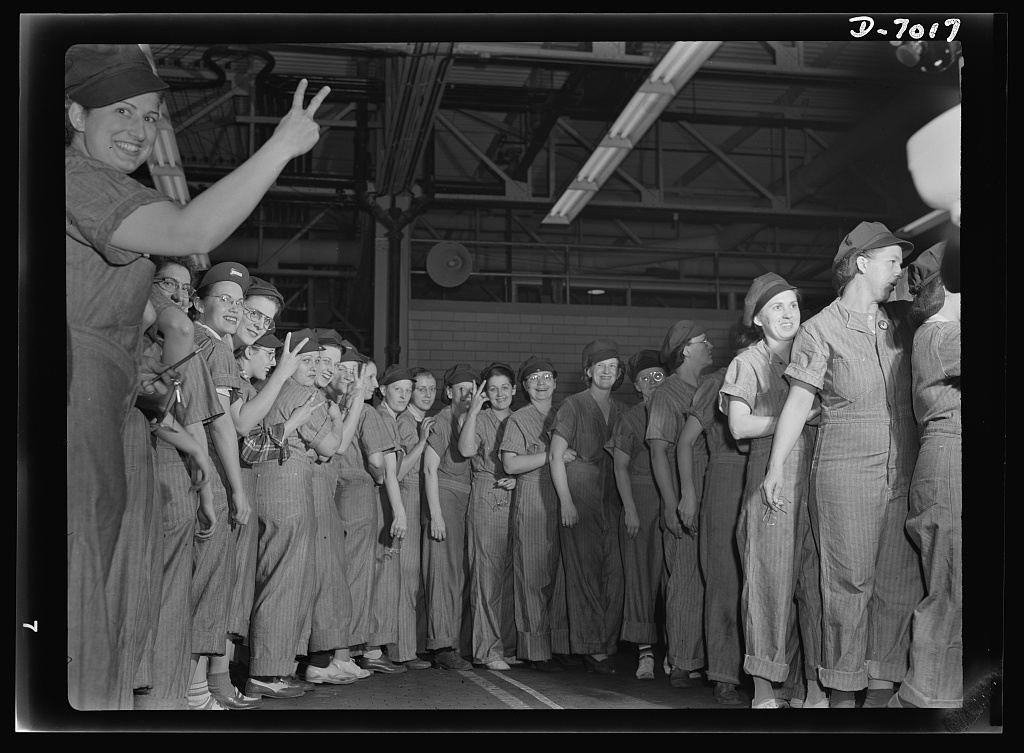
There is no shortage of federal guidelines for preventing a new pandemic wave as more businesses welcome workers back to resume full production.
There is no shortage of federal guidelines for preventing a new pandemic wave as more businesses welcome workers back to resume full production. Reflecting many of our recent articles, the Occupational Safety and Health Administration (OSHA) Guidance Summary: Preparing Workplaces for COVID-19 advises:
The Centers for Disease Control’s Interim Guidance for Businesses and Employers to Plan and Respond to Coronavirus Disease 2019 (COVID-19) is also a helpful resource, stressing the importance of specific written workplace protocols for employee education and health operation. See also, Business As Unusual; COVID-19 Generated Expansions to Our Model Employee Handbook and Forms.
As 2020’s runs on toilet paper and hair dye have demonstrated, life’s only constant is change. Whether full return to work is only a few weeks away or longer, we can be sure the national, state and local standards for the transition will evolve in response to whatever new and unprecedented circumstances arise. Stay tuned.
Our firm continues to assist employer clients develop timely policies and protocols to enable continued or resumed operations while safeguarding worker health and safety in this extraordinary time. For more information, contact Tim Bowles, Cindy Bamforth or Helena Kobrin.
Tim Bowles
April 29, 2020