Click here to subscribe to our Bowles Law e-letter


Click here to subscribe to our Bowles Law e-letter

New Labor Code 2750.3(d) , effective January 1, 2020 as part of Assembly Bill (AB) 5, exempts real estate licensees, regulated under the Business & Professions Code (B&P), from the strict Dynamex ABC test for independent contractor...
New Labor Code 2750.3(d), effective January 1, 2020 as part of Assembly Bill (AB) 5, exempts real estate licensees, regulated under the Business & Professions Code (B&P), from the strict Dynamex ABC test for independent contractor classification. See, Dodging the Bullet (October 2019).
Labor Code 2750.3(d) defers to B&P 10032(b), which permits real estate brokers and agents to structure their relationships either as employer-employee, respectively, or as hirer-independent contractor. However, that provision of 10032(b) notably does not apply where broker and agent have no written contract between them. For such “non-10032(b)” real estate broker-agent associations:
Moral: As the complexity and uncertainty of California’s employee/independent contractor law increase, so too the wisdom of utilizing competent legal counsel to help navigate the rocks and shoals of such classifications.
See also:
For further information, please contact Tim Bowles, Cindy Bamforth or Helena Kobrin.
Helena Kobrin
November 22, 2019
California has long regulated the “employment” of infants in the movies. Labor Code 1308.8 bans babies under 15-days old while requiring physician certification for our “older” new arrivals (aged 15-days to “under one month”) to work on...
California has long regulated the “employment” of infants in the movies. Labor Code 1308.8 bans babies under 15-days old while requiring physician certification for our “older” new arrivals (aged 15-days to “under one month”) to work on any “motion picture set or location.”
Beginning January, 2020, Assembly Bill (AB) 267 will apply such “micro-age” prohibition and certification standards to the entire “entertainment industry,” now defined (new Labor Code 1286(f)) in this digital age as:
This broader “entertainment industry” scope understandably applies to the labor regulation of all minors under age 18. Yet, read literally, the expanded definition means that no precocious newborns two-weeks old or younger may bull ride (rodeo) or swallow swords (circus), period. Other babies not yet a month-old could in theory do so, but would require written certification from “a licensed physician or surgeon who is board-certified in either pediatrics or family medicine.”
Perhaps slightly more to the point is the uncertainty of just how far this Labor Code ban and written certification requirement applies to newborns engaged in “photography…modeling…and any other performances where a minor performs to entertain the public.” Would that not be every such baby picture and video posted on Facebook, Instagram and any other social media medium?
For further information, please contact Tim Bowles, Cindy Bamforth or Helena Kobrin.
Tim Bowles
November 15, 2019
When new Labor Code section 2750.3(g) goes into effect on January 1, 2020 as part of Assembly Bill (AB) 5, certain types of referral agencies may be able to avoid classifying associated service providers as employees under the uber-strict...
When new Labor Code section 2750.3(g) goes into effect on January 1, 2020 as part of Assembly Bill (AB) 5, certain types of referral agencies may be able to avoid classifying associated service providers as employees under the uber-strict Dynamex ABC standards. See, California’s Independent Contractors (October 2019).
Only referral agencies that deal in specified industries are eligible: those connecting clients or customers with service providers dealing in graphic and/or web design, photography, tutoring, event planning, minor home repair, furniture assembly, picture hanging, moving, errands, home cleaning, animal services, dog walking or grooming, pool cleaning or yard cleanup.
Such associated service providers must be either a sole proprietorship, corporation, partnership, limited liability company or limited liability partnership.
Additionally – and keeping with the previously prevailing “Borello” multi-factor balancing test for contractor vs. employee classification -- the service provider must:
See also:
For further information, please contact Tim Bowles, Cindy Bamforth or Helena Kobrin.
Cindy Bamforth
November 8, 2019
Helena is “Of Counsel” to the Law Offices of Timothy Bowles. She contributes to the firm’s continuing specialty of employment law while adding her extensive experience in copyright/ trademark and contract work.
Helena is “Of Counsel” to the Law Offices of Timothy Bowles. She contributes to the firm’s continuing specialty of employment law while adding her extensive experience in copyright/ trademark and contract work. Helena also regularly assists clients in the evolving area of home care law, aiding in creation and compliance, and as applicable, registration, of home care organizations and domestic referral agencies.
Admitted to The Florida Bar in 1978 and to the State Bar of California in 1991, Ms. Kobrin began her practice in the commercial realm, handling transactional matters, banking and other government regulation, as well as real estate and probate work.
For the bulk of her career, and through the Bowles & Moxon and Moxon & Kobrin firms, she represented churches and other non-profit organizations in a large variety of areas, including copyright, trademark, and trade secret issues, contract review and drafting, bankruptcy, litigation, and dispute resolution. She continues to enjoy helping organizations in the non-profit and religious realms.
Starting in the 1990s, Ms. Kobrin was instrumental in establishing protections for copyrights and trademarks on the Internet. She was part of the team that represented plaintiffs in the first-ever copyright infringement suit over unauthorized online postings and was featured in media interviews around the globe. That case led to the passage of the federal Digital Millennium Copyright Act (DMCA) requiring service providers to remove copyright infringements from websites upon receiving notice, while protecting providers proactive in taking down such copyrighted material online.
Ms. Kobrin was also a speaker and participant at various early-Internet forums addressing copyright issues, including one at The Brookings Institution and a CSPAN-featured debate over how to protect copyright online while exempting proactive service providers from liability.
1 Nov, 2019
November 1, 2019
When new Labor Code section 2750.3(f) goes into effect on January 1, 2020 as part of Assembly Bill (AB) 5, it will be possible for builders to exempt their sub relationships from the new highly restrictive Dynamex ABC standard for...
When new Labor Code section 2750.3(f) goes into effect on January 1, 2020 as part of Assembly Bill (AB) 5, it will be possible for builders to exempt their sub relationships from the new highly restrictive Dynamex ABC standard for independent contractor classification. See, Dodging the Bullet (October 2019).
This special exception stems from Sacramento’s political process. To take advantage and be judged by the less stringent Borello balancing factors, the subcontractor will need to meet all these requirements:
These seven criteria would in any event qualify a subcontractor as independent under the “C” factor of the Dynamex ABC test, now section 2750.3: “The person is customarily engaged in an independently established trade, occupation, or business of the same nature as that involved in the work performed.”
The real benefit of the exception is that it legally moves the relationship beyond Dynamex factor “B,” under which the sub would otherwise be the contractor’s employee as engaged in the “usual course of [that contractor’s] business.”
Thus, a general contractor would be well advised to prevent future potential legal and financial harm by formally employing any subcontractor who does not fit all seven points above.
Particularly in this high-stakes arena, consultation with competent legal counsel is good practice.
See also:
For further information, please contact Tim Bowles, Cindy Bamforth or Helena Kobrin.
Helena Kobrin
October 31, 2019
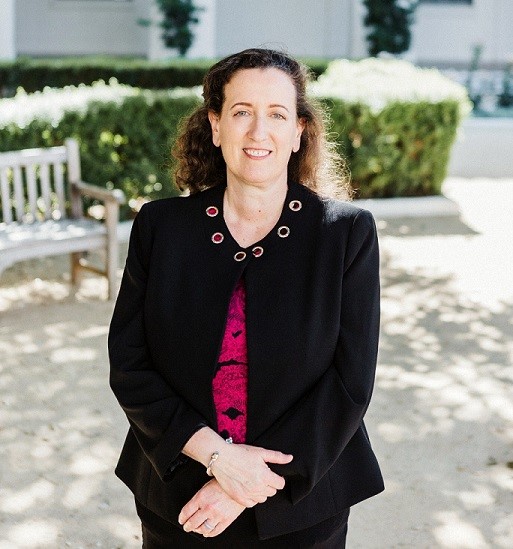
A partner at Bowles Law, Cindy has a strong skill set and extensive experience in California employment law issues.
A partner at Bowles Law, Cindy has a strong skill set and extensive experience in California employment law issues. This includes harassment prevention training, employee handbook compliance, wages (including overtime), meal and rest breaks, leaves of absence, independent contractor classification, disciplinary measures, and terminations.
Prior to joining Bowles Law, Ms. Bamforth served as in-house counsel for a group of affiliated businesses supervising all legal affairs.
Last year, she was honored by host John Horn to speak on KPCC NPR’s “The Frame” on identifying and preventing sexual harassment in the workplace. The invitation came on the heels of her participation in Women in Film’s #MeToo movement’s panel discussing sexual harassment in Hollywood.
Her lively and informative radio segment touched on the advantages to live classroom-style harassment prevention training, and what employers should do to prevent workplace harassment.
Ms. Bamforth is dedicated to helping companies develop sound employment practices for secure growth, through education and counseling. She is known for her exceptional communication skills and ability to defuse potentially explosive situations in the workplace.
Cindy received her Bachelor of Arts in government from Wesleyan University and her J.D. degree magna cum laude from Seattle University Law School. She also served as Associate Editor for the Seattle University Law Review.
Raised amid a family of lawyers, Ms. Bamforth also employs her legal skills in pro bono work for a variety of social betterment groups.
25 Oct, 2019
October 25, 2019
Effective January 1, 2020, a portion of Assembly Bill (AB) 5 -- new Labor Code section 2750.3(e) -- exempts bona fide business-to-business contracting relationships from the ultra-strict Dynamex “ABC” test for independent contractor...
Effective January 1, 2020, a portion of Assembly Bill (AB) 5 -- new Labor Code section 2750.3(e) -- exempts bona fide business-to-business contracting relationships from the ultra-strict Dynamex “ABC” test for independent contractor classification. The previously prevailing “Borello” multi-factor balancing test for the contractor vs. employee classification will continue to apply to this exemption. See, California’s Independent Contractors (October, 2019).
A business entity that provides services (the “service provider”) to another business entity (the “hiring entity”) can fall within the business-to-business exception if:
Additionally, the service provider must:
For example, if interior design company Lovely Decors, Inc. (LDI) hires Modern Window Treatments, LLC (MWT) to install custom blinds at LDI’s corporate office and all of the above criteria are met, then the determination of employee or contractor status shall be governed by Borello. If, however, LDI hires MWT to install custom blinds for LDI’s customers, then this business-to-business exception to the rigid “Dynamex ABC” standard might not apply.
See also:
For further information, please contact Tim Bowles, Cindy Bamforth or Helena Kobrin.
Cindy Bamforth
October 24, 2019
The product of Sacramento politics, specific “professional services” occupations will be exempted from the rigid “ Dynamex ABC” standard for classifying independent contractors, California Labor Code 2750.3 , effective January 1, 2020...
The product of Sacramento politics, specific “professional services” occupations will be exempted from the rigid “Dynamex ABC” standard for classifying independent contractors, California Labor Code 2750.3, effective January 1, 2020 (part of Assembly Bill (AB) 5). See, Dodging the Bullet (October 2019), listing other specific industries/licensed professionals that can be exempt.
Such independent “professional services” include:
Licensed cosmetologists, barbers, estheticians, manicurists, and electrologists can also fall within the independent “professional services” definition, providing the contracted person:
As with the other specific industries/licensed professionals that can be exempt from the stricter standard (see Dodging the Bullet), the Borello multi-factor balancing test for the contractor vs. employee classification will continue to apply to the above occupations.
See also:
For further information, please contact Tim Bowles, Cindy Bamforth or Helena Kobrin.
Helena Kobrin
October 18, 2019
Tim Bowles, our lead attorney, has an extensive and successful 40-plus year history as a litigator.
Tim Bowles, our lead attorney, has an extensive and successful 40-plus year history as a litigator.
A graduate of the University of California Berkeley (1971) and University of California Davis School of Law (1977), Tim mentored under some of the leading constitutional and trial lawyers of the day, representing churches of Scientology and related organizations. During this time, through court precedent and legislation, Tim helped establish and confirm valuable protections for free religious practice and conscience in America that continue to benefit individuals from all faiths and walks of life.
Having focused on management-side employment practice since the mid-1990s, Mr. Bowles has earned a top-“AV” Martindale-Hubbell rating by his peers and judges before whom he has appeared. He is a frequent law blogger on workplace issues and the author of the Bowles Law Report, a regular publication servicing over 20,000 recipients. Mr. Bowles is also a regular speaker for employers and professional groups, including seminars on a wide range of employment law-related subjects such as gender-based discrimination and harassment, employee pay practices and workplace dispute resolution.
From decades of experience, Tim has also developed model employment forms and workplace policy manuals adapted and in practice by thousands of employers.
Tim’s first journey into the developing world was to India and Nepal in the early 1970s, traveling through some of most poverty challenged regions of the planet. The experience affected him profoundly, witness to the hundreds of millions of people worldwide who bear the brunt of human rights deprivations and social injustices.
After some three decades of litigation work in the American courts, Tim returned to the developing world in 2005, this time to post-genocide West Africa as a volunteer for Youth for Human Rights International (YHRI), an organization dedicated to teaching young people their human rights as embodied in the 1948 Universal Declaration of Human Rights of the United Nations. He has since helped YHRI develop successful human rights education and youth leadership initiatives in Africa as well as the United States.
Beginning in 2014, Mr. Bowles has also volunteered to create and spearhead the African Literacy Project in West Africa for Applied Scholastics International, another NGO dedicated to effective, competency-based education and fighting illiteracy worldwide.
17 Oct, 2019
October 17, 2019