Click here to subscribe to our Bowles Law e-letter


Click here to subscribe to our Bowles Law e-letter

The 2018 changes in California employment law are numerous. Compliance with these from January 1 on will of course reduce the prospect of related claims or lawsuits.
The 2018 changes in California employment law are numerous. Compliance with these from January 1 on will of course reduce the prospect of related claims or lawsuits.
Two new provisions particularly require immediate review of employment applications and hiring practices for “Day One” compliance. See:
Managers should not put this off. No matter the size of business, applications that include salary history or criminal background after December 31, 2017 will be in violation of the law.
Other changes include the New Parent Leave Act for all businesses with more than 20 employees and increases in minimum wage as well as new standards for exemption from overtime for physicians and surgeons and computer software professionals.
We will be publishing more “What’s New in 2018” articles in coming weeks. Business owners and managers may also attend one of our two scheduled Pasadena seminars on how these changes will impact employers: on Friday, January 26 or Friday, February 23, 2018.
Our attorneys are also available to answer questions and assist businesses with any implementation issues. For further information, please contact Tim Bowles, Cindy Bamforth or Helena Kobrin.
Helena Kobrin
December 14, 2017

Sexual harassment has been unequivocally unlawful, in theory, for over three decades.
Sexual harassment has been unequivocally unlawful, in theory, for over three decades. With the rising flood in recent months of high-profile terminations and resignations stemming from such inexcusable violations, 2017 hopefully marks the make-break point where the law will at last widely apply in practice.
Women in Film L.A. has been a leading advocate against such exploitation in Hollywood since the 1970s. Spurred by the individual courage of targeted women finally speaking out, the organization held a November 28 Sexual & Gender Abuse in the Workplace panel to raise awareness and offer long-term solutions to this seemingly endemic scourge.
With Women in Film president and Oscar-winning producer Cathy Schulman moderating, panelists included actress Heather Graham, actress/writer Rosette Laursen, casting director Tracy “Twinkie” Byrd, author and attorney Kathleen Tarr, and our own Cindy Bamforth, Bowles Law partner.
Cindy is particularly qualified to speak on the issue, having been our office’s lead in the training of thousands in workplace harassment prevention, investigation and resolution for most of the past decade. With the extensive press coverage generated, the forum provided her the channel to educate a broad audience on what is and is not unlawful conduct.
The Hollywood Reporter coverage included Heather Graham’s recollections of working with Harvey Weinstein and her looking “to the recent slew of allegations as a breakthrough moment. ‘I found [the allegations against Weinstein] to be so exciting because I felt like woman were finally speaking their truths, and finally being heard, and finally doing something about it.’”
The resulting Los Angeles Times article stated in part: “Cynthia Bamforth, a Pasadena attorney, described how California employment law covers people who work not only for big companies but also for small ones. Independent contractors, job applicants, volunteers and interns also are covered, Bamforth said. She added that there were different forms of harassment, including hostile work environments and ‘quid pro quo’ situations in which someone dangles job advancement in exchange for sex.”
Cindy and our office will continue to educate and enlighten our clients and the public on employee rights and employer duties to address and prevent workplace harassment.
December 8, 2017
See also:
Ten Top Reasons For Live Sex Harassment Prevention Training (September, 2017)
New Transgender Rights In The Workplace (July, 2017)
The State Of Workplace Harassment And Retaliation Claims (July, 2017)
Expanding Policy and Notice Requirements to Protect Employees (June, 2017)
December 8, 2017

Effective January 1, 2018, California’s “ New Parent Leave Act ” (the Act) requires all private employers with 20 or more on payroll to provide eligible workers with up to 12 weeks of unpaid job-protected parental leave to bond with a new...
Effective January 1, 2018, California’s “New Parent Leave Act” (the Act) requires all private employers with 20 or more on payroll to provide eligible workers with up to 12 weeks of unpaid job-protected parental leave to bond with a new child within one year of birth, adoption, or foster care placement (parental leave).
An eligible employee must have worked for the employer for more than 12 months and at least 1,250 hours during the previous 12-month period. The employee must also work at a worksite comprising at least 20 employees within 75 miles.
The Act only covers eligible employees who are not otherwise subject to both the Family and Medical Leave Act (FMLA) and the California Family Rights Act (CFRA).
The parental leave shall be separate from and in addition to Pregnancy Disability Leave.
The employee may choose whether to use accrued vacation pay, paid sick time, or other accrued paid time off during the parental leave. Additionally, the employer must maintain group health plan benefits during the leave at the same level and under the same conditions as if the employee was still working.
The employer may not deny the parental leave or ask the employee to reschedule the leave’s start date. The employer must provide a guarantee of reinstatement to the same or comparable position before the leave begins. If on or before commencement of the leave the employer fails to provide such a guarantee, the employer shall be deemed to have refused to allow the leave.
Both parents working for the same employer are entitled to a cumulative 12 weeks total. The employer may, but is not required to, provide simultaneous leave to both parents.
Covered employers should update their employee handbooks and prepare internal notices and forms for employees to use when requesting leave under the Act. The Fair Employment and Housing Council is expected to issue new regulations in the coming year, which will probably require amending such handbook provisions and notices.
For further information, please contact Tim Bowles, Cindy Bamforth or Helena Kobrin.
Cindy Bamforth
December 8, 2017

California and the federal government require employers to provide their workers with a range of printed statements and information on workplace laws and required procedures.
California and the federal government require employers to provide their workers with a range of printed statements and information on workplace laws and required procedures. 2018 brings more changes to the pamphlets to be distributed in California workplaces. Some of these are:
Employers may download the above pamphlets or purchase them from the California Chamber of Commerce. As these URL links are subject to legislative or regulatory modifications, you should confirm you are using the most recent versions at all times.
As part of our hire-to-fire employment forms package, we also provide a more comprehensive list of California and federal forms, pamphlets and notices that HR should distribute to new hires.
For further information, please contact Tim Bowles, Cindy Bamforth or Helena Kobrin.
Cindy Bamforth
December 1, 2017

Continuing her public campaign for employers to adhere to California wage and hour laws, Labor Commissioner Julie Su has announced a judgment in favor of two live-in workers for wages, overtime, and meal breaks against Alexen Corporation,...
Continuing her public campaign for employers to adhere to California wage and hour laws, Labor Commissioner Julie Su has announced a judgment in favor of two live-in workers for wages, overtime, and meal breaks against Alexen Corporation, which runs facilities in San Lorenzo and Antioch for developmentally disabled adults.
For years, Alexen had paid the two employees a daily rate while requiring them to remain on duty through meals and to be available through the night. After investigating the workers’ complaints, the state Division of Labor Standards Enforcement (Division) awarded them:
This 2015 $314,124 award grew to $360,000 with two years of additional post-judgment interest.
As Labor Code 96.8 permits, the Division enforced this award through the state court, seizing monies deposited in Alexen’s bank accounts.
Commissioner Su’s press release asserted: “California is at the forefront of the fight
against wage theft, giving the Labor Commissioner tools to punish recalcitrant employers who steal their workers' wages and refuse to pay even after the workers file a claim and win.”
Employers in all industries that pay hourly workers a daily flat rate without regard to the number of hours worked and to the applicable minimum wage, overtime, and break laws should consider this ruling a wake-up call. It is good sense for any business to regularly review its pay practices, thus taking care to comply with all applicable state and federal laws. See also:
Helena Kobrin
November 24, 2017

With sexual harassment scandals currently crowding the daily news cycle, the potential for a holiday office party to become a morale-crushing, litigation nightmare is greater today than ever.
With sexual harassment scandals currently crowding the daily news cycle, the potential for a holiday office party to become a morale-crushing, litigation nightmare is greater today than ever. There is nothing wrong with annually celebrating company accomplishments and work well done. Yet, management must ensure such parties serve to acknowledge teamwork and build morale, not to spin out-of-control into a regrettable “harassment fest” or worse.
Some DO’s and DON’Ts:
DO: Evaluate your company’s culture and the kind of events that will best fit. But even if you have staff who supposedly go for crude jokes or conduct, you must not promote or permit harassing behavior.
DO: Design a celebration that includes workplace-appropriate acknowledgment and team building. A luncheon rather than an evening party may minimize opportunity for unwanted romantic advances and other improper conduct.
DO: Provide advance guidelines for appropriate dress, including examples of inappropriate clothing such as skimpy outfits and those likely to be insulting or offensive to other races, cultures, religions, etc.
DO: Respect employees who do not wish to take part. Participation in your party needs to be voluntary.
DO: If needed, apply discipline, such as asking an employee who is behaving offensively to leave or sending an employee home to change if dressed inappropriately for the workplace.
DON’T: Permit supervisors, managers, or any executives, even if they own the company, to behave inappropriately. Those are the very people who must be good role models and set the example for appropriate behavior.
DON’T: Look the other way if an employee is being harassed in some way. Such activities can demoralize not only the person targeted but the all or most of the group. Manager inaction will significantly increase the chances of a harassment claim.
DON’T: Allow alcohol consumption. Your company can be liable for physical injuries incurred or sexual harassment committed by a person served alcohol at a company-sponsored party, regardless of location or whether it is during or off working hours. If you still decide to serve alcohol or have a bar available, provide advance guidelines for what is appropriate.
See also:
Office Holiday Survival Guide (November, 2010)
Office Holiday Survival Guide II: Respecting Employee Religious Practices (December, 2010)
Office Holiday Survival Guide III: Harassment Hotbed (December, 2010)
For further information this holiday season, please contact one of our attorneys Tim Bowles, Cindy Bamforth, and Helena Kobrin.
Helena Kobrin
November 22, 2017

The California Labor CommissionercitedOakland construction contractor, Attic Pros, and its owner for misclassifying 119 workers as independent contractors. The Commissioner ordered the company to pay more than $3.5 million, including unpaid minimum wages andovertime,liquidated damages,waiting time penalties, andcivil penaltiesfor violations during a 32-month period.
The California Labor Commissioner cited Oakland construction contractor, Attic Pros, and its owner for misclassifying 119 workers as independent contractors. The Commissioner ordered the company to pay more than $3.5 million, including unpaid minimum wages and overtime, liquidated damages, waiting time penalties, and civil penalties for violations during a 32-month period.
The Commissioner awarded $3.5 million based on 10–14 hour workdays up to six days a week, but the company paid them a daily rate amounting to less than minimum wage.
The award consisted of:
Commissioner Julie Su stated: “This is an egregious case of wage theft, with workers misclassified and denied a just day’s pay. My office enforces California’s labor laws to stop employers willing to cheat employees of their pay as a means to gain an unfair advantage over their law-abiding competitors.”
Misclassification of employees as independent contractors can become a costly proposition. Whether someone is an independent contractor or should be classified as an employee is a legal question based upon multiple factors in the relationship, and is not merely a matter of choice by the parties. Various government agencies have posted guidance online for making a correct classification determination. See Independent Contractor (Self – Employed) or Employee? and EDD Employment Determination Guide. The Division of Labor Standards Enforcement (DSLE) has posted on its website frequently asked questions for proper classification of workers.
See also:
If you need assistance to determine how to classify employees correctly, please contact one of our attorneys, Tim Bowles, Cindy Bamforth or Helena Kobrin.
November 20, 2017
Helena Kobrin
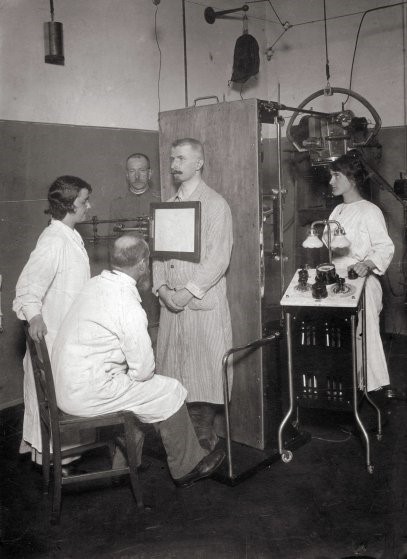
California Labor Code section 515.6 exempts certain licensed physicians and surgeons from overtime compensation as long as they receive set minimum hourly rates of pay.
California Labor Code section 515.6 exempts certain licensed physicians and surgeons from overtime compensation as long as they receive set minimum hourly rates of pay. The California Department of Industrial Relations (DIR) is increasing this minimum, effective January 1, 2018.
To avoid California’s requirements to pay overtime premium rates after eight hours worked in a day or 40 in a week, employers will have to pay eligible physicians and surgeons the minimum equivalent of $79.39 per hour, up from the current $77.15 rate.
To document qualification for this exemption, employers will need to pay the physician or surgeon the minimum hourly rate, keeping accurate track of hours worked. Physicians and surgeons paid on a lump sum salary (whether weekly or otherwise) will not qualify for this exemption.
Under Labor Code section 515.6 a doctor is exempt-from-overtime only if he or she is a licensed physician or surgeon “primarily engaged” (more than 50% of the time) in duties that require that licensure. California Business & Professions Code section 2052 specifies such duties, requiring a medical license for anyone who “diagnoses, treats, operates for, or prescribes for any ailment, blemish, deformity, disease, disfigurement, disorder, injury, or other physical or mental condition of any person.”
Employers relying on this exemption will of course need to implement this rate change by the January 1 deadline.
Licensed medical doctors may also qualify for other overtime exemptions, including the administrative, executive, or professional exemptions. Each such category carries its own distinct criteria.
For more information, please contact Tim Bowles, Cindy Bamforth or Helena Kobrin.
Cindy Bamforth
November 9, 2017

California Labor Code section 515.5 exempts certain computer software professionals from overtime compensation who receive specified minimum compensation.
California Labor Code section 515.5 exempts certain computer software professionals from overtime compensation who receive specified minimum compensation. California’s Department of Industrial Relations (DIR) has announced its rate increase for this minimum, effective January 1, 2018.
To comply with the section 515.5 exemptions, California employers must pay otherwise qualified computer software employees a minimum hourly rate of $43.58, up from $42.35. Alternatively, an otherwise qualified employee paid by salary is eligible on minimum annual compensation of $90,790.07, payable at least once monthly at no less than $7,565.85.
An exempt computer professional must also meet each of the high-level skills and duties criteria for that exemption as laid out in Labor Code section 515.5. Among these, the employee must be “primarily engaged” (more than 50% of the time) in intellectual or creative work which requires “the exercise of discretion and independent judgment” applying systems analysis to determine “functional specifications” of hardware, software or systems; designing computer systems or programs; and/or documenting, testing, creating or modifying computer programs related to computer systems software or hardware design.
Although such qualified employees need not be paid overtime premium under California law, employers should further ensure such workers meet the overtime exemption for computer professionals under federal law.
It is also possible for computer professionals to qualify for the administrative, executive or “learned profession” exemptions from overtime. Each category possesses its own distinct qualification rules.
For more information, please contact one of our attorneys Tim Bowles, Cindy Bamforth or Helena Kobrin.
Cindy Bamforth
November 3, 2017