Click here to subscribe to our Bowles Law e-letter


Click here to subscribe to our Bowles Law e-letter

New California law, effective January 1, 2016, requires all home care organizations (HCOs) to be licensed and to register all of their home care aides (HCAs) with the state.
New California law, effective January 1, 2016, requires all home care organizations (HCOs) to be licensed and to register all of their home care aides (HCAs) with the state. See our blog “Caregivers Agencies Must Comply With Home Care Services Consumer Protection Act or Cease Operation” describing the Home Care Services Consumer Protection Act (HCSCPA).
The HCSCPA required all Home Care Organizations (HCO) to submit by December 31, 2015 to the new Home Care Services Bureau (Bureau) a “notice of intent” to apply for such licensing.
This new law also requires HCOs to submit the actual application for licensing by March 1, 2016. No HCO is authorized to operate without a Bureau-issued license after July 1, 2016.
The HCSCPA did not include a specific deadline date for HCAs listed in an HCO’s Notice of Intent to file registration forms. However, such aides are required to file within 60 days of the “Home Care Aide Registry” going live online. The Registry went live January 1, 2016. The HCA registration filing deadline, 60 days from that date, is thus March 1, 2016.
Home Care Aide registration requires completion and submission to the Bureau of three forms: HCS 100 – Application for Home Care Registration ; LIC 508 – Criminal Record Statement ; and HCS 9163 – Request for LiveScan Services (fingerprinting form).
This new law and the Bureau procedures to administer are detailed, covered in the Bureau’s 80 page booklet available online. This publication includes sections on civil penalties starting at page 31. Such penalties include a possible $900 per day fine for operation without a license. Operators of unlicensed facilities are also subject to criminal prosecution.
To date, we have found no guidance from the Bureau on the consequence of an HCO having missed that December 31, 2015 notice of intent deadline. However, good sense would indicate that: a) now filing that notice as soon as possible is better than not filing it at all; and b) not waiting until the last minute on March 1 to file the HCO licensing application and HCA registrations is preferred.
Our office is available to assist HCO owners and managers navigate these new legal requirements. Please contact Tim Bowles, Cindy Bamforth, or Helena Kobrin for more information.

As recently covered in our California Minimum Wage Increasing blog, California’s minimum will rise to $9.00 an hour on July 1, 2014.
As recently covered in our California Minimum Wage Increasing blog, California’s minimum will rise to $9.00 an hour on July 1, 2014.
Also by July 1, California employers must prominently post the new Division of Labor Standards Enforcement Minimum Wage Order (MW-2014) specifying this $9.00 per hour minimum requirement as well as the $10.00 per hour minimum that begins January 1, 2016.
California employers must conspicuously display all such mandatory state and federal labor posters and notices where all employees may view them. Even companies with only one employee must display certain notices. Companies must post a separate set of these notices in each business location. Several of these employer postings must also be displayed where job applicants can read them.
An “all in one poster” containing current California and federal law notifications, along with other currently required pamphlets, may be purchased from the California Chamber of Commerce This comprehensive poster set includes:
California Notices:
Federal Notices:
January 1, 2016
As recently covered in ourCalifornia Minimum Wage Increasingblog, California’s minimum will rise to $9.00 an hour on July 1, 2014.
As recently covered in our California Minimum Wage Increasing blog, California’s minimum will rise to $9.00 an hour on July 1, 2014.
Also by July 1, California employers must prominently post the new Division of Labor Standards Enforcement Minimum Wage Order (MW-2014) specifying this $9.00 per hour minimum requirement as well as the $10.00 per hour minimum that begins January 1, 2016.
California employers must conspicuously display all such mandatory state and federal labor posters and notices where all employees may view them. Even companies with only one employee must display certain notices. Companies must post a separate set of these notices in each business location. Several of these employer postings must also be displayed where job applicants can read them.
An “all in one poster” containing current California and federal law notifications, along with other currently required pamphlets, may be purchased from the California Chamber of Commerce This comprehensive poster set includes:
California Notices:
Federal Notices:
For more information concerning required workplace notices, contact one of our attorneys, Timothy Bowles, Cindy Bamforth or Helena Kobrin.

“Piece work” compensation or “piece rate” is payment for work based on production. For decades, this method has worked to benefit worker and management in many industries. It has become common for trucking companies to pay drivers by the mile or by the delivery, for auto repair shops to pay mechanics by the task accomplished, and for service companies to pay technicians by the number of jobs completed. Businesses have been able to set their workers’ pay rates proportional to the enterprise’s ove
“Piece work” compensation or “piece rate” is payment for work based on production. For decades, this method has worked to benefit worker and management in many industries. It has become common for trucking companies to pay drivers by the mile or by the delivery, for auto repair shops to pay mechanics by the task accomplished, and for service companies to pay technicians by the number of jobs completed. Businesses have been able to set their workers’ pay rates proportional to the enterprise’s overall income generated from production while employees, commonly paid well above industry norms for their efforts, tended to be more invested in company success.
California’s Courts Changed the Rules for Piece Work Pay in 2013: Of course, piece work would only be acceptable if the compensation generated exceeded the applicable minimum wage. Overturning long-term workplace presumptions, two 2013 California Court of Appeal decisions (Gonzales v. Downtown L.A. Motors and Bluford v. Safeway) directed that acceptable piece work arrangements are not a simple matter of averaging an employee’s total pay against the hours he or she worked that week to confirm the figure was above the required hourly minimum. These cases concluded that:
a) California law requires employers to pay piece workers additionally for at least ten minutes of rest for every four-hour shift, by definition time a worker was not earning piece pay since he or she was required to be idle during this time; and
b) Employers must also pay piece workers additionally for other periods of working time where the employee is not engaged in the actual production that generates the piece pay, e.g., staff meetings, training seminars, clean-up time.
The appeals courts thus ruled that an employer is in violation of California’s minimum wage law – which requires such compensation for “every hour worked” – unless that business paid its piece workers separately for rest periods and for payable “non-production” time. Federal law, by contrast, allows businesses to merely average all piece pay over the hours worked in a payroll period to confirm the per-hour amount is at least equal to federal minimum wage.
Over the two-plus years since the Gonzales and Bluford decisions, numerous California industries with widespread piece work practices – trucking in particular – have found themselves increasingly targeted for legal actions seeking payment of back wages for such unpaid rest period and “non-production” time, going back for up to four years. Ironically, the companies affected could thus be potentially responsible for supposed back pay back to 2011 or even earlier even though these new interpretations of California labor law were not issued until 2013.
California Legislature Makes the Piece Work Pay Even More Complex Starting January 1, 2016: Apparently seeking to restore some balance, the California Legislature has responded with new Labor Code 226.2, effective January 1, 2016. However, the likely result is the widespread death of piece work systems in many companies which take the time to understand the implications of this new law.
Section 226.2 does carry a degree of “good news” for trucking outfits and other companies that have been mistakenly operating under inadequate piece work plans over the last several years. This new law gives such businesses the chance to fairly calculate and, within one year from now, by December 15, 2016, to make up the shortfalls to all persons underpaid by the Gonzales and Bluford rules since July 1, 2012. For example, if an affected piece work-paying trucking company has employed 100 drivers since July 1, 2012, it would have the next 12 months, to December, 2016, to calculate by strict formulas and come up with the back payments for the wages applicable to each such driver’s rest periods, staff meetings, training sessions, and other non-productive time. A company that takes advantage of this so-called “safe harbor” for catching up on back pay would not be subject to additional penalties it would otherwise owe for such non-payment.
To qualify for this “safe harbor” relief however, a company must give written notice to the Department of Industrial Relations (DIR) no later than July 1, 2016 that it is engaged in the back pay calculations and payments. The DIR will then post the name of the company on its public website until July 1, 2017. Thus, any business who opts for such a make-up program must announce publicly that it has likely been out-of-compliance with the law for up to the preceding 2 ½ years.
New section 226.2 is also definite that all employers must comply with the statute’s many vague and potentially complex accounting and recordkeeping standards for any piece work system after December 31, 2015. Among the many new standards are:
Required additional pay for each rest and recovery period an employee takes each day, calculated by an uncertain and potentially complicated formula for averaging each worker’s hourly rate each workweek;
Required additional pay at applicable minimum wage for all “other nonproductive work time,” vaguely defined as time under the employer’s control, exclusive of rest or recovery periods, that is not directly related to the activity being compensated on a piece rate basis. Just what activity is “not directly related” will no doubt be hotly contested by employers, employees and their respective lawyers, subject to the various views of the judges ultimately assigned to overseeing such disputes;
Required separate entries on every future paycheck for the rest/recovery time compensation and “other nonproductive time,” including the numbers used for calculation; and
Separate record keeping to establish each affected worker’s nonproductive work time, however a business seeks to define that term.
The degree of uncertainness and complexity Labor Code 226.2 now introduces into calculating and administering piece work will likely kill off such systems of pay for many companies aware of the changes, replaced by an “hourly-plus-bonus” or other more straightforward method of pay. A business that continues to utilize piece work pay without study, understanding and compliance with its obligations may eventually encounter a rude awakening of significant back pay, penalties and fines that could indeed threaten the life of that enterprise. Even a company that seeks to comply with the law may be exposed if that employer happens to judge its vague terms in a manner later disapproved by a court’s or agency’s judgment.
Our office can help company owners and managers better understand these fast-approaching changes in the law and a business’s options to deal with them. Contact Tim Bowles, Cindy Bamforth, or Helena Kobrin for more information.
Tim Bowles
December 4, 2015

California’s minimum wage is increasing in steps. It went to $9.00 per hour on July 1, 2014. It increases to $10.00/hour on January 1, 2016 . This rise has numerous repercussions.
California’s minimum wage is increasing in steps. It went to $9.00 per hour on July 1, 2014. It increases to $10.00/hour on January 1, 2016.
This rise has numerous repercussions. California’s minimum wage landscape has become fairly chaotic, with many cities and counties dictating even higher rates within their boundaries, with increases at various times. An employer is required to pay the highest minimum wage rate applicable to each locale where it does business.
The City and County of San Francisco went to $12.25 as of May 1, 2015. Its next general increase will be on July 1, 2016, up to $13.00. However, the minimum wage applicable to for-profit companies contracting with San Francisco goes to $13.34 on January 1, 2016.
Oakland, which has been at $12.25 an hour since March 2015, will go to $12.55/hour as of January 1, 2016.
The City of Los Angeles and Los Angeles County are both increasing their minimum wage to $10.50 on July 1, 2016, the first of such upward adjustments scheduled over the next several years.
These are examples only. Every California employer must verify what rate or rates apply to its workforce. There are at least 14 municipalities statewide with their own minimum wage levels and dates of increase. See: A business should regularly check for any such local ordinance(s) that may affect its operations in any locale where it has employees. See UC Berkeley’s compilation of California municipalities with minimum wage laws as one possible resource.
There are other costs to California employers potentially affected by a rise in the “minimum wage floor.” Increases tend to push up other hourly wage rates for companies that want to keep pace at some proportion above the minimum. Higher wage rates also lead to higher payments on employment taxes as well as workers’ compensation premiums.
The qualifying salary rate will also increase for California executives and administrators otherwise eligible for overtime exemption. Such salary must be at least two times the minimum wage for a 40 hour week. The 2015 minimums of $720 per week and $3,120 monthly will thus increase to $800 per week and $3,467 monthly as of January 1, 2016.
An increase in minimum wage levels is all the more reason to ensure all wage and timekeeping practices are in full compliance with applicable federal and state laws. For example, improperly calculated overtime, faulty policy and procedure on meal and rest periods, or substandard clock-in and clock-out systems and rules can create expensive challenges.
For information concerning wage levels and related workplace practices, as well as model employee policies and forms, contact one of our attorneys, Tim Bowles, Cindy Bamforth, or Helena Kobrin.

SB 358 , the “ Fair Pay Act ,” has been enacted by the California Legislature and signed into law by the Governor .
SB 358, the “Fair Pay Act,” has been enacted by the California Legislature and signed into law by the Governor. The Act aims to eliminate the gender wage gap between women earning lower rates and their male counterparts for the same or even similar work. Nationally, women’s wages are an average of 78 cents for every dollar paid to men in comparable employment. California’s working women average 85 cents for every dollar earned by male co-workers.
The law amends Labor Code 1197.5, directing:
The Fair Pay Act also prohibits retaliation or discrimination against an employee who asserts rights under the statute or who discloses his or her own wages, discusses or inquires about wages of others, or encourages others to do so. This provision is intended to remedy the often “hidden” nature of such discrimination. Any employee who is the target of such discrimination or retaliation may bring a civil action against the employer for lost wages and work benefits and for “equitable” relief, such as an injunction.
The Act requires employers to keep pertinent employment records for three years, instead of the previous two.
The law goes into effect on January 1, 2016. Businesses should determine whether they are compliant with the law before that date by a pay structure review. In the event of disparities identified that fit the above criteria for an exception, management should accurately document the legitimate justification(s) for those differences.
If you have any questions about the new law, including confirmation of compliance with its requirements, Tim Bowles, Cindy Bamforth, and Helena Kobrin can address them.

California Labor Code section 515.5 exempts certain computer software professionals from overtime compensation who receive specified minimum hourly compensation.
California Labor Code section 515.5 exempts certain computer software professionals from overtime compensation who receive specified minimum hourly compensation. California’s Department of Industrial Relations (DIR) has announced its rate increase for this minimum, effective January 1, 2016.
To comply with the section 515.5 exemptions, California employers must pay otherwise qualified computer software employees a minimum hourly rate of $41.85, up from $41.27. Alternatively, an otherwise qualified employee paid by salary is eligible on minimum annual compensation of $87,185.14, payable at least once monthly at no less than $7,265.43.
An exempt computer professional must also meet each of the high-level skills and duties criteria for that exemption as laid out in Labor Code section 515.5. Among these, the employee must be “primarily engaged” (more than 50% of the time) in intellectual or creative work which requires “the exercise of discretion and independent judgment” applying systems analysis to determine “functional specifications” of hardware, software or systems; designing computer systems or programs; and/or documenting, testing, creating or modifying computer programs related to computer systems software or hardware design.
Although such qualified employees need not be paid overtime premium under California law, employers should further ensure such workers meet the overtime exemption for computer professionals under federal law.
It is also possible for computer professionals to qualify for the administrative, executive or “learned profession” exemptions from overtime. Each category possesses its own distinct qualification rules.
For more information, please contact one of our attorneys Tim Bowles, Cindy Bamforth or Helena Kobrin.
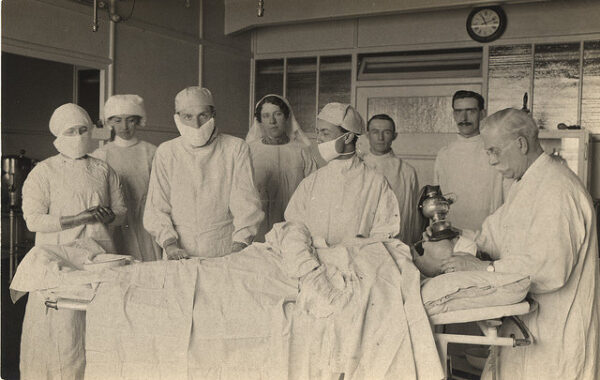
California Labor Code section 515.6 exempts from overtime compensation certain licensed physicians and surgeons who receive set minimum hourly rates of pay.
California Labor Code section 515.6 exempts from overtime compensation certain licensed physicians and surgeons who receive set minimum hourly rates of pay. The California Department of Industrial Relations (DIR) is increasing this minimum, effective January 1, 2016.
To avoid this state’s requirements to pay premium rates after eight hours worked in a day or 40 in a week, employers will now have to pay eligible physicians and surgeons the minimum equivalent of $76.24 per hour, up from the current $75.19 rate.
To document qualification for this exemption, employers will need to pay the physician or surgeon the minimum hourly rate, keeping accurate track of hours worked. Physicians and surgeons paid on a lump sum salary (whether weekly or otherwise) will not qualify for this exemption.
Under Labor Code section 515.6, an employee is an exempt-from-overtime worker only if he or she is a licensed physician or surgeon “primarily engaged” (more than 50% of the time) in duties that require that licensure. California Business & Professions Code section 2052 specifies such duties, requiring a medical license for anyone who “diagnoses, treats, operates for, or prescribes for any ailment, blemish, deformity, disease, disfigurement, disorder, injury, or other physical or mental condition of any person.”
Employers relying on this exemption will of course need to implement this rate change by the January 1 deadline.
Licensed medical doctors may also qualify for other overtime exemptions, including the administrative, executive, or professional exemptions. Each such category carries its own distinct criteria.
For more information, please contact Tim Bowles, Cindy Bamforth or Helena Kobrin.

As an example of the destruction that can result from an employer’s neglect of effective prevention training for supervisors and managers, international retailer Auto Zone has fought a losing battle for nearly a decade attempting to defend a California gender discrimination and retaliation suit. The company is currently on the hook for over $185,000,000 in punitive damages, $25,000,000 more than former employee Rosario Juarez requested to make an example of Auto Zone manager conduct as well as t
As an example of the destruction that can result from an employer’s neglect of effective prevention training for supervisors and managers, international retailer Auto Zone has fought a losing battle for nearly a decade attempting to defend a California gender discrimination and retaliation suit. The company is currently on the hook for over $185,000,000 in punitive damages, $25,000,000 more than former employee Rosario Juarez requested to make an example of Auto Zone manager conduct as well as this employer’s failure to prevent or curb such behavior.
Auto Zone hired San Diego retail salesperson Juarez in 2000, promoting her to parts sales manager in April 2001. According to Juarez, the company then denied her requested store manager promotion despite her exemplary performance and her direct manager’s recommendation. She claims her efforts to advance were continuously thwarted by a “glass ceiling,” asserting that out of nearly 100 regional store locations, only 10 had female managers. Juarez also claimed the Auto Zone directed its district managers to stop promoting women to store manager, to dramatically reduce the number of women promoted, and to remove existing female managers.
Auto Zone later promoted Juarez to store manager after she threatened to sue. After Juarez became pregnant in September 2005, her district manager allegedly harassed her–such as by telling her she could not handle her job–and urged her to step down from her store manager position.
In February 2006, despite her complaining about unfair treatment, Auto Zone demoted Juarez. After she filed a complaint with the California Department of Fair Employment and Housing on January 25, 2007, Auto Zone terminated her on November 20, 2008, claiming she was responsible for a “missing” cash envelope.
In November, 2014, a federal court jury found that Juarez’s pregnancy or gender was a substantial motivating reason for Auto Zone’s demotion and termination and that Auto Zone retaliated against her for complaining about her mistreatment, and that the company was responsible for failing to “take all reasonable steps” to prevent its managers from discriminating and retaliating against Juarez.
The jury unanimously awarded Juarez more than $872,000 for lost earnings and emotional distress. To discourage future wrongful conduct, the jury also unanimously determined that $185 million was the amount necessary to punish Auto Zone for its misconduct — $25 million more than Juarez’s requested punitive damages amount.
This courtroom war continues on, with Auto Zone’s now pending request for either a new trial or a much-reduced judgment. Regardless of how much Auto Zone will ultimately pay, the case illustrates the exorbitant amounts that can be in play, even in a relatively straightforward discrimination lawsuit brought by one employee.
For larger employers (with 50 or more persons hired, whether employed and/or independently contracted), California mandates that “all reasonable steps” includes effectively delivered supervisory/management anti-harassment training at least once every two years. This of course does not exempt smaller companies from taking viable measures to prevent such personnel management disasters as indicated by the Auto Zone experience.
The Law Offices of Timothy Bowles provides such required training in an interactive seminar format that brings home the fundamentals essential for supervisor maintenance of an harassment-, discrimination- and retaliation-free workplace. During October, November and December, 2015, we are delivering our half-day seminars:
For more information about our harassment prevention training or workplace forms and policies, please contact Tim Bowles, Cynthia Bamforth or Helena Kobrin.
Cindy Bamforth
October 23, 2015