Click here to subscribe to our Bowles Law e-letter


Click here to subscribe to our Bowles Law e-letter

On May 19, 2015, theLos Angeles City Council approved Motion 4E, providing annual minimum wage increases for employees in the City of Los Angeles up to $15.00 in 2020.The measureapplies to all employers, but implementation is delayed for employers having no more than 25 employees. Non-profits with more than 25 employees may apply for a waiver if they meet certain conditions.
On May 19, 2015, the Los Angeles City Council approved Motion 4E, providing annual minimum wage increases for employees in the City of Los Angeles up to $15.00 in 2020. The measure applies to all employers, but implementation is delayed for employers having no more than 25 employees. Non-profits with more than 25 employees may apply for a waiver if they meet certain conditions.
The initial increase will be to $10.50 on July 1, 2016. This is $.50 higher than the state minimum wage that goes into effect on January 1, 2016. See our previous blog, Amended Minimum Wage Notice Must Be Posted by July 1, 2014.
The Los Angeles measure provides for further increases each July 1 thereafter – to $12.00 in 2017, $13.25 in 2018, $14.25 in 2019, and finally $15.00/hour on July 1, 2020. Employers who have 25 or fewer employees must begin implementing the increase in July 2017 and have until 2021 to reach $15.00/hour. The approved measure directs that minimum wage for 14-17 year-olds will remain at 85 percent of minimum wage.
The matter has now been referred to the City Attorney to draft an ordinance implementing these changes, to be approved by the City Council. The ordinance is also to provide that wages will increase annually after 2020 according to the Consumer Price Index for Los Angeles.
This move by the City of Los Angeles follows a trend in California and nationally to increase minimum wage. See, Oakland Minimum Wage Escalates to $12.25 and San Francisco Minimum Wage Escalates to $12.25 on May 1, 2015.
For further information, contact one of our attorneys Tim Bowles, Cindy Bamforth or Helena Kobrin.
Helena Kobrin
May 22, 2015
On May 19, 2015, the Los Angeles City Council approved Motion 4E , providing annual minimum wage increases for employees in the City of Los Angeles up to $15.00 in 2020.
On May 19, 2015, the Los Angeles City Council approved Motion 4E, providing annual minimum wage increases for employees in the City of Los Angeles up to $15.00 in 2020. The measure applies to all employers, but implementation is delayed for employers having no more than 25 employees. Non-profits with more than 25 employees may apply for a waiver if they meet certain conditions.
The initial increase will be to $10.50 on July 1, 2016. This is $.50 higher than the state minimum wage that goes into effect on that date. See our previous blog, Amended Minimum Wage Notice Must Be Posted by July 1, 2014.
The Los Angeles measure provides for further increases each July 1 thereafter – to $12.00 in 2017, $13.25 in 2018, $14.25 in 2019, and finally $15.00/hour on July 1, 2015. Employers who have 25 or fewer employees must begin implementing the increase in July 2017 and have until 2021 to reach $15.00/hour. The approved measure directs that minimum wage for 14-17 year-olds will remain at 85 percent of minimum wage.
The matter has now been referred to the City Attorney to draft an ordinance implementing these changes, to be approved by the City Council. The ordinance is also to provide that wages will increase annually after 2020 according to the Consumer Price Index for Los Angeles.
This move by the City of Los Angeles follows a trend in California and nationally to increase minimum wage. See, Oakland Minimum Wage Escalates to $12.25 and San Francisco Minimum Wage Escalates to $12.25 on May 1, 2015.
For further information, contact one of our attorneys Tim Bowles, Cindy Bamforth or Helena Kobrin.

Under federal law, employees may or may not earn wages for preliminary actions at the beginning or “postliminary” activities at the close of a work day. The issue is determined on close attention to the context on a case-by-case basis.
Under federal law, employees may or may not earn wages for preliminary actions at the beginning or “postliminary” activities at the close of a work day. The issue is determined on close attention to the context on a case-by-case basis. For example, earlier in 2014, the U.S. Supreme Court absolved employer U.S. Steel from having to pay workers for the time spent donning specific articles of clothing and protective gear at the start of the day. See our article: The Devil Is in the Details, U.S. Supreme Court Turns to History and Webster’s Dictionary to Defeat a Class Action (Devil Article).
In Integrity Staffing Solutions, Inc. v. Busk, 2014 Westlaw 6885951, 574 United States Reports (U.S.) __ [December 9, 2014]), the Supreme Court addressed an end-of-the-day work situation, whether the Amazon warehouse workers earned wages under the Fair Labor Standards Act (FLSA) for the roughly 25 minutes spent waiting for and receiving daily security screenings after clocking out.
As we explained in the Devil Article, whether an employer has wage obligations under federal law for start-of-the-day “wind-up” activities or day’s end “wind down” actions is determined by the interplay of 1938 FLSA (which imposed near-blanket responsibility for payment for all time workers spent at the job) and the 1947 Portal-to-Portal Act (which exempted certain start and end activities from wage payments).
The key consideration is whether the starting or ending actions are part of a job’s “principal activities” because they are “integral and indispensable” to a worker’s performance of productive work. In one case (Mitchell v. Meat Packing, 350 U.S. 260, 262 (1956)), the Court found that time meatpacker employees spent sharpening their knives was compensable because dull blades would slow down production. In a more recent decision (IBP, Inc. v. Alvarez, 546 U.S. 21, 42 (2005)), the Court found that time poultry-plant employees spent waiting to put on protective gear was noncompensable because this waiting was “two steps removed from the productive activity on the assembly line.”
In the December, 2014 Integrity Staffing decision, the Supreme Court found the Amazon warehouse employees’ “productive work” was the location and movement of goods on the floor of the worksite. The workers’ time waiting in line and going through security screenings (to check at the end of the day for possible theft from the workplace) was not integral and indispensable to their principal duties and could have been eliminated without affecting the workers’ ability to perform their jobs. Thus, employer Integrity Staffing did not owe those employees wages for that time.
While the federal standards thus limit compensable work time in certain contexts, California law is more favorable to employees. Generally, businesses in this state must count the time workers spend at the work site changing clothes, cleaning up or performing other preparatory actions as part of payable “hours worked.” However, California Division of Labor Standards Enforcement (DLSE) enforcement guidelines do recognize some limited exceptions.
The Integrity Staffing case again illustrates that the question of whether employees earn wages for the time they spend on actions to start and/or end the day comes down to the specific circumstances in each situation. Particularly where management seeks to exclude such time from the paid workday, consulting with experienced employment legal counsel is a good idea.
If you have any questions about these issues, feel free to contact one of our attorneys, Tim Bowles, Cindy Bamforth, or Helena Kobrin.
Under federal law, employees may or may not earn wages for preliminary actions at the beginning or “postliminary” activities at the close of a work day. The issue is determined on close attention to the context on a case-by-case basis. For example, earlier in 2014, the U.S. Supreme Court absolved employer U.S. Steel from having to pay workers for the time spent donning specific articles of clothing and protective gear at the start of the day. See our article:The Devil Is in the Details, U.S. Sup
Under federal law, employees may or may not earn wages for preliminary actions at the beginning or “postliminary” activities at the close of a work day. The issue is determined on close attention to the context on a case-by-case basis. For example, earlier in 2014, the U.S. Supreme Court absolved employer U.S. Steel from having to pay workers for the time spent donning specific articles of clothing and protective gear at the start of the day. See our article: The Devil Is in the Details, U.S. Supreme Court Turns to History and Webster’s Dictionary to Defeat a Class Action (Devil Article).
In Integrity Staffing Solutions, Inc. v. Busk, 2014 Westlaw 6885951, 574 United States Reports (U.S.) __ [December 9, 2014]), the Supreme Court addressed an end-of-the-day work situation, whether the Amazon warehouse workers earned wages under the Fair Labor Standards Act (FLSA) for the roughly 25 minutes spent waiting for and receiving daily security screenings after clocking out.
As we explained in the Devil Article, whether an employer has wage obligations under federal law for start-of-the-day “wind-up” activities or day’s end “wind down” actions is determined by the interplay of 1938 FLSA (which imposed near-blanket responsibility for payment for all time workers spent at the job) and the 1947 Portal-to-Portal Act (which exempted certain start and end activities from wage payments).
The key consideration is whether the starting or ending actions are part of a job’s “principal activities” because they are “integral and indispensable” to a worker’s performance of productive work. In one case (Mitchell v. Meat Packing, 350 U.S. 260, 262 (1956)), the Court found that time meatpacker employees spent sharpening their knives was compensable because dull blades would slow down production. In a more recent decision (IBP, Inc. v. Alvarez, 546 U.S. 21, 42 (2005)), the Court found that time poultry-plant employees spent waiting to put on protective gear was noncompensable because this waiting was “two steps removed from the productive activity on the assembly line.”
In the December, 2014 Integrity Staffing decision, the Supreme Court found the Amazon warehouse employees’ “productive work” was the location and movement of goods on the floor of the work site. The workers’ time waiting in line and going through security screenings (to check at the end of the day for possible theft from the workplace) was not integral and indispensable to their principal duties and could have been eliminated without affecting the workers’ ability to perform their jobs. Thus, employer Integrity Staffing did not owe those employees wages for that time.
While the federal standards thus limit compensable work time in certain contexts, California law is more favorable to employees. Generally, businesses in this state must count the time workers spend at the work site changing clothes, cleaning up or performing other preparatory actions as part of payable “hours worked.” However, California Division of Labor Standards Enforcement (DLSE) enforcement guidelines do recognize some limited exceptions.
The Integrity Staffing case again illustrates that the question of whether employees earn wages for the time they spend on actions to start and/or end the day comes down to the specific circumstances in each situation. Particularly where management seeks to exclude such time from the paid workday, consulting with experienced employment legal counsel is a good idea.
If you have any questions about these issues, feel free to contact one of our attorneys, Tim Bowles, Cindy Bamforth, or Helena Kobrin.
Helena Kobrin
May 13, 2015

California’s Fair Employment and Housing Act (FEHA)prohibits companies employing five or more persons from: 1) discriminating against an employee due to his or herphysical disability; 2) failing to makereasonable accommodationfor a worker’s known physical disability; 3) failing to engage in aprompt and good faith interactive processwith a disabled employee to determine effective reasonable accommodations; and 4)retaliating against an employeefor opposing practices that FEHA prohibits.
California’s Fair Employment and Housing Act (FEHA) prohibits companies employing five or more persons from: 1) discriminating against an employee due to his or her physical disability; 2) failing to make reasonable accommodation for a worker’s known physical disability; 3) failing to engage in a prompt and good faith interactive process with a disabled employee to determine effective reasonable accommodations; and 4) retaliating against an employee for opposing practices that FEHA prohibits.
An employer may not discriminate against a disabled worker if he or she can perform the essential functions of a particular position with or without reasonable accommodation. A reasonable accommodation is a modification of working conditions that allows the disabled employee to perform those essential functions. An accommodation is not reasonable if doing so would produce undue hardship to the employer’s operations. See also, our previous disability-related articles, including Disability and Leave of Absence Policies, Pregnancy Disability Leave, and Disability Employment.
A vital aspect of any FEHA disability lawsuit arising out of these employer duties, is whether the defending company has clearly documented that it has fulfilled each of these obligations. A recent California Court of Appeal decision fully exonerating an employer illustrates what such adequate action and documentation entails. Nealy v. City of Santa Monica No. B246634 (Cal. Ct. App. Feb, 13, 2015. Also published in Westlaw, 234 Cal.App.4th (2015) 359. The decision confirms that required “reasonable accommodation” does not include an employer changing the essential functions of a job position at employee request.
Mr. Nealy was a long time employee of the City of Santa Monica, serving as a “solid waste equipment operator” for some six years up to 2003, when he injured his right knee on the job. With two surgeries, Mr. Nealy was out on “total temporary disability” for nearly two years.
With his doctor’s written certification, he sought return to work in May, 2005 with certain restrictions on pushing heavy trash bins. Nealy 234 Cal.App.4th at 366.
Mindful of its above obligations, the City maintained an “accommodations committee” to assist its human resources department in providing reasonable accommodations to disabled workers. To further document its actions in compliance with FEHA, the City also issued “essential job functions analysis” (EJFA) for various job positions.
For over five years following Mr. Nealy’s May, 2005 request to return to work and using its accommodations committee and its EJFAs for various posts, the City engaged in a series of interactions with him to find a position for which he was qualified and could perform the essential functions at least with reasonable accommodation.
In the last round, in Summer, 2010, the City concluded that Mr. Nealy could not perform the essential functions of the solid waste equipment operator position because the essential functions included several actions, including the lifting of heavy objects and the stooping or bending over to inspect machinery which Mr. Nealy’s doctor had directed in writing that Mr. Nealy could absolutely not perform. The City also engaged in a process to find a vacant position for Mr. Nealy qualified and which involved essential functions that he could perform. Unfortunately, the City concluded it could not accommodate him and thus laid him off. Nealy 234 Cal.App.4th at 369.
Mr. Nealy sued, alleging the City had violated all four of its FEHA disability obligations specified above. The lower court dismissed the case before trial for Mr. Nealy’s lack of evidence (“summary judgment”) and Mr. Nealy appealed. Nealy 234 Cal.App.4th at 369.
The Court of Appeal agreed with the lower court judge that the City could not be found in violation of FEHA. The heart of Mr. Nealy’s claim was that the City should be obligated to modify the essential functions of the solid waste equipment operator position in his circumstances so that he would not be required to perform the actions his doctor had established Mr. Nealy was incapable of, including the handling of heavy objects. The Court concluded: “The City was not required to eliminate essential functions from the job to accommodate [Mr. Nealy]… the inability to perform even one essential function is enough to move on to other alternatives, such as reassignment.” Nealy 234 Cal.App.4th at 377.
The Court also found the City had adequately documented its satisfactory exploration of other accommodations. “Reasonable accommodation may also include ‘reassignment to a vacant position’ if the employee cannot perform the essential functions of his or her position even with accommodation … FEHA requires the employer to offer the employee ‘comparable’ or ‘lower graded’ positions for which he or she is qualified … FEHA does not require reassignment, however, if there is no vacant position for which the employee is qualified … FEHA does not require the employer to promote the employee or create a new position for the employee to a greater extent than it would create a new position for any employee for any employee regardless of disability.” Nealy 234 Cal.App.4th at 377.
The Court went even further: “To the extent that Nealy claims the City has a duty to await a vacant position to arise, he is incorrect. A finite leave of absence may be a reasonable accommodation to allow an employee time to recover, but FEHA does not require to provide an indefinite leave of absence to await possible future vacancies.” Nealy 234 Cal.App.4th at 377. (emphasis supplied).
The Court also provided an important explanation of what constitutes unlawful retaliation in the disability context. FEHA prohibits an employer from terminating or discriminating against a worker because he or she has opposed practices that would be illegal under FEHA or because he or she has filed a complaint, testifed or assisted in any legal action arising from alleged FEHA violations.
However, Mr. Nealy did not actually oppose any supposed or alleged improper FEHA practices, for example seeking the advice of the Department of Fair Employment and Housing (DFEH) or filing an internal grievance with the City that it was violating his rights in the manner in which they were handling his requests. Instead, Mr. Nealy was merely engaged in the interactive process with the City required by the law. If, when an employer concludes that process unfavorably to the person’s continued employment, that employee then had a valid claim for retaliation, this would significantly blur and perhaps obliterate the distinction between an action for failure to accommodate or engage in the interactive process and retaliation.” Thus, the Court found that Mr. Nealy had no claim for retaliation either. Nealy Cal.App.4th at 380.
This Nealy v. City of Santa Monica decision thus illustrates the important service a company can provide itself by thorough, fair and well-documented accommodation processes. This starts with a business’s careful attention to the written description of the essential functions of each position in the company. As the Nealy Court pointed out: “ ’Essential functions’ means the fundamental job duties of the employment position the individual with the disability holds or desires. ‘Essential functions’ does not include marginal functions of the job … ‘Marginal functions’ of an employment position are those that, if not performed, would not eliminate the need for the job or that could be readily performed in an alternative way.” Nealy Cal.App.4th at 373.
For attorney assistance on this vital area, including the prevention or handling of disability-related disputes, please contact attorneys Tim Bowles, Cindy Bamforth, or Helena Kobrin.
Tim Bowles
May 11, 2015
California’s Fair Employment and Housing Act (FEHA) prohibits companies employing five or more persons from: 1) discriminating against an employee due to his or her physical disability ; 2) failing to make reasonable accommodation for a...
California’s Fair Employment and Housing Act (FEHA) prohibits companies employing five or more persons from: 1) discriminating against an employee due to his or her physical disability; 2) failing to make reasonable accommodation for a worker’s known physical disability; 3) failing to engage in a prompt and good faith interactive process with a disabled employee to determine effective reasonable accommodations; and 4) retaliating against an employee for opposing practices that FEHA prohibits.
An employer may not discriminate against a disabled worker if he or she can perform the essential functions of a particular position with or without reasonable accommodation. A reasonable accommodation is a modification of working conditions that allows the disabled employee to perform those essential functions. An accommodation is not reasonable if doing so would produce undue hardship to the employer’s operations. See also, our previous disability-related articles, including Disability and Leave of Absence Policies, Pregnancy Disability Leave, and Disability Employment.
A vital aspect of any FEHA disability lawsuit arising out of these employer duties is whether the defending company has clearly documented that it has fulfilled each of these obligations. A recent California Court of Appeal decision fully exonerating an employer illustrates what such adequate action and documentation entails. Nealy v. City of Santa Monica No. B246634 (Cal. Ct. App. Feb, 13, 2015. See also, 234 Cal.App.4th (2015) 359. The decision confirms that required “reasonable accommodation” does not include an employer changing the essential functions of a job position at employee request.
Mr. Nealy was a long time employee of the City of Santa Monica, serving as a “solid waste equipment operator” for some six years up to 2003 when he injured his right knee on the job. With two surgeries, Mr. Nealy was out on “total temporary disability” for nearly two years.
With his doctor’s written certification, he sought return to work in May, 2005 with certain restrictions on pushing heavy trash bins. Nealy, 234 Cal.App.4th at 366.
Mindful of its above obligations, the City maintained an “accommodations committee” to assist its human resources department in providing reasonable accommodations to disabled workers. To further document its actions in compliance with FEHA, the City also issued “essential job functions analysis” (EJFA) for various job positions.
For over five years following Mr. Nealy’s May, 2005 request to return to work and using its accommodations committee and its EJFAs for various posts, the City engaged in a series of interactions with him to find a position for which he was qualified and could perform the essential functions at least with reasonable accommodation.
In the last round, in Summer, 2010, the City concluded that Mr. Nealy could not perform the essential functions of the solid waste equipment operator position because the essential functions included several actions, including the lifting of heavy objects and the stooping or bending over to inspect machinery which Mr. Nealy’s doctor had directed in writing that Mr. Nealy could absolutely not perform. The City also engaged in a process to find a vacant position for Mr. Nealy qualified and which involved essential functions that he could perform. Unfortunately, the City concluded it could not accommodate him and thus laid him off. Nealy, 234 Cal.App.4th at 369.
Mr. Nealy sued, alleging the City had violated all four of its FEHA disability obligations specified above. The lower court dismissed the case before trial for Mr. Nealy’s lack of evidence (“summary judgment”) and Mr. Nealy appealed. Nealy, 234 Cal.App.4th at 369.
The Court of Appeal agreed with the lower court judge that the City could not be found in violation of FEHA. The heart of Mr. Nealy’s claim was that the City should be obligated to modify the essential functions of the solid waste equipment operator position in his circumstances so that he would not be required to perform the actions his doctor had established Mr. Nealy was incapable of, including the handling of heavy objects. The Court concluded: “The City was not required to eliminate essential functions from the job to accommodate [Mr. Nealy]… the inability to perform even one essential function is enough to move on to other alternatives, such as reassignment.” Nealy, 234 Cal.App.4th at 377.
The Court also found the City had adequately documented its satisfactory exploration of other accommodations. “Reasonable accommodation may also include ‘reassignment to a vacant position’ if the employee cannot perform the essential functions of his or her position even with accommodation … FEHA requires the employer to offer the employee ‘comparable’ or ‘lower graded’ positions for which he or she is qualified … FEHA does not require reassignment, however, if there is no vacant position for which the employee is qualified … FEHA does not require the employer to promote the employee or create a new position for the employee to a greater extent than it would create a new position for any employee for any employee regardless of disability.” Nealy, 234 Cal.App.4th at 377.
The Court went even further: “To the extent that Nealy claims the City has a duty to await a vacant position to arise, he is incorrect. A finite leave of absence may be a reasonable accommodation to allow an employee time to recover, but FEHA does not require to provide an indefinite leave of absence to await possible future vacancies.” Nealy, 234 Cal.App.4th at 377. (emphasis supplied).
The Court also provided an important explanation of what constitutes unlawful retaliation in the disability context. FEHA prohibits an employer from terminating or discriminating against a worker because he or she has opposed practices that would be illegal under FEHA or because he or she has filed a complaint, testifed or assisted in any legal action arising from alleged FEHA violations.
However, Mr. Nealy did not actually oppose any supposed or alleged improper FEHA practices, for example seeking the advice of the Department of Fair Employment and Housing (DFEH) or filing an internal grievance with the City that it was violating his rights in the manner in which they were handling his requests. Instead, Mr. Nealy was merely engaged in the interactive process with the City required by the law. If, when an employer concludes that process unfavorably to the person’s continued employment, that employee then had a valid claim for retaliation, this would significantly blur and perhaps obliterate the distinction between an action for failure to accommodate or engage in the interactive process and retaliation.” Thus, the Court found that Mr. Nealy had no claim for retaliation either. Nealy, 234 Cal.App.4th at 380.
This Nealy v. City of Santa Monica decision thus illustrates the important service a company can provide itself by thorough, fair and well-documented accommodation processes. This starts with a business’s careful attention to the written description of the essential functions of each position in the company. As the Nealy Court pointed out: “ 'Essential functions’ means the fundamental job duties of the employment position the individual with the disability holds or desires. ‘Essential functions’ does not include marginal functions of the job … ‘Marginal functions’ of an employment position are those that, if not performed, would not eliminate the need for the job or that could be readily performed in an alternative way.” Nealy, 234 Cal.App.4th at 373.
For attorney assistance on this vital area, including the prevention or handling of disability-related disputes, please contact attorneys Tim Bowles, Cindy Bamforth, or Helena Kobrin.

We are proud to present a fully overhauled officewebsite. In addition to updated attorneyprofiles,our firm’s experience and values, andavailable services, we offer a several pages on thehistory and evolution of employment lawas well as aNews sectioncontaining a fully compiled and indexedlibrary of over 275blog articles covering the legal basics and ongoing developments in nearly every aspect of workplace management and administration.
We are proud to present a fully overhauled office website. In addition to updated attorney profiles, our firm’s experience and values, and available services, we offer a several pages on the history and evolution of employment law as well as a News section containing a fully compiled and indexed library of over 275 blog articles covering the legal basics and ongoing developments in nearly every aspect of workplace management and administration.
Visitors to our site are also able to quickly survey our approach to service in many employment- and business-related practice areas, including:
The new site also contains a glossary of pertinent legal terms and a section with answers to Frequently Asked Questions in a host of workplace legal areas.
We hope you will find the new site of service to you. Please visit soon and relay any comments. Thanks very much to our developers Andrea Kluge and Alan Gilbertson of G&G Creative for all their hard work bringing the site to life.
Tim Bowles
April 30, 2015
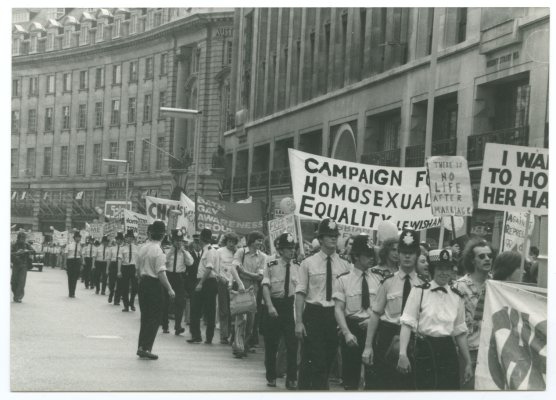
Prior to 2013, same sex spouses had no FMLA leave benefits regardless of whether their residence state recognized same sex marriages. However, U.S. Supreme Court’s 2013 decision inU.S. v. Windsorstruck down the federal Defense of Marriage Act which had defined marriage as being between a man and a woman. The ruling opened the door to the expansion of the rights of married persons to same sex couples.
Prior to 2013, same sex spouses had no FMLA leave benefits regardless of whether their residence state recognized same sex marriages. However, U.S. Supreme Court’s 2013 decision in U.S. v. Windsor struck down the federal Defense of Marriage Act which had defined marriage as being between a man and a woman. The ruling opened the door to the expansion of the rights of married persons to same sex couples.
The Department of Labor’s initial regulations following Windsor protected the FMLA rights of same sex spouses but only if their marriage was legally recognized in the state where they lived. This standard created confusion where such a same sex couple later moved to a state (or were employed in one) that did not recognize their marriage. Newly issued FMLA regulations remedy this inequity. FMLA protections now apply to all spouses who were legally married in any state even if the state where they now reside or work does not recognize same sex marriages. See, 29 Code of Federal Regulations (C.F.R.) section 825.102.
The new rule does not alter the eligibility requirements under FMLA or change the threshold of 50 or more employees in order for a company to be bound by that law. Please consult the Department of Labor’s newly issued “Frequently Asked Questions” (FAQs) for a broad survey of FMLA’s rights and requirements. Our attorneys Tim Bowles, Cindy Bamforth, and Helena Kobrin are also able to address questions regarding this law.
Cindy Bamforth
April 25, 2015
Prior to 2013, same sex spouses had no FMLA leave benefits regardless of whether their residence state recognized same sex marriages. However, U.S. Supreme Court’s 2013 decision inU.S. v. Windsorstruck down the federal Defense of Marriage Act which had defined marriage as being between a man and a woman. The ruling opened the door to the expansion of the rights of married persons to same sex couples.
Prior to 2013, same sex spouses had no FMLA leave benefits regardless of whether their residence state recognized same sex marriages. However, U.S. Supreme Court’s 2013 decision in U.S. v. Windsor struck down the federal Defense of Marriage Act which had defined marriage as being between a man and a woman. The ruling opened the door to the expansion of the rights of married persons to same sex couples.
The Department of Labor’s initial regulations following Windsor protected the FMLA rights of same sex spouses but only if their marriage was legally recognized in the state where they lived. This standard created confusion where such a same sex couple later moved to a state (or were employed in one) that did not recognize their marriage. Newly issued FMLA regulations remedy this inequity. FMLA protections now apply to all spouses who were legally married in any state even if the state where they now reside or work does not recognize same sex marriages. See, 29 Code of Federal Regulations (C.F.R.) section 825.102.
The new rule does not alter the eligibility requirements under FMLA or change the threshold of 50 or more employees in order for a company to be bound by that law. Please consult the Department of Labor’s newly issued “Frequently Asked Questions” (FAQs) for a broad survey of FMLA’s rights and requirements. Our attorneys Tim Bowles, Cindy Bamforth, and Helena Kobrin are also able to address questions regarding this law.
Cindy Bamforth
April 25, 2015