Click here to subscribe to our Bowles Law e-letter


Click here to subscribe to our Bowles Law e-letter
Paper Cut Chaos
Small Compliance Gaps Fuel
Class Action Frenzy
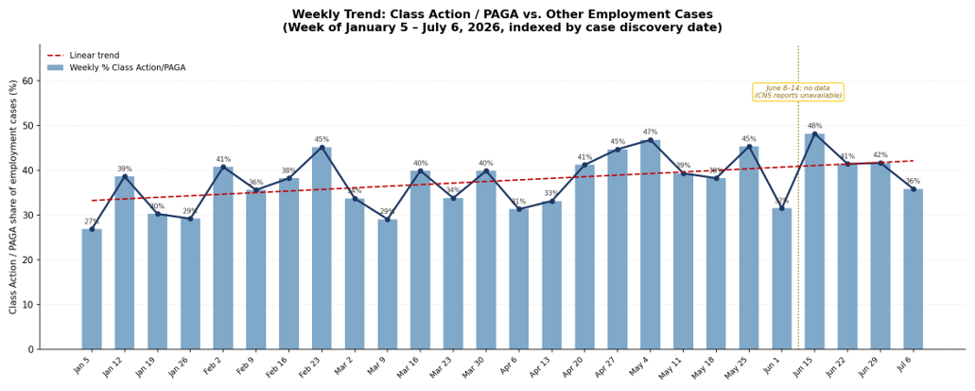
California’s employers are in the midst of a growing litigation epidemic, the wage-and-hour class action — a lawsuit built around one policy or practice applied to a company’s entire workforce, the exposure multiplied by every employee it touches and every pay period it covers.
Class actions live and die on one question: is there a common policy or practice that affected a group of employees the same way? The lawyers aren't looking for one employee perhaps shorted some overtime. They're looking for a payroll rule, a scheduling practice, or a handbook provision that applied uniformly and thus permits a court to magnify a single violation to dozens, hundreds, or thousands of workers extending four years back from the date of filing.
The underlying facts are often mundane:
None of these individually would justify a major lawsuit. Yet, as they stem from a company-wide policy rather than an isolated manager's mistake, like the virtually certain speeding ticket if one drives long enough, it’s only a matter of time before that business may be tagged with a class case.
This state offers a special boost to this unpleasantness. Routinely, plaintiffs' firms add a PAGA (Private Attorneys General Act) layer to the class claims. See, e.g., PAGA Monster Declawed --Major Relief for Responsible Employers (June 28, 2024)
Take-Aways:
For further information, please contact Tim Bowles, Cindy Bamforth or Helena Kobrin.
See also:
Tim Bowles
July 31, 2026
If you are an employer facing possible litigation, or have an employee issue on which you need immediate guidance, call us to set up a consultation, or submit your message.
NOTE: Use of this website does not make one a client of the Law Offices of Timothy Bowles (“Firm” or “Bowles Law”). Establishing an attorney-client relationship and the confidentiality that comes with it depends on the Firm’s prior confirmation that no factor, including any conflict of interest (for example, our representation of another party adverse to you), exists to prevent that establishment. If you have confidential information that you would like to provide a Bowles Law attorney, please communicate directly to one of our attorneys, in person, by telephone, email, fax or other written means. Do not use this website to offer or communicate confidential information about any legal matter.