Click here to subscribe to our Bowles Law e-letter


Click here to subscribe to our Bowles Law e-letter

National Raisin will pay $2 million and its co-employer Select Staffing $500,000 to settle sexual harassment allegations brought by the Equal Employment Opportunity Commission (EEOC).
National Raisin will pay $2 million and its co-employer Select Staffing $500,000 to settle sexual harassment allegations brought by the Equal Employment Opportunity Commission (EEOC).
The case charged a sexually hostile work environment at National Raisin, with supervisors taking no effective action to stop the harassment despite complaints that seasonal female workers were subject to “frequent unwanted groping, sexually explicit comments, requests for sexual favors, and retaliatory termination following complaints of harassment.”
The settlement requires Select Staffing to train temporary workers on their federal rights to be harassment free and to train executives and HR personnel to investigate, correct and prevent harassment. Select Staffing must also document complaints and actively ensure clients take appropriate corrective measures.
Anna Park, regional attorney for the EEOC’s Los Angeles District Office, said: “We are seeing repeated issues with staffing agencies who ignore harassment of temporary workers on assignment. Staffing agencies are the direct employers of temporary workers; like all employers, Title VII requires that staffing agencies take action to protect their employees if they learn of third-party harassment at client worksites. We commend the women who came forward despite their fears and encourage others not to stay silent. To the EEOC, no one is above the law.”
For further information, please contact Tim Bowles, Cindy Bamforth or Helena Kobrin.
See also:
Helena Kobrin
September 13, 2024

The California Civil Rights Department ( CRD ) has obtained a $14,425,000 settlement from Microsoft Corporation for allegedly discriminating and retaliating against employees returning from disability, pregnancy, and family caretaking...
The California Civil Rights Department (CRD) has obtained a $14,425,000 settlement from Microsoft Corporation for allegedly discriminating and retaliating against employees returning from disability, pregnancy, and family caretaking leave.
The settlement resolves a multi-year investigation related to Microsoft’s denial of annual bonuses and/or promotions to workers who took protected leave under California’s Fair Employment and Housing Act, the California Family Rights Act, California’s Pregnancy Disability Leave law, Title VII of the Civil Rights Act of 1964, and the Americans with Disabilities Act.
As part of the settlement, Microsoft will implement proactive steps to prevent future discrimination.
CRD Director Kevin Kish stated: “Whether it’s to look after a newborn child or take care of your own health, workers generally have the right to take time off without worrying about consequences at work. By allegedly penalizing employees for taking protected forms of leave, Microsoft failed to support workers when they needed to care for themselves or their families. The settlement…will provide direct relief to impacted workers and safeguard against future discrimination at the company. We applaud Microsoft for coming to the table and agreeing to make the changes necessary to protect workers in California.”
Take-Aways:
Covered employers must correctly implement all applicable leave laws and ensure managers do not consider protected time off when determining compensation and promotions.
For further information, please contact Tim Bowles, Cindy Bamforth or Helena Kobrin.
See also:
Cindy Bamforth
September 11, 2024

California’s Paid Family Leave ( PFL ) -- a temporary disability program administered by the state’s Employment Development Department ( EDD ) -- provides up to eight weeks of state-funded partial wage replacement benefits for workers...
California’s Paid Family Leave (PFL) -- a temporary disability program administered by the state’s Employment Development Department (EDD) -- provides up to eight weeks of state-funded partial wage replacement benefits for workers needing time off to care for a seriously ill family member, bond with a new child, or participate in a qualifying military event.
Small businesses may apply for state grants up to $2,000 per employee on PFL to offset increased overhead, such as to cross-train existing staff and hire and train new and/or temporary employees.
The grant period is June 1, 2024 to May 31, 2026 or until funds run out. To qualify, the business must:
Take-Aways:
For more details, visit www.CaliforniaPFL.com
For further information, please contact Tim Bowles, Cindy Bamforth, or Helena Kobrin.
See also:
Cindy Bamforth
September 6, 2024

A North Carolina Walmart distribution center refused an employee’s intermittent leave request for a neurological issue in her hand and wrist.
A North Carolina Walmart distribution center refused an employee’s intermittent leave request for a neurological issue in her hand and wrist. The company insisted she return to full duty or not at all, then terminated her after she protested its denial of intermittent work.
Her resulting complaint to the Equal Employment Opportunity Commission (EEOC) for disability discrimination and retaliation was one of over 29,000 nationwide for fiscal year 2023. On the EEOC’s suit on her behalf, Walmart settled for $75,000 and a prohibition from requiring full employee recovery before return to work. Walmart also must consider transfer from a warehouse to a store as reasonable accommodation and must post employee rights notices, provide annual training, and submit compliance reports.
The EEOC’s press release states: “Employer policies requiring employees to show that they are 100% healed, or can otherwise work without restriction, before returning from medical leave violate public policy and run afoul of the [Americans with Disabilities Act]. Further, the statute prohibits employers from retaliating against employees for seeking a reasonable accommodation. Such conduct has a chilling effect on the willingness of other employees to report unlawful conduct.”
Take-Aways:
Don’t retaliate against employees who seek accommodation for a disability. Have an interactive discussion and work out any reasonable accommodation. On reliable documentation there are no scheduling or other adjustments possible without an undue hardship, termination is a last resort.
For further information, please contact Tim Bowles, Cindy Bamforth or Helena Kobrin.
See also:
Helena Kobrin
August 30, 2024

Dear Employers: Please, as soon as superhumanly possible, confront and upgrade workplace practices to full Labor Code compliance.
Dear Employers: Please, as soon as superhumanly possible, confront and upgrade workplace practices to full Labor Code compliance. It pains me to hear a procrastinator ask the cost of defense – the projected time, money, risk -- when facing a class action or “PAGA” (2004 Private Attorneys General Act) suit. As these cases involve so many factors, “expense more than you can likely imagine” is about as specific as one can get.
California class action and PAGA litigation is a growth industry with every viable business in the crosshairs. See, e.g., The Data Is In—California Class Action and PAGA Filings to Hit New Highs (January 12, 2024) (class actions filings have steadily risen since 2017 with a staggering 20% increase in 2023, over 5,000 cases statewide). See also PAGA Monster Grow More Legs – Best Protection Against Potentially Devastating Group Labor Claims is … Prevention (February 2, 2024) (for even a handful of irregular meal break timekeeping records for 30 workers, averaging 1.5 violations per week for one year, one company recently faced $468,000 in PAGA penalties).
Best practices demand an internal proactive wage audit to locate and fix improper pay practices before the process server comes knocking with summons and complaint. Critical compliance issues include:
Take-Aways:
Our firm can help conduct friendly wage audits, from a small scale targeting of time and pay records to a thorough inspection of multiple wage-and-hour matters. Please, do it … now.
For further information, please contact Tim Bowles, Cindy Bamforth or Helena Kobrin.
See also:
Tim Bowles
August 30, 2024

On August 20, 2024, a Texas federal court issued an injunction stopping the Federal Trade Commission ’s (FTC) new non-compete regulation from taking effect on September 4.
On August 20, 2024, a Texas federal court issued an injunction stopping the Federal Trade Commission’s (FTC) new non-compete regulation from taking effect on September 4.
See Freeing Enterprise: FTC Prohibits Employee Noncompetes (May 17, 2024).
Judge Ada Brown concluded the FTC overstepped its authority, calling the new rule arbitrary, capricious and groundless.
With several other district courts also addressing this regulation – one has already upheld it -- it will take the appeals courts, possible the U.S. Supreme Court, to resolve the issue.
For California-only employers, they can go back to their long-familiar California non-compete ban (see, Non-Compete No Nos [November 3, 2023]) and not worry about any differences between California and federal law.
Take-Aways:
Stay tuned for the next episode in FTC vs the federal courts. In the meantime, employers do not have to follow the federal non-compete ban.
For further information, please contact Tim Bowles, Cindy Bamforth or Helena Kobrin.
See also:
Helena Kobrin
August 23, 2024

The nationwide “ ban-the-box ” movement is part of government’s effort to remedy blanket disqualification of persons with criminal records for any job.
The nationwide “ban-the-box” movement is part of government’s effort to remedy blanket disqualification of persons with criminal records for any job. Ban-the box laws typically require employers to eliminate the criminal history question on a job application, reduce an employer’s accessibility to criminal records until after extending a conditional job offer, and require the criminal offense to be relevant for that job position for an employer to use it as a disqualifying factor.
Following San Francisco, Los Angeles, and California’s statewide Fair Chance Act, Los Angeles County has adopted the Los Angeles County Fair Chance Ordinance for Employers (FCO). See also, FCO Overview and Frequently-Asked Questions.
Effective September 3, 2024, the FCO applies to any employer -- including job placement agencies and non-profit organizations -- located or doing business in the unincorporated County that employs five or more employees.
The FCO also covers individuals whose employment (including independent contractors or freelancers) involves, or will involve, performing at least two hours of work on average each week within the unincorporated County.
Covered employers should pay particular attention to these points:
Job Postings and Workplace Notices:
Job postings must exclude language deterring those with criminal backgrounds from applying and must include language establishing FCO and Fair Chance Act compliance. If legally prevented from hiring individuals with a criminal history, the job posting must enumerate those laws or regulations. If the employer intends to conduct a criminal history check, the job posting must list all material duties of the specific position for which a criminal history may have a direct, adverse and negative relationship. Covered employers must also conspicuously display a notice about the FCO at every workplace and on webpages frequently visited by employees, freelancers or applicants.
Conditional Job Offer Letters, Procedures:
The conditional job offer letter must contain a complete list of all types of information, background or history the employer will review. If applicable, the letter must state the offer is contingent upon review of the criminal history and that the employer has good cause to conduct the background check for the specific job position based on specified “supporting justification.”
Criminal History Restrictions:
The employer cannot ask any criminal background questions until after the employer receives the criminal history report. Except for caregiver positions, covered employers may no longer inquire about or base an adverse action on a conviction over seven years old, measured from the date of disposition.
Rescinding the Conditional Job Offer:
The employer must carefully conduct a documented multi-step individualized assessment before withdrawing the conditional job offer.
Private Right to Civil Action:
There are substantial administrative penalties for an employer’s FCO violations. Also, an aggrieved individual can file a complaint against the hiring entity with the County’s Department of Consumer and Business Affairs (DCBA) and can bring a civil court action within one year thereafter.
Take-Aways:
Covered employers should carefully review the FCO’s extensive rules and restrictions; modify job postings, webpages, and conditional job offer letters; and implement a compliant hiring process before the September 3 deadline.
For further information, please contact Tim Bowles, Cindy Bamforth or Helena Kobrin.
See also:
Cindy Bamforth
August 15, 2024
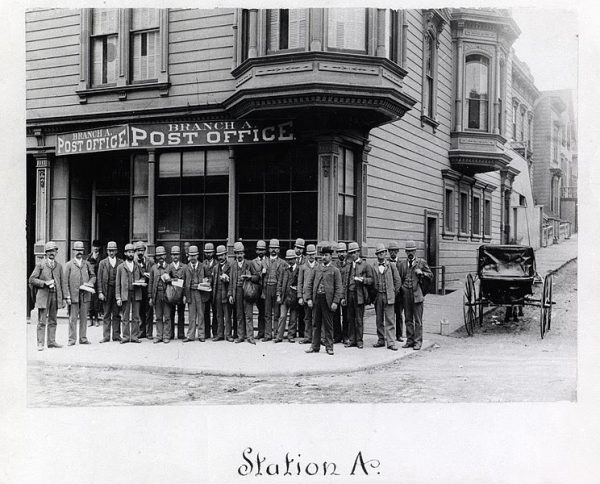
Triggered by an Occupational Safety and Health Administration (OSHA) investigation, the federal Department of Labor (DOL) sued the U.S.
Triggered by an Occupational Safety and Health Administration (OSHA) investigation, the federal Department of Labor (DOL) sued the U.S. Postal Service, obtaining a court approved settlement over USPS’s alleged retaliation against three probationary employees for reporting workplace injuries. The resolution affects 59 post offices in Washington state, following DOL retaliation suits against the USPS in Oregon, California, and Pennsylvania since 2020.
The settlement bars repeat retaliation and directs $187,732 paid to the illegally terminated employees for lost wages, interest, and other damages.
Regional Solicitor of Labor Marc Pilotin stated:
“By issuing the broadest permanent anti-retaliation injunction to date, the U.S. District Court has recognized the U.S. Postal Service’s pattern of ignoring its own policies and unlawfully firing probationary workers who report injuries. The agency’s repeated and unlawful disregard of federal laws against employee retaliation has caused financial and emotional harm to workers and their families. This retaliatory conduct must stop at once.”
“This landmark injunction sends a clear signal to employers that retaliation — in any form — against employees who report workplace injuries will not be tolerated. The U.S. Department of Labor will continue to enforce federal protections of workers’ rights rigorously and combat retaliation. With this action, the USPS’ unlawful firings of probationary employees must come to an end. Immediate changes must be made to prevent these kinds of baseless, hurtful and unlawful terminations.”
Other agreement terms include:
Take-Aways:
Private employers have the same responsibility to honor injury claims as the USPS is now specifically directed to do. Businesses must refrain from all retaliation against injured workers.
For further information, please contact Tim Bowles, Cindy Bamforth or Helena Kobrin.
See also:
Helena Kobrin
August 9, 2024

Clearly written Labor Code-compliant policies go a long way toward and hassle-free workplace and smooth working relationships, as well as minimizing the chances of worker legal claims. “Tim's office makes HR matters so much easier.
Clearly written Labor Code-compliant policies go a long way toward and hassle-free workplace and smooth working relationships, as well as minimizing the chances of worker legal claims.
“Tim's office makes HR matters so much easier! We just have to do what they tell us to do. We order their updated hiring forms and employee handbook each year, thus expanding our protections with the correct up-to-date wording. The hiring forms alone saved us thousands of dollars in one lawsuit.” ~ LO
Updated for 2024, our model forms include:
Our comprehensive 80-plus page model employee handbook, 2024 edition, covers:
CONTACT US TO ORDER NOW
To order or for more information, contact Office Manager Aimee Rosales at 626.583.6600 or email her at officemgr@tbowleslaw.com
August 8, 2024