Click here to subscribe to our Bowles Law e-letter


Click here to subscribe to our Bowles Law e-letter

Our collective unwanted pandemic “house guest” continues to spur government’s unprecedented measures toward the virus’s permanent eviction.
Our collective unwanted pandemic “house guest” continues to spur government’s unprecedented measures toward the virus’s permanent eviction.
Beginning November 21 and to December 21, the California Department of Public Health imposed a statewide 10:00 p.m. to 5:00 a.m. curfew with certain exceptions for essential services, medical emergencies, etc.
Starting tomorrow, Saturday, December 5, and through December 26, a further Regional Stay Home Order will be in place. Any of five regions in California will be subject to the order’s strict standards if and when that region’s total available adult ICU bed capacity falls to less than 15%. The regions are:
Once triggered, the regional order substantially limits public and commercial activity, for example including cut-backs of indoor retail and shopping center operation to 20% capacity; hotels and lodging open for critical infrastructure support only; restaurant take-out or delivery only; remote office work only except for critical infrastructure; and worship and political expression outdoors only.
We count 22 counties and one city which have rescinded their previous local orders and now follow statewide guidances:
As of today, December 4, 2020, we list these counties and cities as continuing with “safer at home” or “shelter in place” ordinances supplemental to and stricter than Sacramento’s statewide directives:
Thanks again to our legal assistant Daniska Coronado for these continuing updates. Please use the above links and other online resources for further developments. Requirements of varying strictness continue to change frequently, municipality-by-municipality.
See also,
For further information, please or contact Tim Bowles, Cindy Bamforth or Helena Kobrin.
Timothy Bowles
Daniska Coronado
December 4, 2020
On September 9, 2020, Cal/OSHA announced citations and $400,000 in proposed penalties to Overhill Farms Inc. and its temporary employment agency Jobsource North America Inc.
On September 9, 2020, Cal/OSHA announced citations and $400,000 in proposed penalties to Overhill Farms Inc. and its temporary employment agency Jobsource North America Inc. for repeatedly failing to protect hundreds of workers from COVID-19 exposure in Vernon frozen food plants.
The agency alleges that on April 28, it found 510 employees unnecessarily exposed to COVID-19 with at least 20 employees contracting the disease and one fatality.
According to Cal/OSHA the employers failed to install physical barriers or implement other workplace protection procedures such as where employees clock in and out, in the break room, during parking operations and at the cart where they put their uniforms. The employers also allegedly failed to train employees on COVID-related hazards, investigate the COVID illnesses or report the fatality to Cal/OSHA as required by law.
Cal/OSHA Chief Doug Parker commented: “It is critical that employers evaluate the workplace and take proactive measures to prevent transmission of COVID-19 in the workplace. If a COVID-19 illness occurs, employers must investigate the case to determine if additional protective measures should be taken and report the serious illnesses and deaths to Cal/OSHA. Employers should also notify workers of possible exposure and report outbreaks to county public health officials.”
Cal/OSHA has recently issued temporary emergency standards to further protect workers from COVID-19. The agency also offers multi-lingual employer guidances by industry, webinars, training and other educational materials, and FAQs regarding pandemic protection, recordkeeping and reporting standards.
See also:
For further information, please or contact Tim Bowles, Cindy Bamforth or Helena Kobrin.
Cindy Bamforth
December 2, 2020
If an office seeks to pull off an in-person 2020 year-ending holiday gathering party (survival celebration?), pandemic social distancing is but the newest element in the planning and execution.
If an office seeks to pull off an in-person 2020 year-ending holiday gathering party (survival celebration?), pandemic social distancing is but the newest element in the planning and execution. Management must ensure such gatherings serve to acknowledge production and promote team morale, not to spiral out-of-bounds into an otherwise preventable harassment incident or worse.
Some DO’s and DON’Ts:
DO: Consider whether the prevailing COVID-19 restrictions and common sense dictate having an in-person event in the first place;
DO: If such planning is to proceed, design a super-spreader free celebration that includes workplace-appropriate acknowledgment and team building and minimizes the prospect for unwelcome, inappropriate conduct. For example, a luncheon rather than an evening party may diminish opportunity for unwanted romantic advances and other improper conduct;
DO: Provide advance dress code guidelines appropriate to the workplace, e.g., outfits not likely to be insulting or offensive to other races, cultures, religions, etc.;
DO: Make it clear that participation is voluntary; and
DO: Enforce guidelines as needed during the event, for instance directing an offending employee to leave.***
DON’T: Permit any supervisor, manager, or executive to behave inappropriately. Leaders must set the example for appropriate behavior;
DON’T: Ignore any instance of off-color banter or other offensive behavior. Inaction is akin to condoning such conduct, significantly increasing the chances of a harassment claim; and
DON’T: Allow alcohol consumption. Management otherwise lowers its ability to reasonably maintain the event’s intended professional demeanor while increasing company exposure to liability for a drink-fueled offender’s conduct. If alcohol is to be available, provide advance guidelines to prevent any inappropriate or unfortunate incident. The HR-advising firm Employers Council has published some relevant points.
See also:
For further information, please contact Tim Bowles, Cindy Bamforth or Helena Kobrin.
Tim Bowles
November 27, 2020
The newly streamlined Employment Development Department (EDD) Unemployment Insurance “work sharing” procedure enables employers to reduce costs in these tough pandemic times, without letting employees go.
The newly streamlined Employment Development Department (EDD) Unemployment Insurance “work sharing” procedure enables employers to reduce costs in these tough pandemic times, without letting employees go.
Work share plans are not new in California, if used infrequently. Instead of the tough choice of who is to stay and who is to go, an employer facing a downturn may reduce co-worker hours across the boards or in an affected unit with each individual receiving unemployment benefits toward his/her missing work time. Such plans thus keep all those employees on payroll, preserving any applicable health and retirement benefits.
Spurred by COVID conditions, Assembly Bill (AB) 1731, effective September 30, 2020, aims to expedite this potential solution.
EDD now provides an electronic portal to enable employers to propose work sharing plans to cover “affected units” of their companies, i.e., those “plants, departments, shifts or other identifiable units,” having a minimum of two workers, and not less than 10 percent of the employer’s regular permanent work force involved . . . in each week, or in at least one week of a two-consecutive-week period, to which an approved work sharing plan applies.”
Among other requirements, the employer must also:
The EDD must act on a plan application within ten working days of receipt and provide employers a claim packet – via online or by mail -- within five days of approval.
Plans approved through September 1, 2023 will be in effect for one year from approval date unless the employer requests a shorter time period.
The EDD’s online FAQs for employees and employers supply other application and administrative requirements.
See also,
For further information, please contact Tim Bowles, Cindy Bamforth or Helena Kobrin.
Helena Kobrin
November 24, 2020
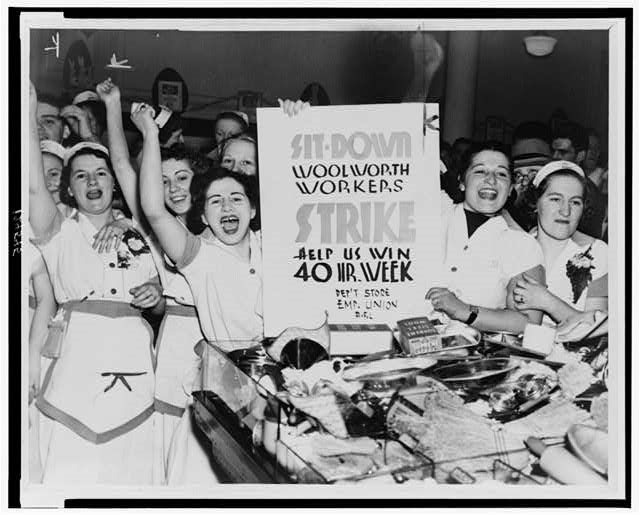
“At-will” employment status is commonly understood as an employer’s prerogative to abruptly terminate a worker for any reason at all. Not so fast.
“At-will” employment status is commonly understood as an employer’s prerogative to abruptly terminate a worker for any reason at all. Not so fast.
Originally adopted during the 1800s Industrial Revolution to provide greater workforce mobility, “at-will” did mean that either employer or employee could terminate or quit the relationship at any time, with or without advance notice and with or without a reason.
However, Congress, state legislatures and the courts have since restricted the concept to include only terminations for reasons not otherwise forbidden. The list of prohibited reasons has steadily grown over the past several generations.
In 1935, for instance, the National Labor Relations Act banned termination based on union-related activities. Also spurred by the Depression, Labor was also able to win contract provisions requiring employers to establish a lawful “just cause” for firing union members.
The Civil Rights Act of 1964 further hindered employer rights to terminate people for classifications irrelevant to job qualifications or performance, initially race, color, sex, national origin or religion.
Depending on an employer’s state or even municipality and the size of its payroll, these so-called “protected classifications” may now exceed 15 or more, to name a few: disability (physical or mental), age (40 or older), sexual orientation, marital status, medical condition, military status, and traits associated with a particular race, such as hair texture and style.
Thus, even if there is a legitimate performance-based reason to terminate a failing employee, management must proceed deliberately if any of these forbidden factors might also be in play.
Best practices include:
See also:
For more information, please contact Tim Bowles, Cindy Bamforth or Helena Kobrin.
Helena Kobrin
Tim Bowles
November 20, 2020
Under existing law, employers with 50 or more on payroll are required to provide unpaid family and medical leave under the California Family Rights Act ( CFRA ) and those with 20 or more on payroll had to provide unpaid baby-bonding time...
Under existing law, employers with 50 or more on payroll are required to provide unpaid family and medical leave under the California Family Rights Act (CFRA) and those with 20 or more on payroll had to provide unpaid baby-bonding time off under the New Parent Leave Act (NPLA).
Effective January 1, 2021, Senate Bill 1383 (SB 1383) repeals the NPLA and greatly expands the CFRA’s leave entitlements.
Under the expanded CFRA, employers with as few as five employees must provide eligible workers with up to 12 weeks of unpaid job-protected family and medical leave each year.
An eligible employee must be employed for more than one year with the employer and have worked at least 1,250 hours during the 12 months prior to the leave. Previously, the law excluded highly-paid salaried employees; the expanded law does not.
Eligible employees may take up to 12 weeks of consecutive or intermittent unpaid leave within a 12-week period.
Eligible employees can take leave to bond with a new child or to care for themselves or a child, parent, spouse or domestic partner. The expanded CFRA also permits leave under these new qualifying reasons:
Employers may require limited documentation to substantiate the need for the leave. Upon granting the leave request, employers must guarantee reinstatement to the same or a comparable position.
Employers must continue paying group health insurance premiums as if the employee were actively working.
Although the leave is unpaid, the employee must be allowed to use available paid sick leave and accrued vacation pay for the employee’s own serious health condition. For CFRA leaves on other grounds, the employee must be allowed to use accrued vacation.
Employers with 50 or more on payroll must also continue to comply with the federal Family and Medical Leave Act (FMLA). Such employers will now potentially face a dual leave track. For example, the expanded CFRA permits for time off to care for a sibling, FMLA does not. Thus, an employee could potentially use up to 12 weeks of expanded CFRA to care for a sibling and then another 12 weeks of FMLA to care for a parent in a single year.
Covered employers should promptly update their employee handbooks and absence request forms. They should also educate and train their supervisors on the new law.
See also:
For more information, please contact Tim Bowles, Cindy Bamforth or Helena Kobrin.
Cindy Bamforth
November 12, 2020
58 percent of California voters have approved Proposition 22 , allowing Uber, Lyft, PostMates, DoorDash, Instacart, and other gig economy companies to continue classifying their workers as independent contractors.
58 percent of California voters have approved Proposition 22, allowing Uber, Lyft, PostMates, DoorDash, Instacart, and other gig economy companies to continue classifying their workers as independent contractors. Effective immediately, such drivers are no longer subject to the rigid ABC test first issued in California Supreme Court’s Dynamex decision (2018) and furthered in the legislature’s Assembly Bill (AB) 5 (2019) and AB 2257 (2020)
Proposition 22 creates a new, hybrid version of independent contractor status for “application (app)-based” drivers working for “network companies” which pick up and deliver goods or people. It guarantees 120 percent of minimum wage for “engaged” time, i.e., from pick-up to delivery, as well as per-mile compensation for vehicle expenses, and other benefits. When a driver makes a pick up in a higher minimum wage county or city, the higher minimum applies to that trip.
A company utilizing this model may not:
In order for the relationship to qualify, network companies and drivers must have written contracts prior to the driver accessing the company’s app and a company may only terminate a driver on grounds listed in the contract.
The new law also provides an earnings floor, and if a driver makes less than that amount for a 14-day earnings period, the company must make up the difference. In addition, companies may not take any portion of tips a driver receives from customers, must pay the tips to the driver, and may not decrease a driver’s pay because of tips.
Other rights, benefits, and policies include:
Companies must require criminal background checks for all drivers prior to accessing the company’s app, with certain convictions disqualifying the driver (e.g., felony sex or other violent crimes). They must also provide safety training to drivers.
A company are also must have a zero-tolerance policy for workers under the influence of drugs or alcohol while driving.
As reflected in the recent “ABC” legislation above and the contrasting large majority who voted for Prop. 22, independent contractor status for app-based drivers has been and remains a hot topic.
While the balance now presented by Proposition 22 will not satisfy everyone, it permits the business survival of network companies while enhancing driver work conditions and maintaining the convenience and relatively low cost of such transportation and delivery services.
See also:
For further information, please contact Tim Bowles, Cindy Bamforth or Helena Kobrin.
Helena Kobrin
November 6, 2020
For the second year running, our clients, fellow attorneys and other supporters have confirmed we arePasadena Weekly’s best law firm. Thanks to all Southern California communities for allowing us to s...
For the second year running, our clients, fellow attorneys and other supporters have confirmed we are Pasadena Weekly’s best law firm. Thanks to all Southern California communities for allowing us to serve you since 1998.
5 Nov,2020
November 5, 2020
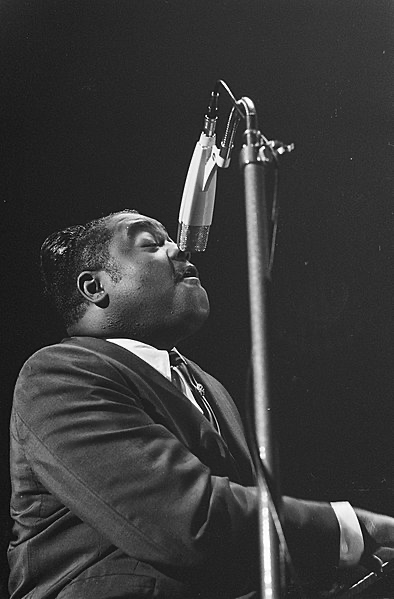
In response to more than a year of meetings, fact-findings and discussions between legislators and the music industry, AB 2257 and new Labor Code 2780 , effective September 4, 2020, provide a new music and entertainment industry exemption...
In response to more than a year of meetings, fact-findings and discussions between legislators and the music industry, AB 2257 and new Labor Code 2780, effective September 4, 2020, provide a new music and entertainment industry exemption from the strict “ABC” test for independent contractor classification.
Now eligible to apply the more-forgiving Borello “balance of factors” test:
Individual performance artists (including comedians, improvisers, magicians, illusionists, mimes, storytellers and puppeteers) can also be ABC test-exempt when performing original, creative work if they are free from the hiring entity’s control and direction both in contract and in fact, retain their intellectual property rights, and can set their terms of work and negotiate their rates.
Single-engagement live performance musicians may avoid the stricter ABC test unless they are headlining at a concert venue with more than 1,500 attendees or performing at a music festival with over 18,000 tickets sold daily.
The ABC test will continue to apply to performers who:
The fine-point boundaries of this law thus require any “hirer” and “hiree” to ensure they are adequately defining their relationship to qualify for this looser “Borello” test for independence.
See also:
For more information, please contact Tim Bowles, Cindy Bamforth or Helena Kobrin.
Cindy Bamforth
October 29, 2020