Click here to subscribe to our Bowles Law e-letter


Click here to subscribe to our Bowles Law e-letter
A.i. Flameout
Lawyers Clipped For
Hallucination Intoxication
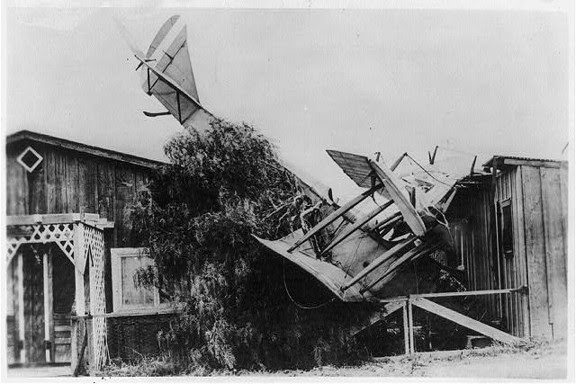
Into the What-Were-They-Thinking Department entered two Orange County lawyers, filing briefs the federal appeals court later found to contain “multiple nonexistent cases, misattributed quotations, and gross misrepresentations of real cases.” Claiming the errors were innocent typos, the attorneys denied the possibility that generative artificial intelligence might have produced the errors. The Court, finding otherwise, sanctioned the lawyers, including a six-month suspension from the practice of law. Anu v. Blanche (June 3, 2006).
Along the way, one of the lawyers eventually conceded it was “possible” AI had been used by the law student who drafted the briefs. While the attorney “reviewed” them before filing, “no licensed attorney read the cases cited...”
While not condemning generative AI as inherently unethical, the Court noted the tool prone to “hallucinations”—fabricated authorities and inaccurate legal statements. Even legal-specific tools from major research providers had reported hallucination rates of 17% and 33% on a representative set of legal queries in 2024.
A competent lawyer must do more than ask AI, confirm the cited case exists, and “call it a day.” The lawyer must “read and reason,” responsible for analysis of the referenced authorities.
However once called out, the lawyers went all-in, offering fictional justifications for their breaches of diligence and candor. The three-judge panel further found these as knowing or “recklessly false statements” to the Court.
The Court thus sanctioned each attorney $2,500, suspended them from practice before the Ninth Circuit for six months, and directed them to provide the disciplinary order to their clients, opposing counsel, presiding judges in all pending cases and every attorney in their firm.
For two years, the lawyers and all attorneys at their firm must include in filings a sworn statement disclosing whether generative AI was used, identifying the tool, and certifying that the signing attorney personally reviewed the filing and verified that all citations and quotations refer to existing authority.
Boom.
Take-Aways:
While AI can assist lawyers, it cannot replace them. The signing attorney is responsible for every filed citation, quotation, and legal proposition. The lawyer also must immediately report AI hallucinations found in filings. A cover-up may be punished more harshly than the botched brief.
For further information, please contact Tim Bowles, Cindy Bamforth or Helena Kobrin.
See also:
Techno Train Wreck - Lawyers v. Artificial Intelligence (May 8, 2026)
Tim Bowles
June 12, 2026
If you are an employer facing possible litigation, or have an employee issue on which you need immediate guidance, call us to set up a consultation, or submit your message.
NOTE: Use of this website does not make one a client of the Law Offices of Timothy Bowles (“Firm” or “Bowles Law”). Establishing an attorney-client relationship and the confidentiality that comes with it depends on the Firm’s prior confirmation that no factor, including any conflict of interest (for example, our representation of another party adverse to you), exists to prevent that establishment. If you have confidential information that you would like to provide a Bowles Law attorney, please communicate directly to one of our attorneys, in person, by telephone, email, fax or other written means. Do not use this website to offer or communicate confidential information about any legal matter.