Click here to subscribe to our Bowles Law e-letter


Click here to subscribe to our Bowles Law e-letter

The Internal Revenue Service has announced the 2026 optional standard mileage reimbursement rate for employee business use of a personal vehicle, effective January 1, 2026. The rate increases 2.5 cents, from 70 to 72.5 cents/mile.
The Internal Revenue Service has announced the 2026 optional standard mileage reimbursement rate for employee business use of a personal vehicle, effective January 1, 2026. The rate increases 2.5 cents, from 70 to 72.5 cents/mile.
These rates apply to fully electric, hybrid, gasoline, and diesel-powered vehicles.
These standard business mileage rates stem from annual government studies of fixed and variable vehicle operating costs, including insurance, repairs, maintenance, fuel, oil, and depreciation.
Under California Labor Code section 2802, employers must reimburse employees for all actual work-related expenses necessarily incurred in the course of their job duties. While the statute does not set a specific mileage rate, many employers rely on the IRS standard mileage rate as a reasonable method of reimbursement.
Take-Aways:
Employers that use the IRS standard mileage rate should reimburse employees for work-related use of personal vehicles at 72.5 cents per mile beginning January 1, 2026.
For further information, please contact Tim Bowles, Cindy Bamforth or Helena Kobrin.
See also:
Cindy Bamforth
February 11, 2026
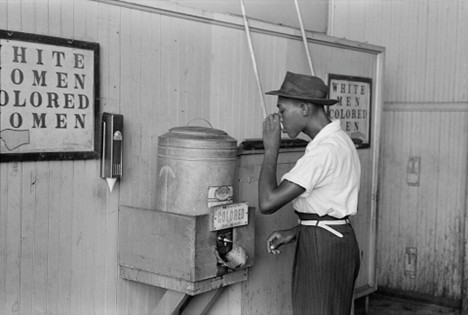
1960s America will long be remembered for widespread protests against racial discrimination and the Vietnam War, the “make love, not war” generation, and the passage of the Civil Rights Act of 1964.
1960s America will long be remembered for widespread protests against racial discrimination and the Vietnam War, the “make love, not war” generation, and the passage of the Civil Rights Act of 1964.
Federal discrimination bans began with the 13th, 14th, and 15th constitutional amendments (1865- 1870), outlawing slavery and granting full citizenship rights (“equal protection”) to all Americans. However, the Southern states soon circumvented these promised principles by Jim Crow laws, implementing special taxes, literacy tests and other measures to bar African-Americans from voting and exercising other rights. Some states enforced and condoned segregation through violent vigilante groups such as the Ku Klux Klan.
Founded in the 1930s, the American civil rights movement gained its first real foothold in 1954 with Brown v. Board of Education, U.S. Supreme Court’s ruling that racial segregation in public schools (the so-called “separate but equal” doctrine) was unconstitutional. Southern states defied the decision by continuing to impose measures that effectively perpetuated segregation, adding fuel to the calls for equal rights and opportunity.
In the 1963 Birmingham, Alabama demonstrations, police employed dogs, clubs and high-pressure fire hoses to suppress nonviolent protesters, including children.
Those brutalities, broadcasted to national TV audiences, led President John Kennedy to propose the Civil Rights Act, signed into law, remarkably, by his successor, Southern Democrat Lyndon Johnson.
The Act remains the country’s principal anti-discrimination law, prohibiting public place segregation and banning employment discrimination based on race, color, religion, sex or national origin. It also created the Equal Employment Opportunity Commission, authorized to sue employers on behalf of workers with discrimination claims.
California’s Fair Employment and Housing Act is this state’s counterpart, enforced by the state’s Civil Rights Department.
All such laws confirm employers should judge people for their competence on the job and not by race, religion and the many other characteristics (“protected classifications”) deemed arbitrary and irrelevant to workplace qualification.
Tim Bowles
February 6, 2026

A quiet pandemic is plaguing California employers: the mounting wave of class actions and Private Attorneys General Act (PAGA) claims over underpaid wages, overtime, meal and rest periods and more.
A quiet pandemic is plaguing California employers: the mounting wave of class actions and Private Attorneys General Act (PAGA) claims over underpaid wages, overtime, meal and rest periods and more. The cost in defense and in settlement can be devastating.
In class actions, a current or former employee seeks appointment as representative of all current and former employees with common claims. Fellow workers need not be aware of the issues or want to be involved.
In PAGA claims, a current or ex-employee brings the suit to collect Labor Code penalties for himself and all workers, the state receiving 65% of any recovery, the employees 35%, plus attorney fees. Penalties can be $50 or $100 for the first offense and skyrocket to double for subsequent offenses for every pay period in which they occurred. The employee must notify the Labor and Workforce Development Agency (LWDA) of the supposed PAGA claims at least 65 days before filing in court.
California employers are being clobbered. Workplace class actions filings jumped from 3,472 in 2020 to 5,117 in 2023, a 47% increase. See Ogletree Deakins article. PAGA claims started out slowly in their first year – 11 in 2006 – but by 2023, they were at 7,780. Duane Morris article. Defending class action and PAGA matters now dominate our practice’s time and attention.
Compliance reviews before the lawyers come knocking is vital. No internal review will guarantee never being sued but the benefit in limiting the chances is immense. Other “ounces of prevention” include:
Take-Aways:
Employers should take all steps to proof themselves against such potentially business-ending claims. Working with a management-side employment attorney and taking advantage of available resources is a must for all businesses.
For further information, please contact Tim Bowles, Cindy Bamforth or Helena Kobrin.
See also:
Helena Kobrin
January 30, 2026

The California Division of Labor Standards Enforcement has updated the mandatory Paid Sick Leave poster . California employers must download and display it in a conspicuous workplace location.
The California Division of Labor Standards Enforcement has updated the mandatory Paid Sick Leave poster. California employers must download and display it in a conspicuous workplace location.
The updated poster reflects statutory changes to California’s paid sick leave law, including amendments enacted through SB 616 and AB 406, and summarizes current employee rights under the Healthy Workplaces/Healthy Families Act:
Take-Aways:
Employers should download and display the current DLSE Paid Sick Leave poster in an accessible location, replace any outdated versions, use the appropriate translated poster for non-English-speaking employees, and review paid sick leave policies and handbooks to ensure consistency with the poster’s requirements. Employers must also continue to comply with applicable local paid sick leave ordinances, which may impose additional or more generous requirements.
For further assistance, please contact Tim Bowles, Cindy Bamforth or Helena Kobrin
See also:
Cindy Bamforth
January 29, 2026
The Equal Employment Opportunity Commission has found reasonable cause to believe KFC violated federal law by subjecting an Orlando location employee to a sexually hostile work environment and then firing her in January 2022 in retaliation...
The Equal Employment Opportunity Commission has found reasonable cause to believe KFC violated federal law by subjecting an Orlando location employee to a sexually hostile work environment and then firing her in January 2022 in retaliation for objecting. The agency found a second employee also affected.
KFC settled the charges in a pre-litigation conciliation, paying $100,000 to each employee. It must also revise employment policies to specifically prohibit sex discrimination, have annual training on sex discrimination for its staff, and for three years must report any other such complaints.
The EEOC Miami District’s regional attorney stated: “Every employee deserves a workplace free from harassment, discrimination and retaliation. By resolving this matter, the EEOC is ensuring that these workers receive justice, and that KFC implements measures to prevent future misconduct.”
Take-Aways:
Employers must establish zero tolerance for sexual harassment and retaliation by policy and by training their staff. They must investigate and take appropriate action when it is reported. This firm offers sexual harassment training.
For further information, please contact Tim Bowles, Cindy Bamforth or Helena Kobrin.
See also:
Helena Kobrin
January 23, 2026
California employers may receive a “claim and conference” notice of a current or former worker’s wage claim with the Division of Labor Standards Enforcement (DLSE), also known as the Labor Commissioner.
California employers may receive a “claim and conference” notice of a current or former worker’s wage claim with the Division of Labor Standards Enforcement (DLSE), also known as the Labor Commissioner.
How a DLSE Claim Begins:
A DLSE claim starts when a current or former worker files a wage complaint. Common claims include unpaid overtime, missed meal or rest breaks, final pay issues, or vacation wages. The DLSE then notifies the employer.
The Settlement Conference:
The DLSE usually schedules a telephonic settlement conference with a deputy labor commissioner to clarify issues and explore early resolution. Although the conference is not a trial, employers should treat it as an official process, not a casual conversation. If the parties reach an agreement, the DLSE documents the settlement and closes the case.
If the Claim Does Not Settle:
If the claim does not settle, the DLSE may set a formal hearing. Both sides present evidence under oath, and the hearing officer issues a written decision.
Missing a scheduled conference or hearing can put an employer at a serious disadvantage.
Statute of Limitations: DLSE vs. Court:
In DLSE proceedings, wage recovery is generally limited to a three-year lookback period, even if the worker points to a written agreement.
Civil lawsuits allow workers to pursue older claims using court-only legal theories. Those claims can extend the lookback to four years.
Because those court-only claims are not available at the DLSE, the process often stays narrower than a lawsuit.
Do Employers Need a Lawyer?:
DLSE proceedings do not require legal representation. Many employers appear on their own, especially in lower-dollar cases.
Legal representation depends on:
Early guidance helps employers present a clear position, avoid unnecessary admissions, and evaluate settlement options.
Take-Aways:
The DLSE claim and conference process allows employers to address wage disputes early and outside of court. Employers who respond promptly, stay organized, and act strategically can better control risk and cost.
For further information, please contact Tim Bowles, Cindy Bamforth or Helena Kobrin.
See also:
Cindy Bamforth
January 15, 2026

Effective February 1, 2026, all California employers must provide each worker with an annual, stand-alone notice summarizing key labor protections and constitutional rights. See Sign of the Times (October 24, 2025).
Effective February 1, 2026, all California employers must provide each worker with an annual, stand-alone notice summarizing key labor protections and constitutional rights. See Sign of the Times (October 24, 2025).
The Labor Commissioner posted a template notice available here. Employers must download, distribute annually, and retain related records for three years.
The DIR template notice summarizes key worker protections:
Take-Aways:
This is an annual distribution notice, not a posting. Be sure to download and distribute the template by February 1, 2026 to all current employees and new hires. Use the appropriate translated DIR version for non-English speaking employees.
For further assistance, please contact Tim Bowles, Cindy Bamforth or Helena Kobrin
See also:
Cindy Bamforth
January 9, 2026

Our new year’s message to management: please focus on the fine details of workforce time and pay documentation.
Our new year’s message to management: please focus on the fine details of workforce time and pay documentation. Like a speeding ticket to the lifetime freeway driver, it is only a matter of time before an unmindful employer gets flagged with a mass litigation suit, possibly placing millions at stake for technical Labor Code violations. Workplace Roulette – Reducing the Odds of PAGA Purgatory (December 13, 2024)
Precise timekeeping is the foundation for limiting the chances of such disasters. California requires every employer:
Where an employer fails to keep required records, an employee’s testimony regarding hours worked is presumed accurate, shifting the burden to the employer to disprove it. Hernandez v. Mendoza 199 Cal.App.3d 721 (1988).
For decades, a company using old school manual cards could reply with its fair and neutral “rounding” practices, setting the work start or end forward or back to the nearest tenth or even quarter hour. The days of that defense may be numbered. In 2021, the California Supreme Court called such practices into question “given that advances in technology have enabled employers to more easily and more precisely capture time worked by employees.” Donohue v. AMN Services, LLC 11 Cal.5th 58 (2021).
While we cannot endorse any particular digital system, there is a wealth of resources for management’s move to join this trend. See, e.g., The 9 Best Payroll and Timekeeping Software in 2026 (December 31, 2025).
Take-Aways:
A best practice to build protections against crippling mass wage-and-hour litigation is to move as quickly as possible from a traditional manual method to workable digital timekeeping software and protocols to ensure all hourly employees are on board with the change.
For further information, please contact Tim Bowles, Cindy Bamforth or Helena Kobrin
See also:
Tim Bowles
January 2, 2026
The federal Wage and Hour Division has cited Maryland construction company J. Solano HVAC LLC $586,000 for a payback scheme by which it paid pipefitter mechanics and sheet metal workers prevailing wage, but had them return everything over...
The federal Wage and Hour Division has cited Maryland construction company J. Solano HVAC LLC $586,000 for a payback scheme by which it paid pipefitter mechanics and sheet metal workers prevailing wage, but had them return everything over $30/hour. The company also misclassified some workers as less skilled to pay them lower prevailing wage rates.
Under federal law, “A prevailing wage is the combination of the basic hourly wage rate and any fringe benefits rate, paid to workers in a specific classification of laborer or mechanic in the area where construction, alteration, or repair is performed, as determined by the Secretary of Labor. “ Workers on federal construction projects are entitled to receive prevailing wage rates.
Baltimore Wage and Hour Division District Director Nicholas Fiorello said:
“By uncovering this scheme, the department ensured that workers were paid fairly, received their full fringe benefits, and that competing contractors were not disadvantaged for appropriately bidding for work based on the required prevailing wage rates. Employers that don’t abide by federal contract requirements may end up being debarred from future government contract work.”
The citation bars Solano from bidding on any federal projects for three years.
California Labor Code 221 also bars paybacks: “It shall be unlawful for any employer to collect or receive from an employee any part of wages theretofore paid by said employer to said employee.”
TAKE-AWAYS:
Employers must follow all laws requiring that certain wages be paid to their employees, whether minimum wage, overtime, prevailing wage, or laws prohibiting paybacks.
For further information, please contact Tim Bowles, Cindy Bamforth or Helena Kobrin.
See also:
Helena Kobrin
December 23, 2025