Click here to subscribe to our Bowles Law e-letter


Click here to subscribe to our Bowles Law e-letter
.jpg)
In "Sign of the Times, “Workplace Know Your Rights Act", Response to Federal Raids (October 24, 2025), we relayed California employers’ requirements, beginning February 1, 2026, to provide each worker an annual, stand-alone notice...
In "Sign of the Times, “Workplace Know Your Rights Act", Response to Federal Raids (October 24, 2025), we relayed California employers’ requirements, beginning February 1, 2026, to provide each worker an annual, stand-alone notice summarizing key labor protections and constitutional rights. These incoming Labor Code sections aim to standardize and expand the scope of such notices in the face of growing Homeland Security aggression.
The state has since issued a template notice.
An employer is required to notify any worker’s designated emergency contact in the event the employee is arrested or detained. Thus, no later than March 30, 2026, an employer must provide each employee the opportunity to name that emergency contact. The employer shall then provide all new employees that opportunity at the time of hiring.
Take-Aways:
By March 30, 2026, employers must inform and provide each worker the means to designate his/her emergency contact in the event of arrest or detention:
For further information, please contact Tim Bowles, Cindy Bamforth or Helena Kobrin.
See also:
Helena Kobrin
March 27, 2026

I got started in Africa in 2004, in Tanzania. Now, 2026, I have never fully come home.
I got started in Africa in 2004, in Tanzania. Now, 2026, I have never fully come home. Some snapshots:
Thursday, 12 August 04 [flight to Inyonga, drive to Katavi National Park, Rungwa River Camp]
Serge and his Excel single-engine touches down at the dirt strip at Msembe Ranger Station at around 10:00. We load and take off. Through the prop drone and air dance, it is a desert below, wilderness, dry stream beds, kopjes [rock promontories], low trees, grey/greens, khaki flats, some ghost clouds, horizon lost in the blurring mix of air and dust. 10,420 feet above sea level and horizontal, headed W x N, 29 degrees, 135 knots over the ground.
We land an hour-plus west at Inyonga. Serge comes around the strip 300 meters off the deck. Several kids are waving at us from the tamped down yards of rectangular, mud-block huts, rich reddish-brown earth. As we come in for the approach, people are hurrying in from everywhere and nowhere to line-up on one side of the strip. By the time we reach the unloading zone, the area is massed, if not mobbed, with people.
All ages are here, mostly young, between 5 and 12 years, mostly boys, some in collared shirts, some in rags, wide eyes, curious; the crowd buzzing. More people flood in from the adjoining blocks of town; no-one’s speaking any English, all in Swahili or whatever tribal language prevails. The townies are shoulder-to-shoulder, five or six deep to see the Westerners fall out of the plane. Last to exit, I give a big hello to the waiting front row of open-faced, belly-high boys. They absorb the greeting, no-one venturing to offer any motion back.
Now the kids press in closely, eight and ten thick. “Hello, jambo!” Their shy curiosity is broken quickly by the digital LCD displays on our cameras. I take a shot of them craning, waving and beaming into the camera and then instantly show the results. Unrestrained exhilaration rolls over the young in waves, jostling for the closest look and exchange with the white guy from the sky. They are like kids anywhere, seemingly let out of school and on a lark, the bold ones, the followers, the clowns, the show-offs. Daudi, in Swahili, has a tough time getting the boys to acknowledge they are skipping school, but it is clear they are educated by their easy ability to answer his math questions ...
In town, Daudi points to the tall plum tree hard-by the main intersection. This is the service mark of the Arabic slave traders who established the East African routes for stolen humanity some 500 years ago. In their wake, most people of this area adopted and have passed-on Islam to this day.
Inyonga is loosely translated as “hanging tree” or “strangulation tree.” This city was an execution center when the Germans ran the show in the 1800s ...
We leave to the southwest over a narrow track that Daudi classes as a high-quality Tanzanian roadway. A lot is thick sand, which he attacks at 40 mph or more; then axle-cracking ridges and shelves; then more sand; no road signs; mud-block huts and bare dirt front spaces with young kids, old women waving; more sand tracks which D wrestles through at high speed like he was bringing a bull to the ground; me in the rider’s front seat, thinking that if everything else around here is living on the edge, elemental life-and-death, why not me?; no windshield, no seat-belt, no side-door (just a low-lying piece of wood).
Of course, the sole safety feature of this hurdling mass is D’s driving skill. He plows through the straight stretches like there is no tomorrow, the thin miambo trees hugging in on the road, all young growth, not likely to kill, only to slow if we went off-kilter ...
As we work our way on a slow stretch through the miambo, two guys approach, walking a bicycle. We stop. They are Sukuma tribe cowboys, dressed like Andre 3000 in the middle of absolute nowhere, one guy in a Cat-in-the-Hat knit cap, black and bright horizontal striping, luminescent gold and yellow scarf, overcoat, leggings and bright plastic rings of all colors stacked from ankle to mid-calf. The other guy was nearly his Big Boi equal, also gaily scarfed, swiping easily at the tse-tse as we talked. They had come nearly 100 k today and were headed well north of Inyonga.
The Sukuma are the largest of the 125 tribes in Tanzania, comprising some 6% of the total population, starting south of Lake Victoria and spreading throughout the nation. They have taken it upon themselves to dress in wild combos of traditional and “modern,” like Bob Marley hyperventilating. They have an annual fashion festival. Daudi describes one warrior who topped off his traditional battle dress with pink bra and panties.
The track gets no better as we come down from flat plateau, through the trees, among mountains and into the Katavi river system. Katavi, where “unimproved” would be an improvement.
The obscure track to camp leads off and down to the left from the “main roadway,” twin lines through the grass. Daudi has us walk the quarter mile to avoid getting hit by the thin filaments of the “upupu” pods, a pea-like sheath hanging from vines on each side of the trail. They are not painful, but produce a nearly unbearable discomfort, one that has driven D and his friends into waters infested with hippo and croc just to try and attain some relief. He is convinced that enough of this can drive a person insane.
It is dark shortly after arrival. The beer is very good, the rice and beef goulash welcome with D’s green three-alarm chili.
Toward bed, the hyena are evident, calling to each other up and down this dry rocky riverbed. Going back to tent, I keep spotting little glistenings among the leaves. These are eight-eyed spiders, one of them rather large, tarantula quality. The crew has placed a line of ash placed across the path leading from our tents to the river bed. The headlamp reveals the apparent motive, an intense line of ants, maybe three inches wide, moving right-to-left across the path, just the other side of the ash line.
The night passes quickly.
Tim Bowles
March 20, 2026

California does not give employers the benefit of the doubt. The state leads the nation in the density, complexity, and sheer volume of workplace regulations.
California does not give employers the benefit of the doubt.
The state leads the nation in the density, complexity, and sheer volume of workplace regulations. Most employers caught in the crosshairs of a wage-and-hour class action suit or a Private Attorneys General Act (PAGA) action are not bad actors. They are well-intentioned businesses that simply did not know what they should have — until a disgruntled former employee and his or her attorney file a court claim to explain it to them, at considerable expense. The antidote is not luck. It is knowledge and the willingness to correct improper practices.
What a Compliance Review Is
A Bowles Law workplace compliance review is a structured, attorney-guided examination of an employer's practices, policies, and documentation against the current requirements of California and federal employment law.
This is not a general legal audit or a box-checking exercise. It is a targeted, practical look at where a business may be exposed — and what it can do about it before a claim is filed.
What We Review
Our compliance review examines the areas that generate the most claims, the highest penalties, and the greatest litigation risk for California employers, including:
Wage and Hour Practices
Pay Statements
Employee Classification
Workplace Policies and Handbook
Hiring and Onboarding
Leave Laws
Why It Matters: The PAGA Reality
California's Private Attorneys General Act allows a single aggrieved employee — current or former — to sue on behalf of all others and collect civil penalties for each confirmed Labor Code violation. With penalties beginning at $100 per violation per pay period, even a modest workforce and a seemingly minor deficiency can produce seven-figure exposure.
Class action and PAGA filings have reached record levels in recent years and show no sign of slowing. Employers who have never faced a claim are not necessarily compliant — they may simply have not yet encountered the employee or attorney who looked closely enough.
PAGA's 2024 reforms gave employers greater opportunity to cure violations before and after a notice is filed. But the best cure remains the one applied before the notice arrives.
The Cost of Waiting
An employer motivated to review its practices after surviving an expensive legal challenge has learned an important, hard lesson. Best practice is to build those protections before the claim is asserted — when corrections are manageable and costs are controlled.
The cost to fix problems found during a compliance review is a business-saving investment compared to the cost of defending the lawsuit that may follow.
Take-Aways
California's regulatory climate is unforgiving of well-intentioned but uninformed practices. A periodic workplace compliance review is not pessimism — it is sound management. It is the difference between steering the ship away from danger and reacting when it hits the rocks.
Bowles Law conducts compliance reviews for employers of all sizes across California. The scope is tailored to each client's workforce, industry, and particular areas of concern.
For more information or to schedule a review, please contact Tim Bowles, Cindy Bamforth, or Helena Kobrin.
See also:
Tim Bowles
March 13, 2026
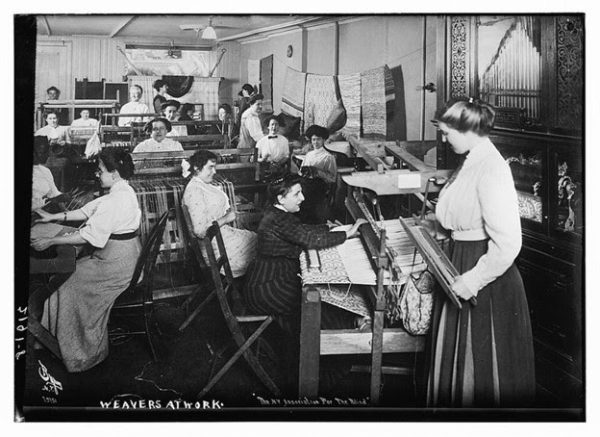
A Long Island Walmart did the right thing in 2017 when it accommodated an employee with hearing, speech and cognitive impairments so she could better understand her work assignments.
A Long Island Walmart did the right thing in 2017 when it accommodated an employee with hearing, speech and cognitive impairments so she could better understand her work assignments. As a result, the employee was able to perform well, rated as providing “valued performance.”
Yet, in 2020, new Walmart managers discontinued the accommodations, later terminating the employee for insubordination over an ensuing conflict.
The Equal Employment Opportunity Commission sued Walmart for disability discrimination under the Americans with Disabilities Act and settled for $60,000. The retailer is also required to train managers and HR personnel on the ADA and reasonable accommodations, submit compliance reports to the EEOC, and post notice of disability rights and the settlement on the bulletin board.
EEOC regional attorney Kimberly Cruz observed: “Federal law prohibits firing an employee because of a disability or the need for a reasonable accommodation. If an employer’s unlawful failure to accommodate a disability leads to an employee’s termination, the firing itself may also be unlawful under the Americans with Disabilities Act.”
Take-Aways:
Unless there is an undue hardship, employers must reasonably accommodate disabled employees to facilitate their job performance. When management changes, employers should ensure the new bosses do not eliminate those accommodations.
For further information, please contact Tim Bowles, Cindy Bamforth or Helena Kobrin.
See also:
Helena Kobrin
March 13, 2026

Meal and rest break violations remain a leading source of wage-and-hour litigation in California. Many claims arise from routine practices that employers can correct with proper oversight. 1.
Meal and rest break violations remain a leading source of wage-and-hour litigation in California. Many claims arise from routine practices that employers can correct with proper oversight.
1. Allowing, but Not Providing a Timely Meal Period
Employers must provide a first meal period of at least 30 minutes no later than the end of the fifth hour of work, and a second when an employee works more than ten hours.
"Available" is not enough. Employers must relieve employees of all duty, relinquish control over their activities, and permit a reasonable opportunity to take an uninterrupted 30-minute break without impeding or discouraging them from doing so. A clear, California-compliant written policy communicated to employees and supervisors is central to meeting that standard.
That said, employers need not police breaks or ensure no work is performed. If an employee voluntarily works through a properly provided break, the employer is generally not in violation, though it must of course pay for all time worked.
Missed break liability arises from vague or missing policies, untrained supervisors, production pressure, or scheduling that pushes breaks past the deadline. Late, interrupted, or on-duty meal periods attributable to management trigger premium pay and potential penalties.
2. Automatically Deducting Meal Periods
Automatic 30-minute deductions create risk if employees skip or shorten breaks. Time records must reflect actual practice.
3. Letting Rest Breaks Slide
Employers must authorize and permit a paid 10-minute rest period for every four hours worked or major fraction thereof.
Supervisors who discourage breaks, fail to provide coverage, or assign workloads that prevent breaks expose the employer to liability, even if no written policy prohibits breaks.
4. Failing to Pay Premiums
If a compliant meal or rest period is not provided, the employer owes one additional hour of so-called premium pay at the employee’s regular rate for each workday a violation occurs.
Premium pay is mandatory. Failure to pay it timely may result in waiting time penalties and wage statement claims.
5. Inconsistent Policies and Spotty Documentation
Inconsistent practices increase litigation and PAGA risk. Common issues include:
Take-Aways
Employers should update policies; audit time records for late, short, or missed breaks; train supervisors to avoid discouraging breaks; provide a clear reporting process; and pay premiums promptly when owed.
Proactive compliance reduces exposure to class actions and PAGA claims.
For further information, please contact Tim Bowles, Cindy Bamforth or Helena Kobrin.
See also:
Cindy Bamforth
March 6, 2026

California Labor Code section 515.6 exempts certain licensed physicians and surgeons from Labor Code 510 overtime compensation upon receipt of specified minimum hourly compensation. That rate changes annually.
California Labor Code section 515.6 exempts certain licensed physicians and surgeons from Labor Code 510 overtime compensation upon receipt of specified minimum hourly compensation. That rate changes annually.
California’s Department of Industrial Relations (DIR) announced the January 1, 2026 rate increases for this minimum to $107.17, up from $103.75, reflecting the 3.3% increase in the California Consumer Price Index for Urban Wage Earners and Clerical Workers.
Employers that pay eligible professionals this minimum hourly rate and accurately track hours worked do not need to pay overtime to those employees.
The physician or surgeon skills and duties criteria in Labor Code section 515.6 must also be met. Principally, the employee must be “primarily engaged” (more than 50% of the time) in duties requiring licensure.
California Business and Professions Code section 2052 specifies such duties, requiring a medical license for anyone who “practices or attempts to practice, or who advertises or holds himself or herself out as practicing, any system or mode of treating the sick or afflicted in this state, or diagnoses, treats, operates for, or prescribes for any ailment, blemish, deformity, disease, disfigurement, disorder, injury, or other physical or mental condition of any person.”
Physicians and surgeons paid on a salary basis will not qualify for this exemption, but may otherwise qualify for the administrative, executive or professional exemptions from overtime. Each category possesses its own distinct requirements.
For more information, please contact Tim Bowles, Cindy Bamforth or Helena Kobrin.
See also:
Helena Kobrin
March 6, 2026

California employers face a growing trend: employees who stop showing up without notice. Handling these ghosting cases without a clear process can create unexpected legal exposure. What Is Job Abandonment.
California employers face a growing trend: employees who stop showing up without notice. Handling these ghosting cases without a clear process can create unexpected legal exposure.
What Is Job Abandonment?
Job abandonment occurs when an employee stops showing up and cuts off contact with his or her employer. While most employers treat this as a voluntary resignation, moving too quickly or without documentation -- especially in California -- can turn an assumed quit into a contested termination.
The Legal Risk:
An employee may later claim a medical emergency, mental health crisis, or family situation, arguing wrongful termination instead of resignation. This can also trigger claims under the Family and Medical Leave Act (FMLA) or California Family Rights Act (CFRA), which provide job-protected leave.
What Employers Should Do:
When an employee stops communicating:
Take-Aways:
Employee ghosting may be informal, but employers must respond with structure and documentation. A clear written policy should set expectations and define the abandonment timeframe. Prompt action, consistent policy enforcement, and thorough records best defend against future claims.
For further information, please contact Tim Bowles, Cindy Bamforth or Helena Kobrin.
See also:
Cindy Bamforth
February 26, 2026

California Labor Code section 515.5 exempts certain computer software professionals from overtime compensation if paid specified minimum compensation.
California Labor Code section 515.5 exempts certain computer software professionals from overtime compensation if paid specified minimum compensation.
California’s Department of Industrial Relations (DIR) announced a 3.3% rate increase for 2026, from $56.97 to $58.85, stemming from the California Consumer Price Index for Urban Wage Earners and Clerical Workers. Alternatively, an otherwise qualified salaried employee is eligible on minimum annual compensation of $122,573.13, up from $118,657.43, payable at least once monthly at no less than $10,214.44.
An exempt computer professional must also meet each of the Labor Code section 515.5 high-level skills and duties criteria. Among these, the employee must be “primarily engaged” (more than 50% of the time) in intellectual or creative work requiring the exercise of discretion and independent judgment such as:
This exemption does not apply to trainees, entry-level employees, writers in the computer field, or others who use computers extensively but are not doing systems analysis, programming, and the like.
Although computer software professionals need not be paid overtime premium under California law, employers should further ensure they meet the comparable federal law exemption, which includes a less restrictive definition of “primary” duty, a lower hourly/salaried threshold, and similar skills and duties tests.
Such computer professionals may also qualify for the administrative, executive or “learned profession” exemptions from overtime, each of which has its own distinct qualifications.
For more information, please contact Tim Bowles, Cindy Bamforth or Helena Kobrin.
See also:
Helena Kobrin
February 20, 2026
Government Code 12999 requires private employers of 100 or more direct or labor contractor hires to submit an annual pay data report to the Civil Rights Department (CRD).
Government Code 12999 requires private employers of 100 or more direct or labor contractor hires to submit an annual pay data report to the Civil Rights Department (CRD). See California’s Annual Occupation Census: Two Steps Will Expand Employee Data Reporting Law (November 14, 2025) for details.
The CRD website has numerous tools available to help employers comply, including:
Take-Aways:
Required pay data reporters should use the CRD website and get a timely start to ensure compliance by the May 13 deadline.
For further information, please contact Tim Bowles, Cindy Bamforth or Helena Kobrin.
See also:
Helena Kobrin
February 13, 2026